Language

Background

FINISHING SYSTEMS

Oil Finish vs. Water-Based Finish

How Do Oil Finish and Water-Based Finish Differ?

Both are used to finish wood surfaces, yet oil-based and water-based systems create distinctly different tactile qualities, responses to light and patterns of ageing over time.

When choosing natural wood flooring, attention often goes to species, colour or laying pattern. Yet the surface finish is the layer that remains in direct contact with the user throughout the life of the floor.

In contemporary wood flooring, oil finish and water-based finish are two common finishing approaches. Although both protect the wood surface, they interact with the material differently and create different experiences in use.

What Does the Surface Finish Affect?

A finish does more than protect wood from dirt, moisture and everyday wear. It also directly affects colour, light reflectance and the tactile quality of the material.

The same Oak or Walnut can produce a very different spatial impression when treated with a different finishing system.

This is why architects and designers often treat the finish as part of the material itself rather than simply as an external protective coating.

In many cases, the way a wood surface feels is shaped by the finish almost as much as by the wood species beneath it.
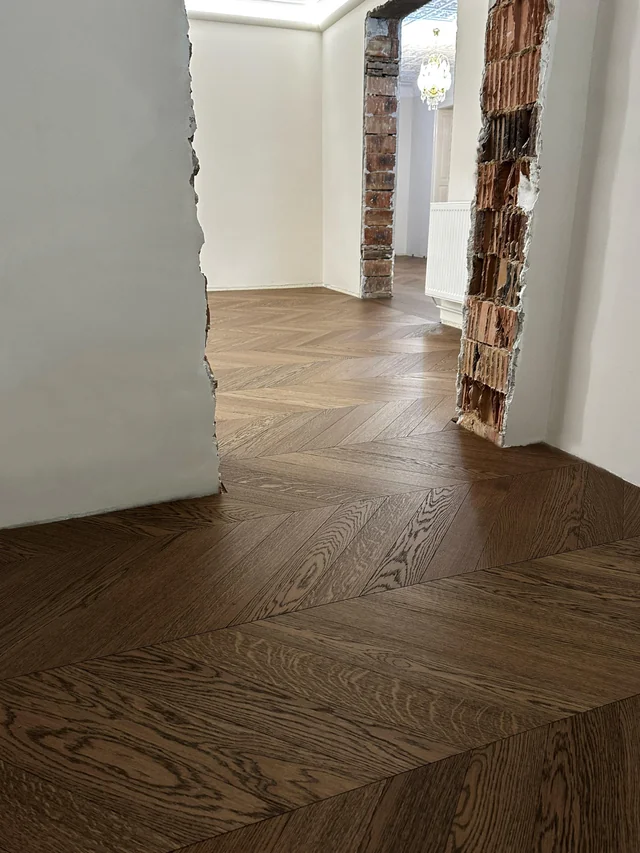
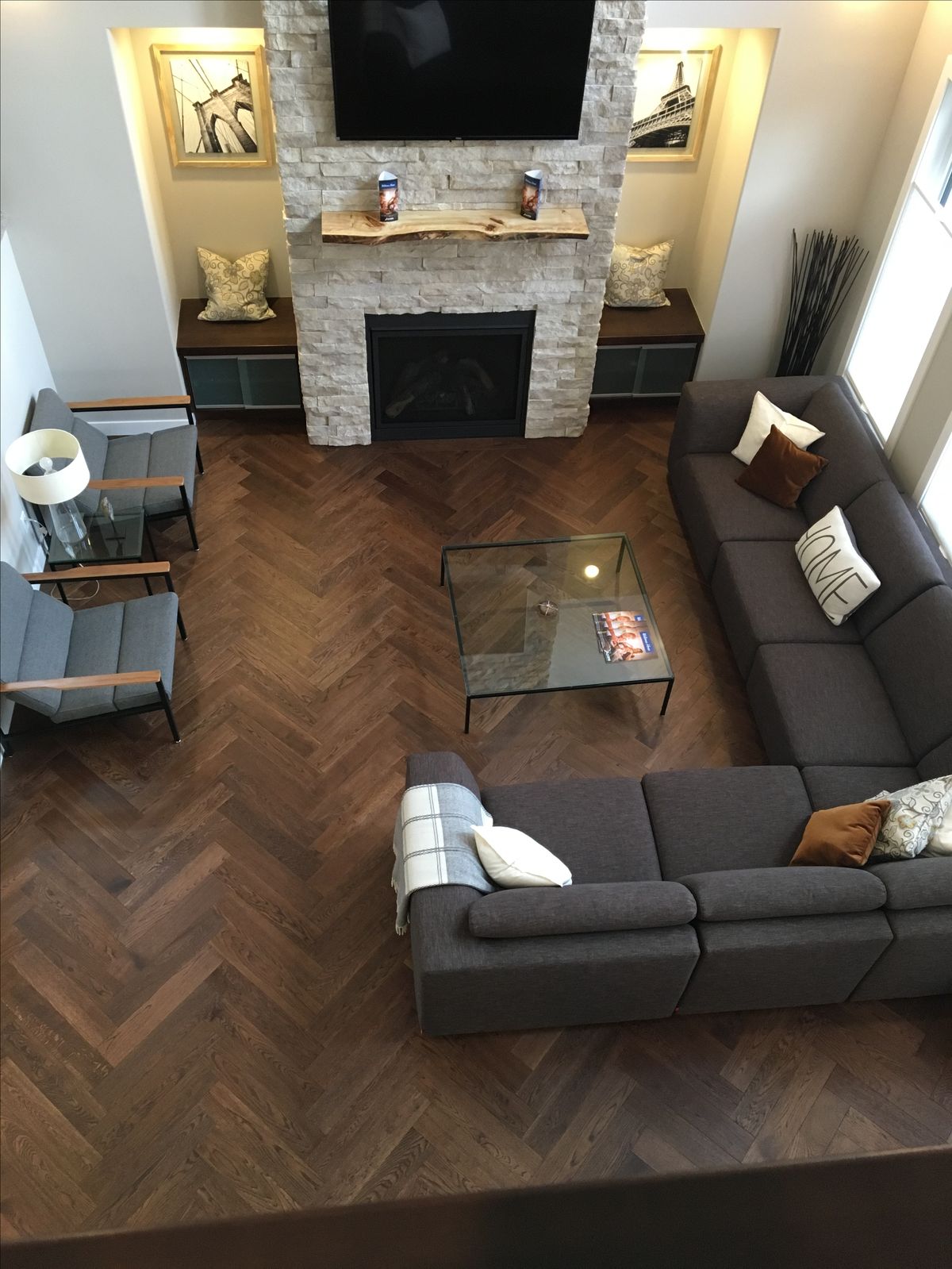
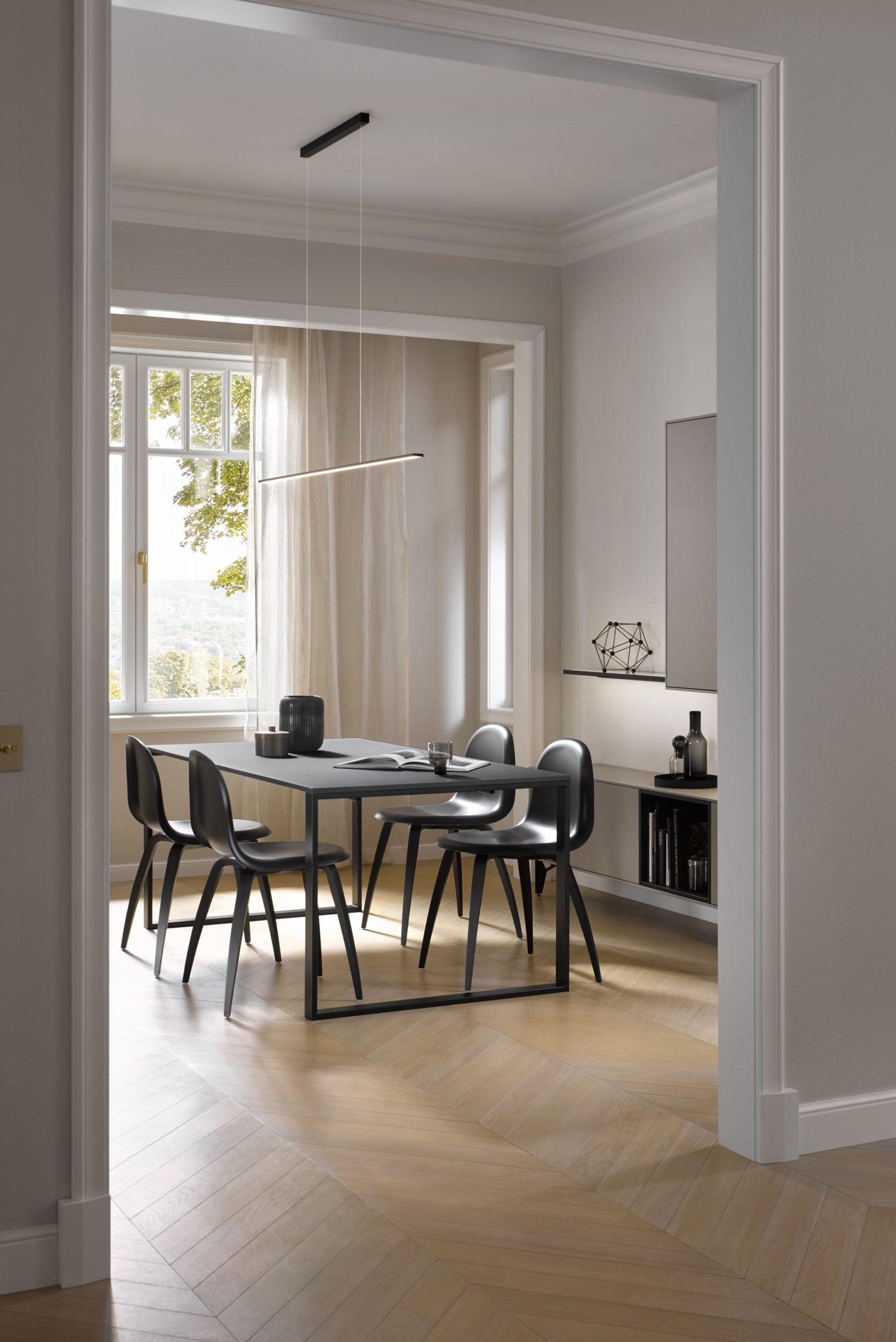
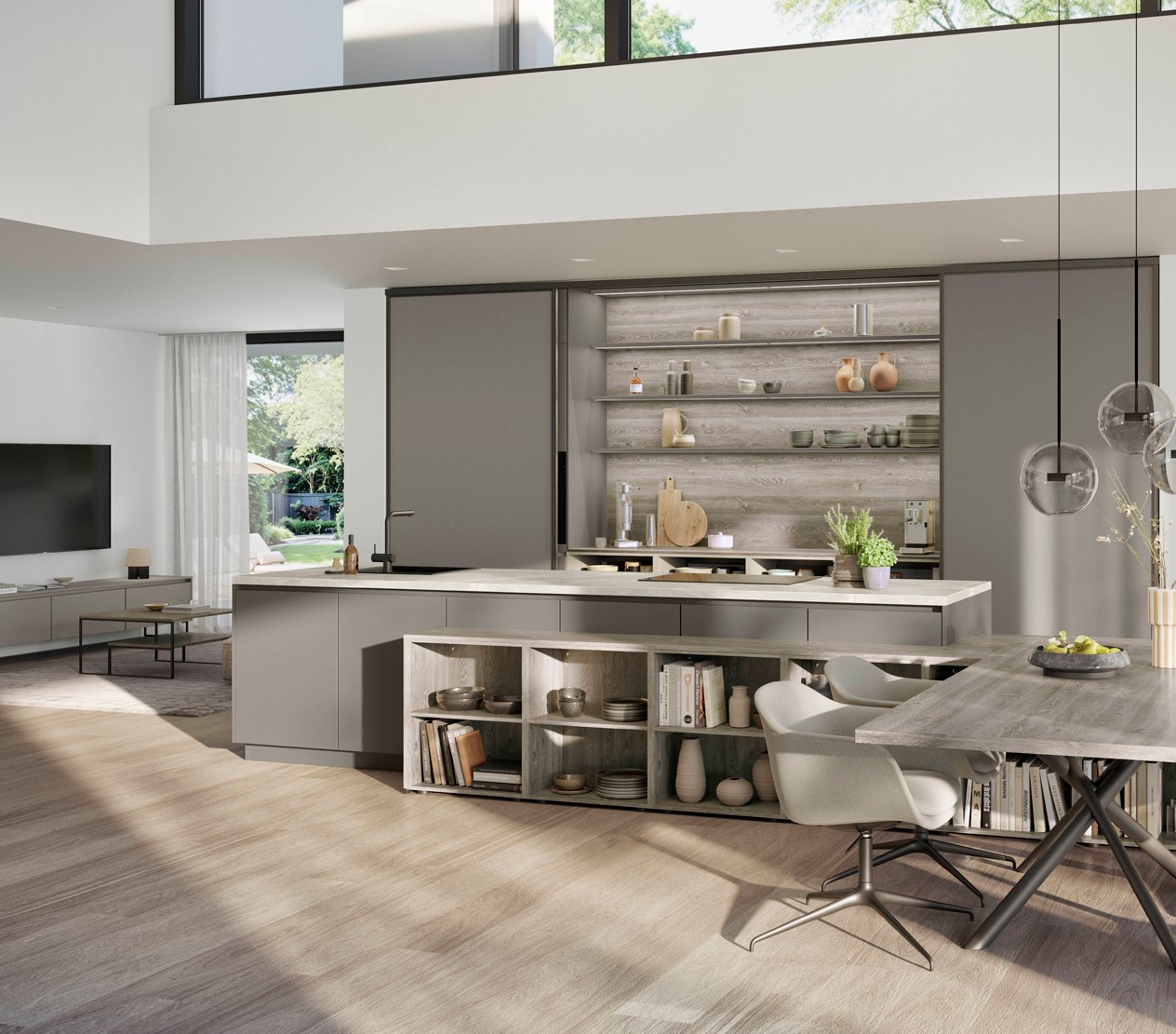
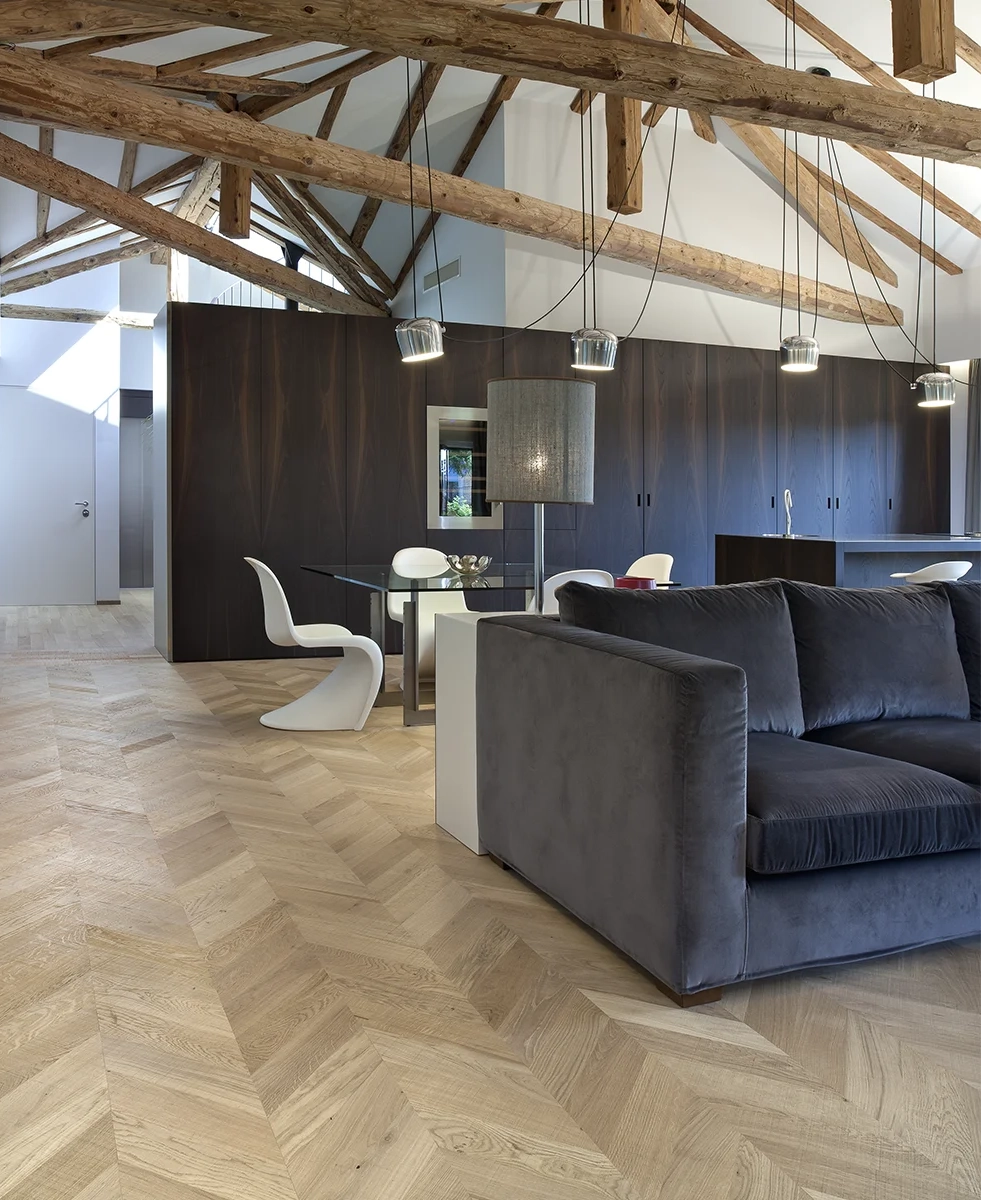
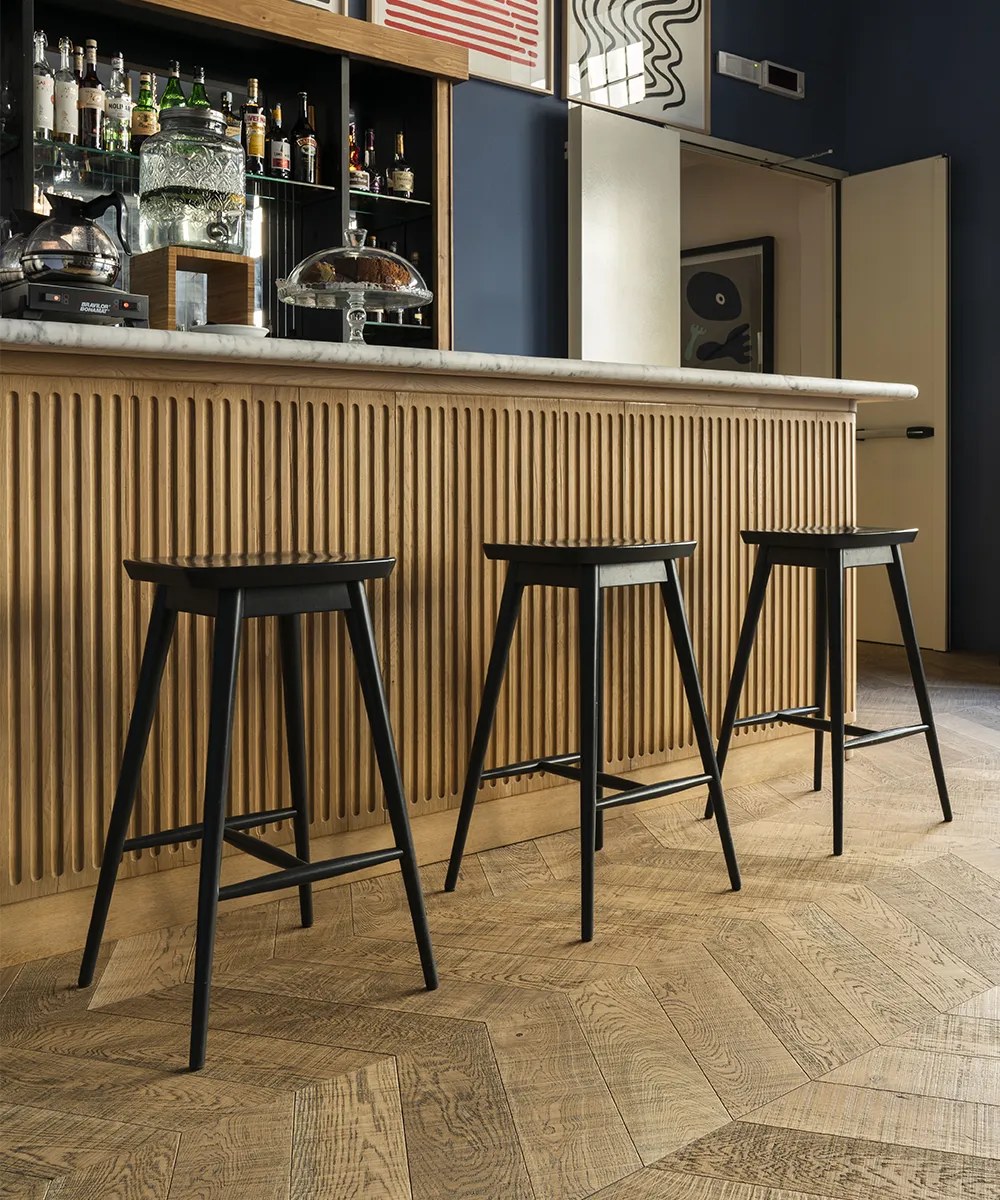
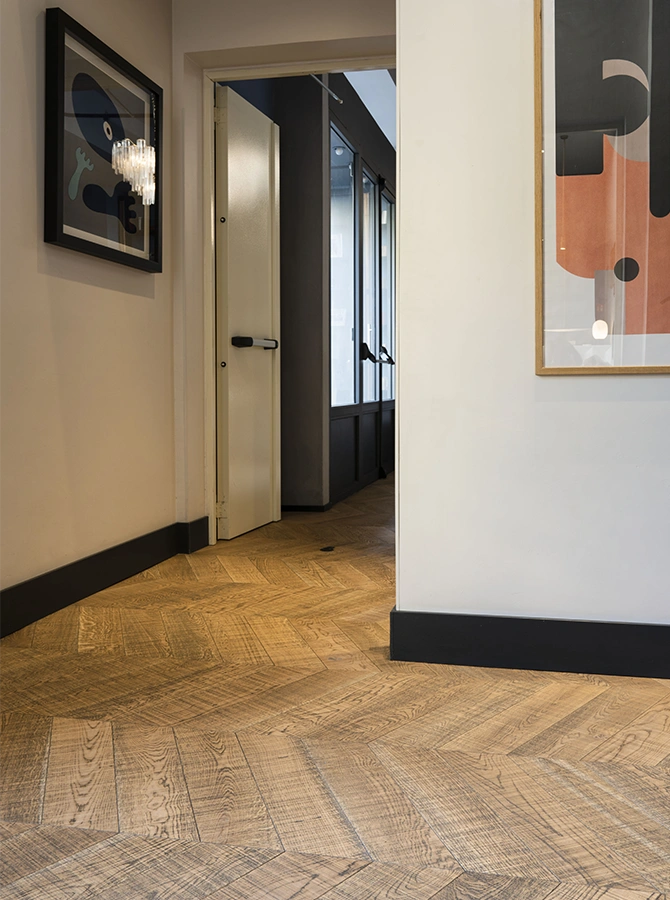
Wood flooring with an oil finish
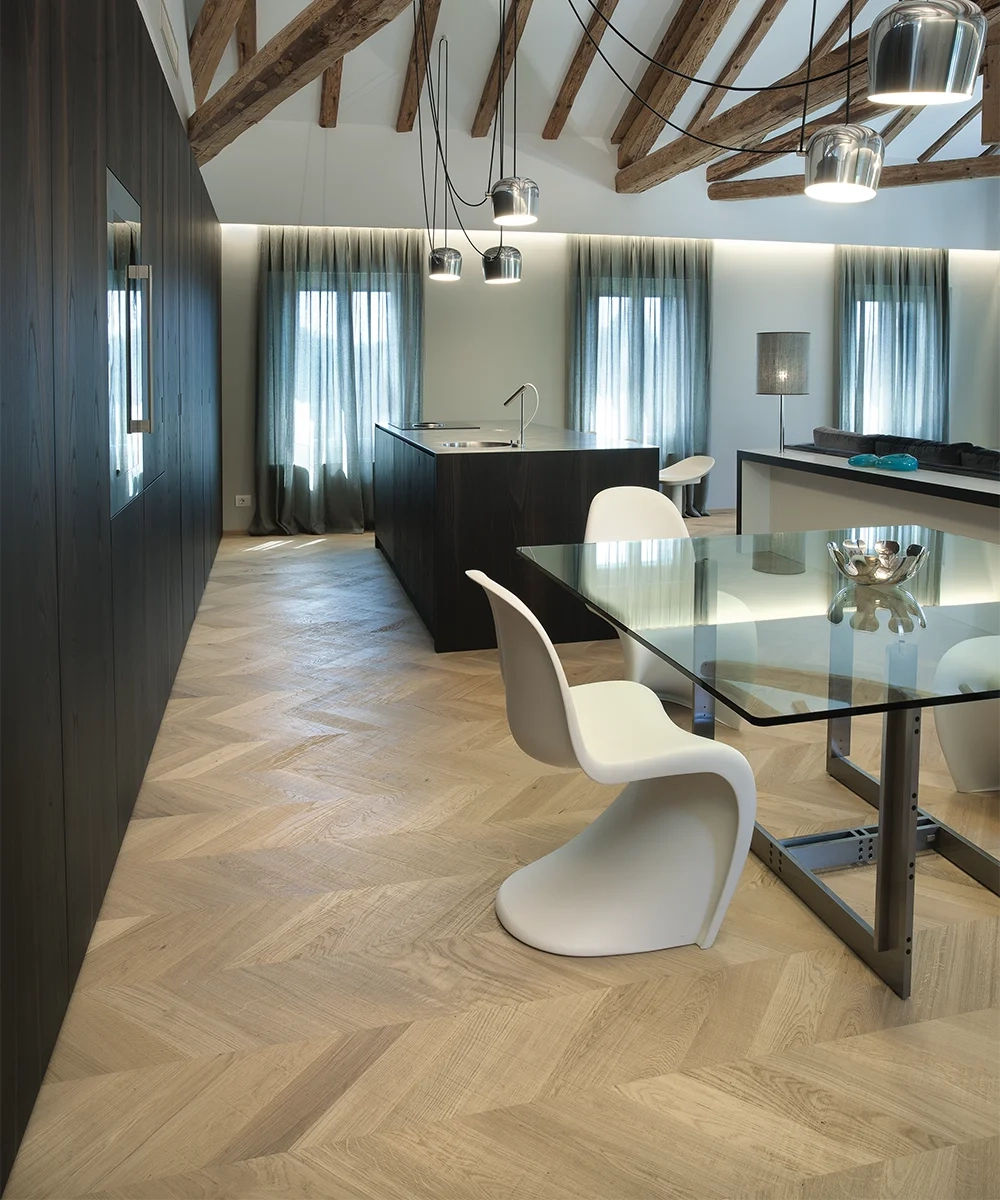
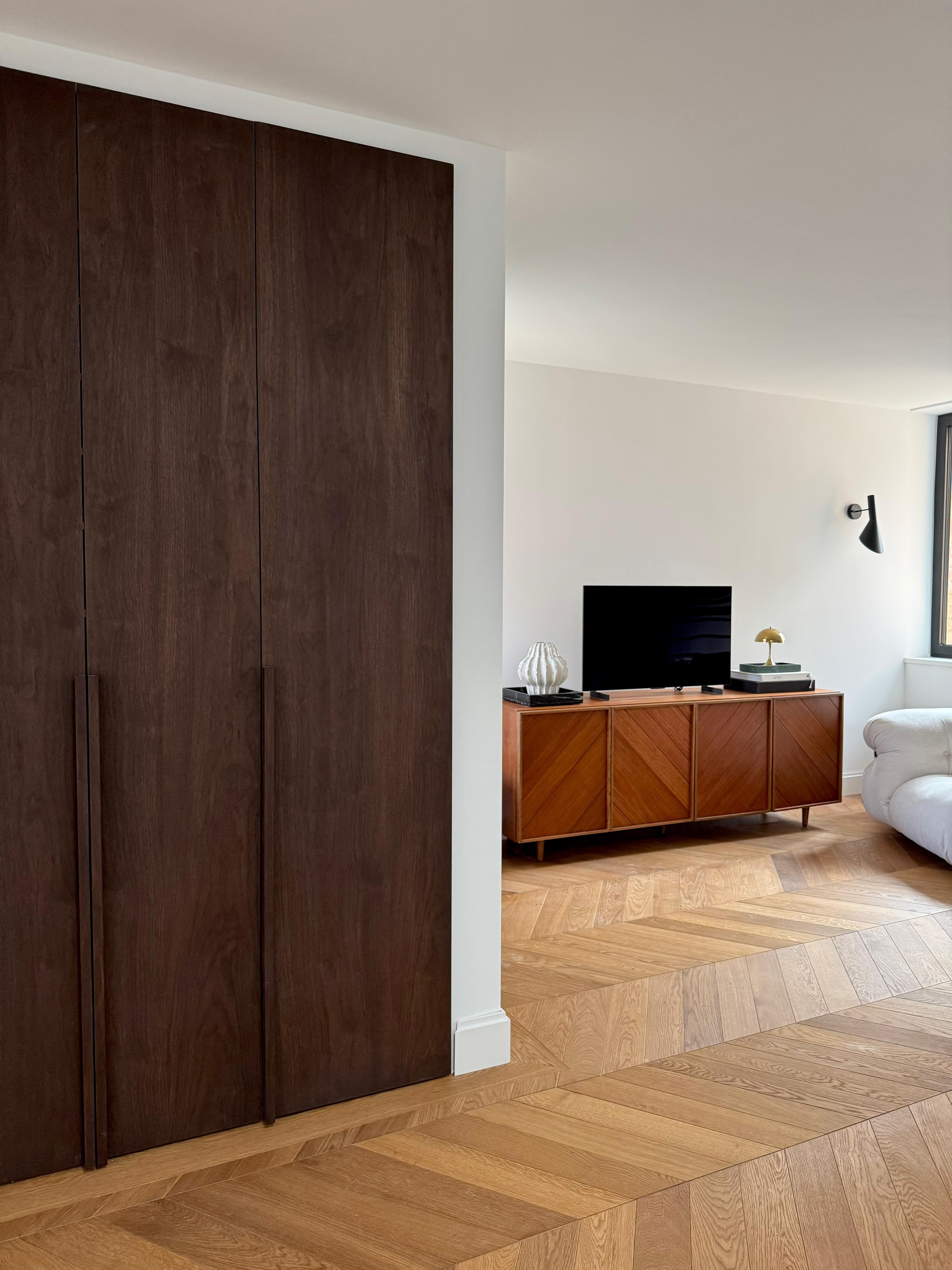
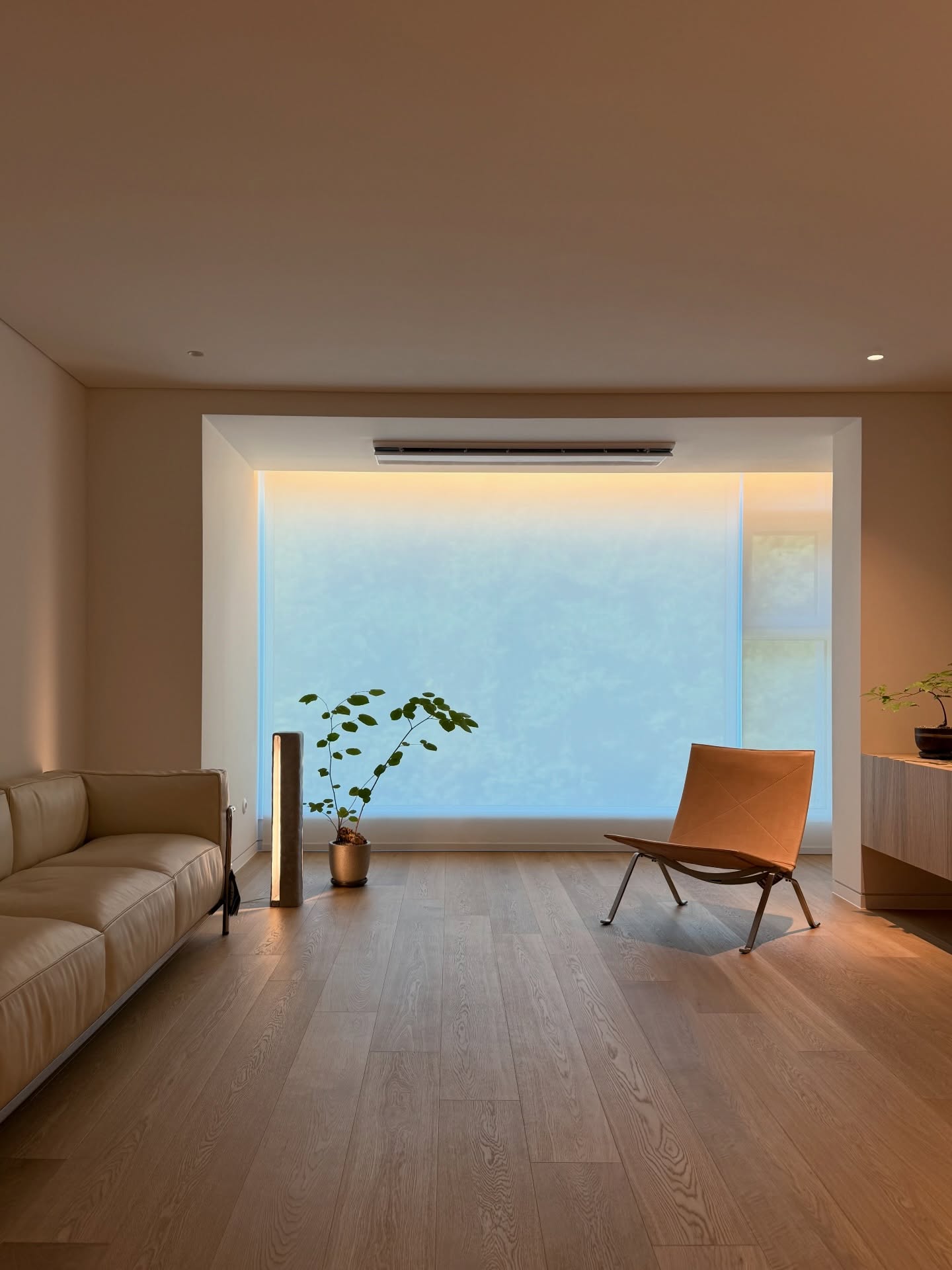
Wood flooring with a water-based finish

What Is an Oil Finish?

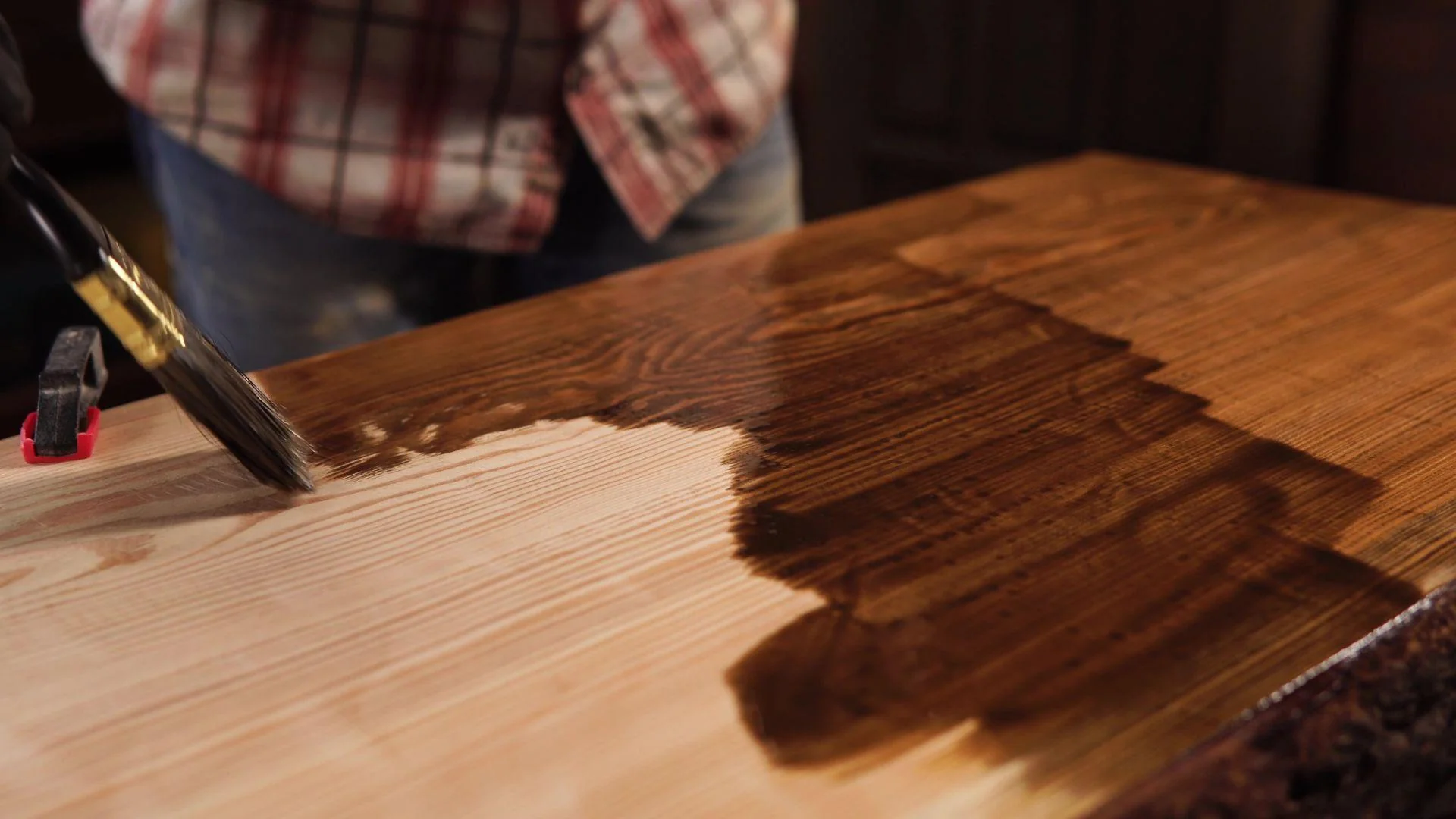
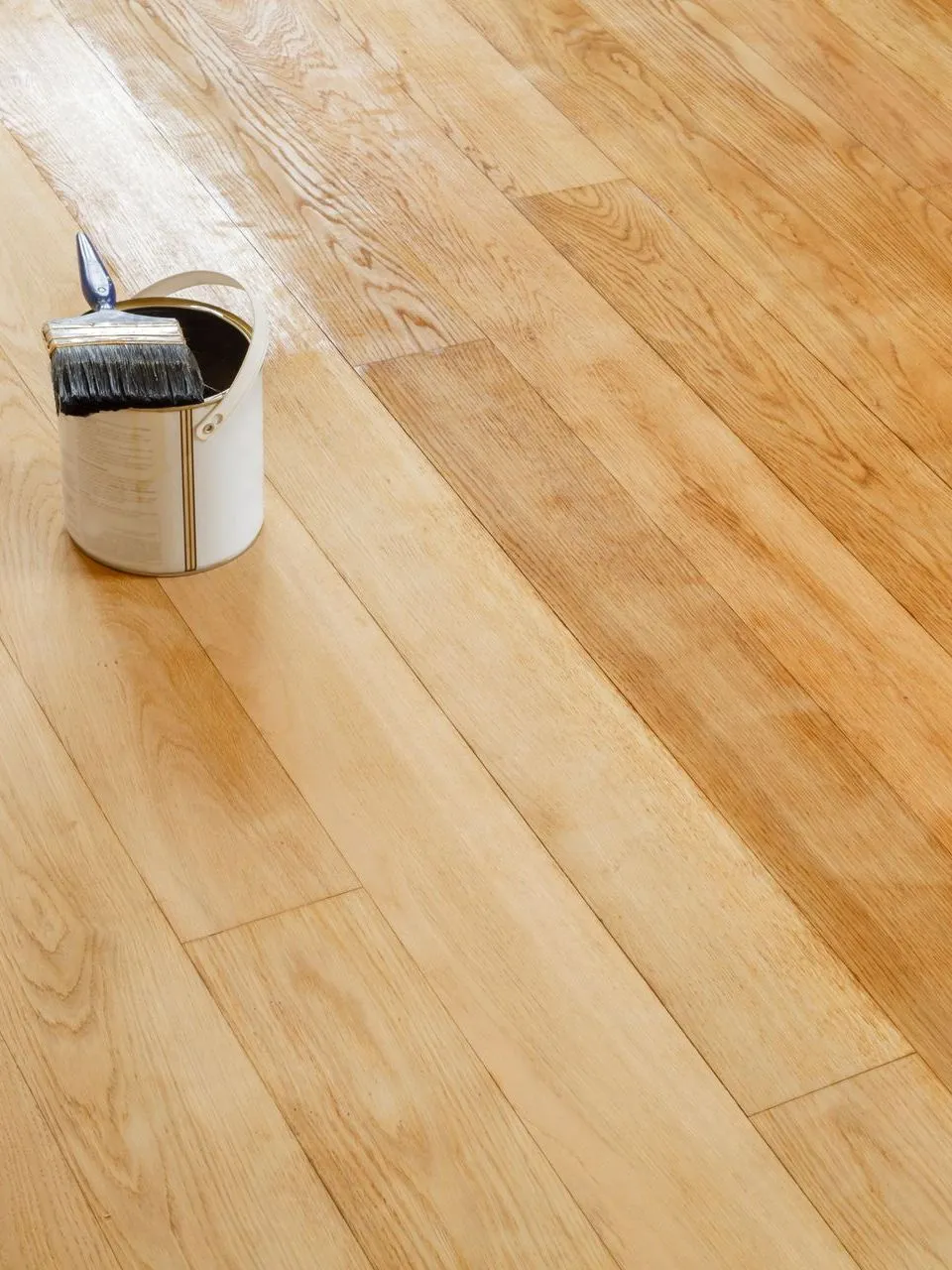
An oil finish uses a specialised oil that penetrates the wood structure rather than forming a thick film on top of the surface.

By penetrating the grain, an oil finish helps preserve the natural feel of the material while emphasising grain depth and the individual characteristics of each wood species.

Under natural light, an oil-finished surface often appears softer, less reflective and closer to the original character of the wood.

This is one reason oil finishes are often used in premium wood flooring systems where material experience is considered as important as performance.

Characteristics of Oil Finish:

• Penetrates the wood structure rather than sealing it beneath a continuous film

• Preserves a more natural tactile quality

• Emphasises the depth of the grain

• Can allow localised maintenance in certain cases

What Is a Water-Based Finish?

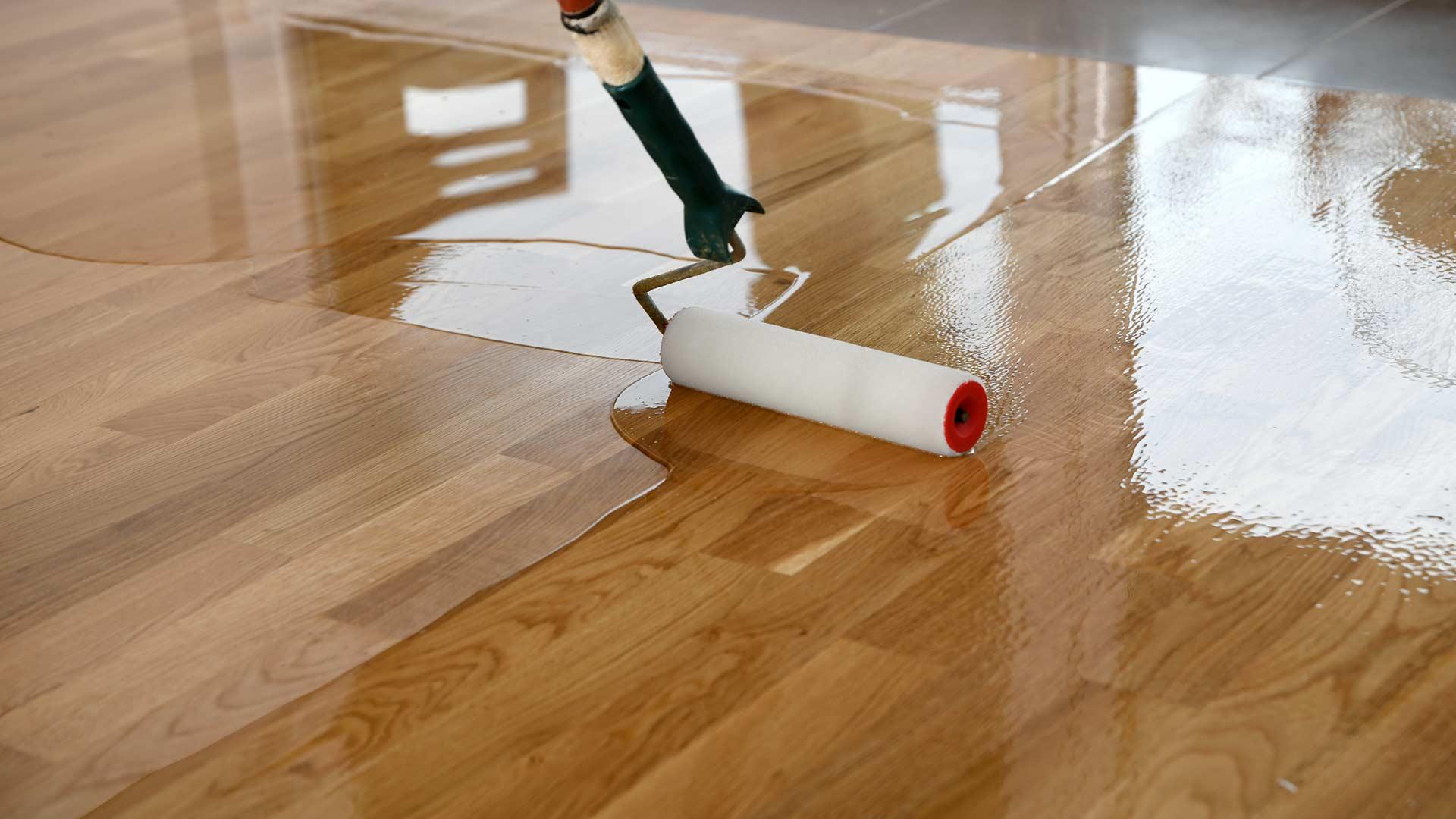
A water-based finish uses water as the primary dispersion medium to form a protective layer over the wood surface.

Unlike an oil finish, a water-based finish works primarily by forming a protective film above the material.

Depending on its formulation, the finish can produce different levels of sheen, from matte to semi-gloss.

It is widely used in interior applications for its consistent protection, ease of cleaning and ability to maintain a uniform appearance across large areas.

Visually, a water-based finish often appears more uniform because a continuous protective layer sits above the wood.

Oil-finished wood surface
Water-based finished wood surface

Differences in Material Feel

The most immediate difference between the two systems is the way the surface feels.

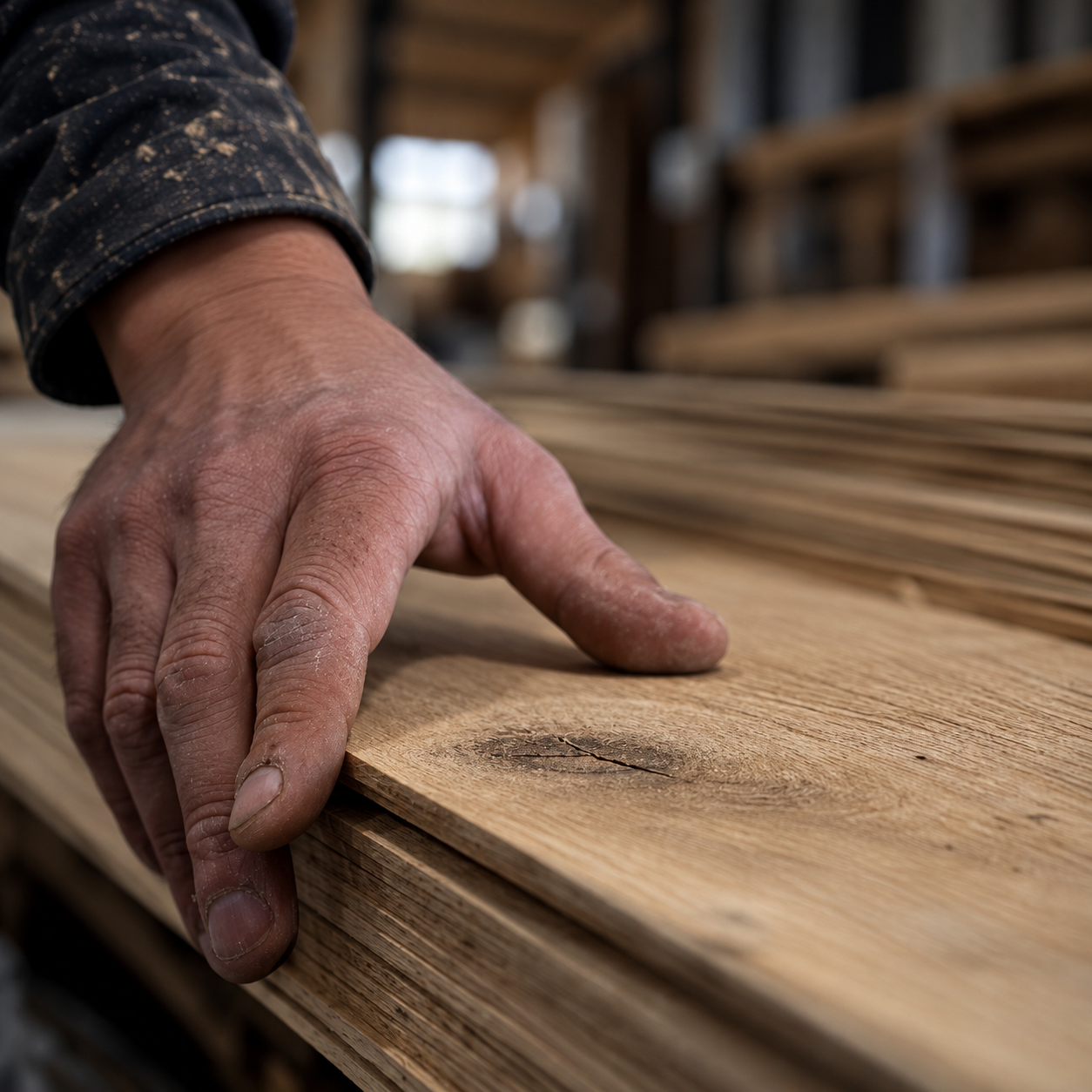
An oil finish allows more of the wood’s actual structure to be felt, from grain and knots to its natural variations.

To the touch, the natural character of the wood is often more apparent than the sensation of a coating sitting above it.

A water-based finish typically feels more uniform because it forms a continuous protective surface over the wood.

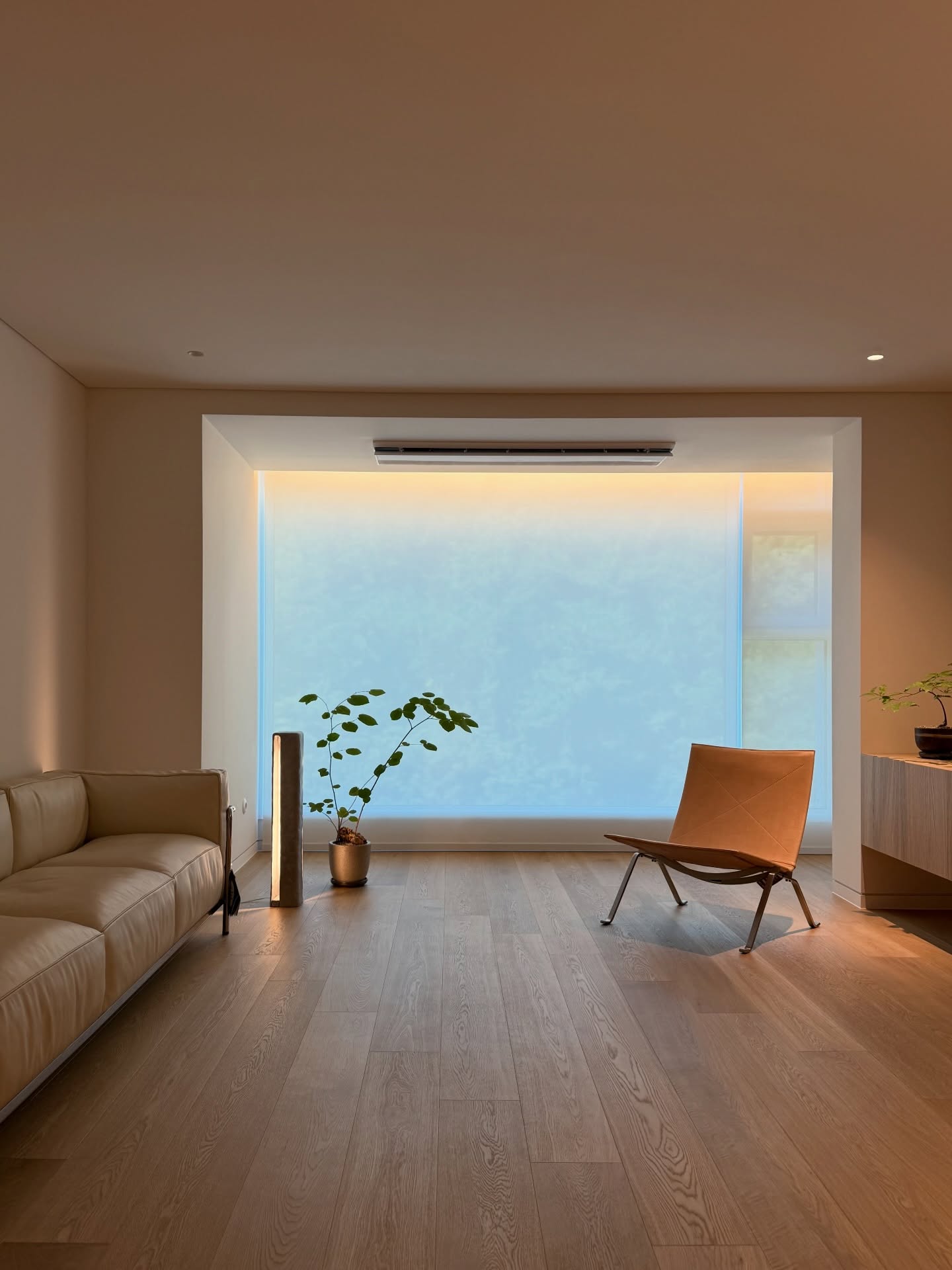
Under the same lighting conditions, an oil finish often appears deeper, while a water-based finish tends to look cleaner and more visually consistent.

Differences Over Long-Term Use

Beyond tactile character, oil and water-based finishes also change differently over extended use.

With an oil finish, the surface generally maintains a more direct relationship with the wood and allows ageing to develop more naturally over time.

A water-based finish focuses on maintaining a stable protective layer over the surface to reduce the effects of everyday use.

Each system has its own advantages and suits different expectations for material experience and real-world use.

Why Does NOËL Choose Oil Finish?

With a focus on natural materials and spatial experience, NOËL chooses oil-based finishing to preserve as much of the wood’s original tactile character as possible.

Rather than creating a coating that feels separate from the material, oil finish highlights grain depth, retains natural surface texture and allows the character of each wood species to remain more perceptible.

This also provides a basis for NOËL to develop more individual colour and surface treatments according to the character and practical requirements of each project.

Explore NOËL Natural Wood

Warranty Policy

View warranty terms

Engineered Structure

Explore the engineered wood layers

Laying Systems

Explore flooring patterns
Zalo Call
SAMPLE BOX

Exclusive Sample Collection

Request our wood flooring sample set.

Select wood type / tone
Oak - Light / Natural Tone
Walnut - Deep Tone
Ash - Natural
Teak - Natural
Herringbone / Chevron
Straight Lay