

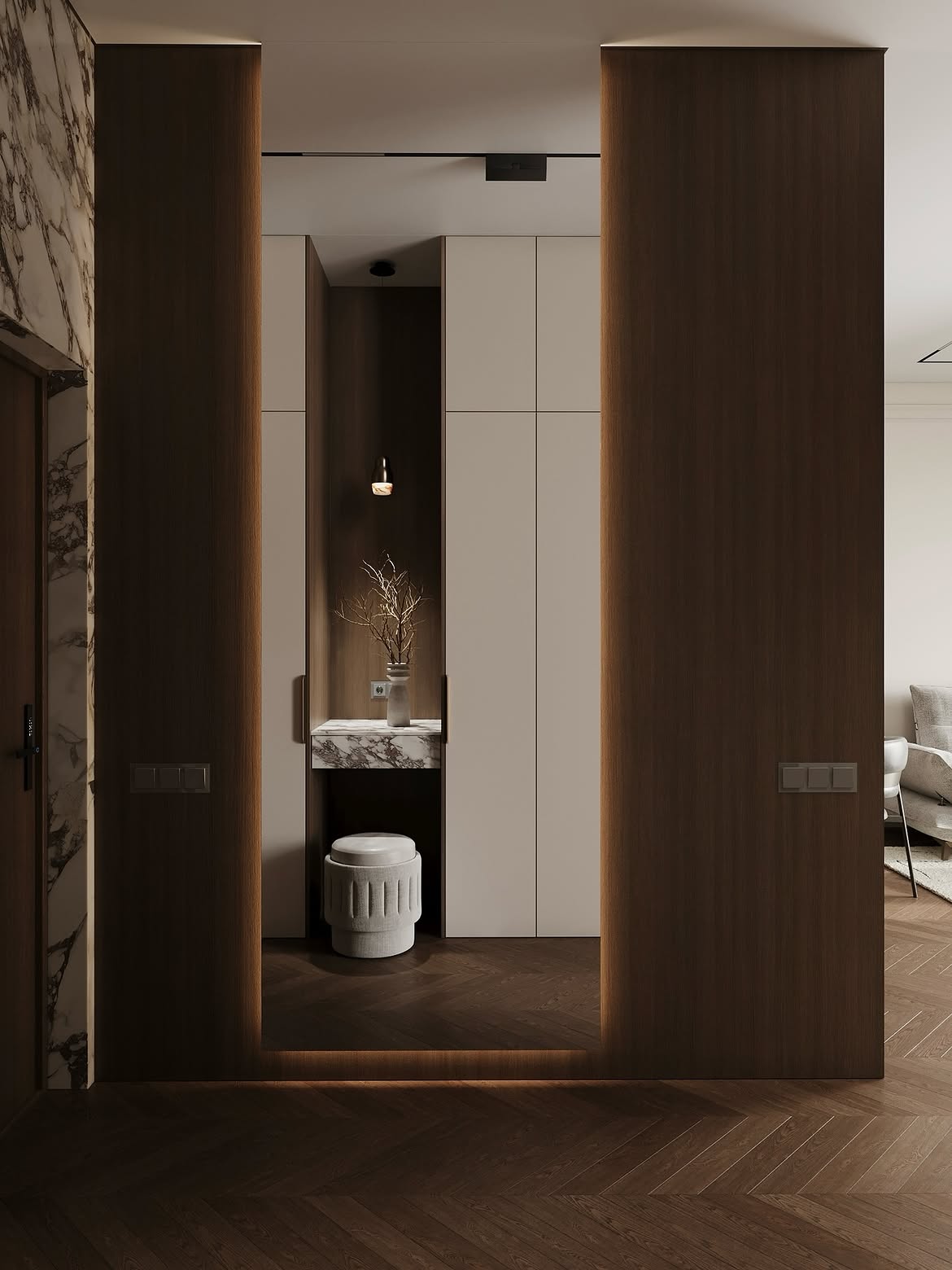


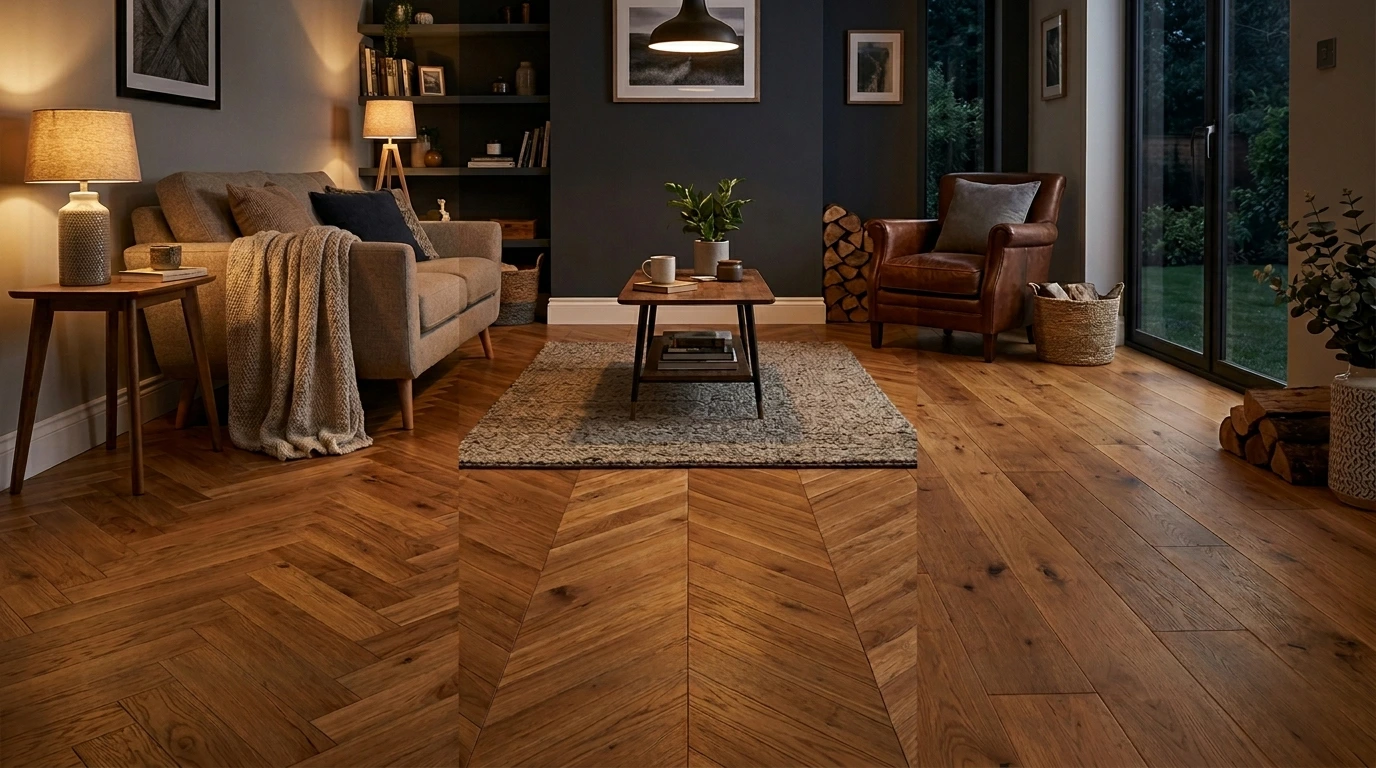
The same timber board can create entirely different spatial impressions depending on how it is laid. This is why a flooring pattern is increasingly treated as a design element rather than simply an installation method.
From classic plank layouts to herringbone and chevron, each pattern carries its own visual language. The choice influences not only the overall aesthetic, but also the perceived depth, proportion and rhythm of a space.
What Is Plank Flooring?
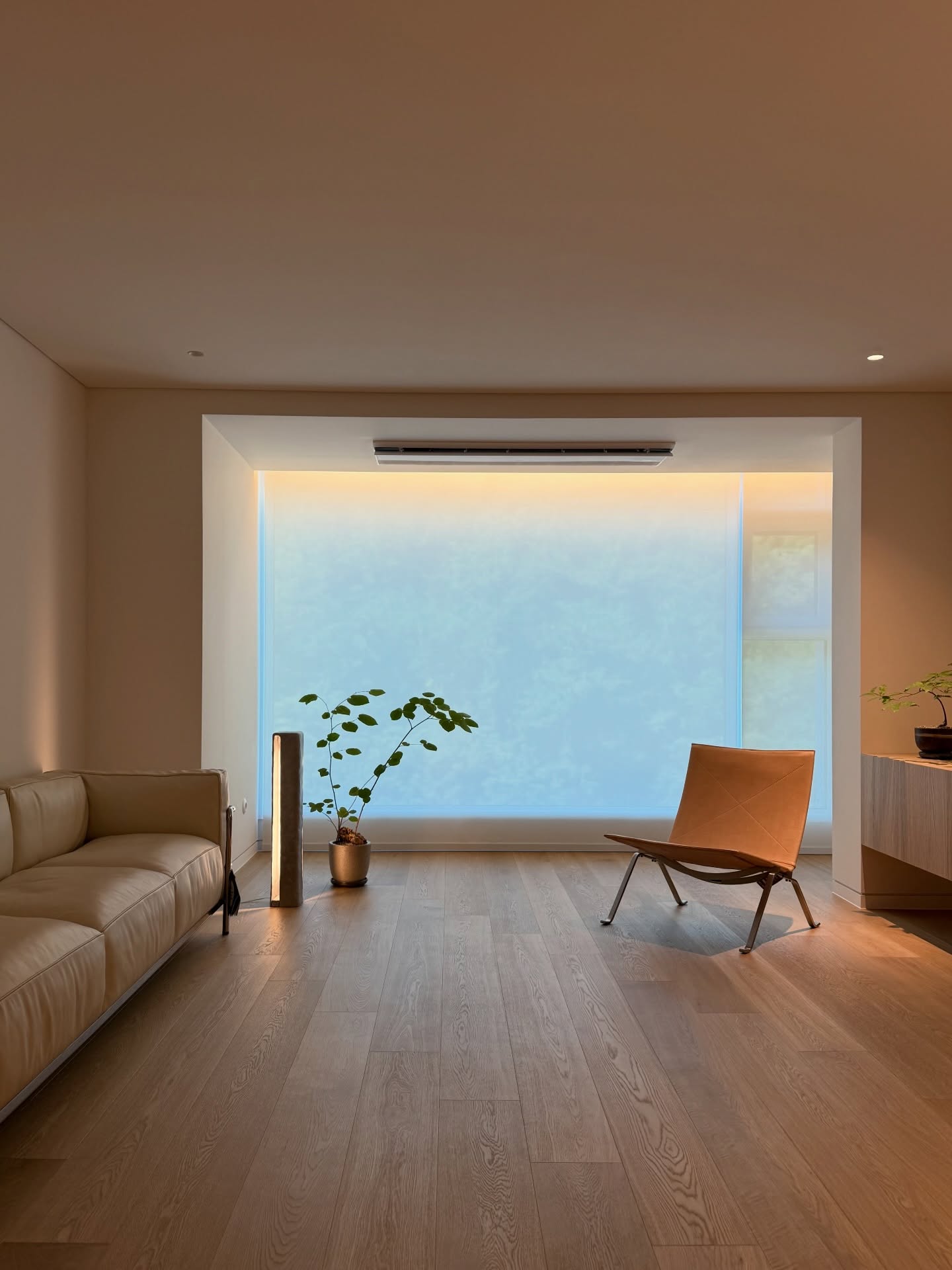
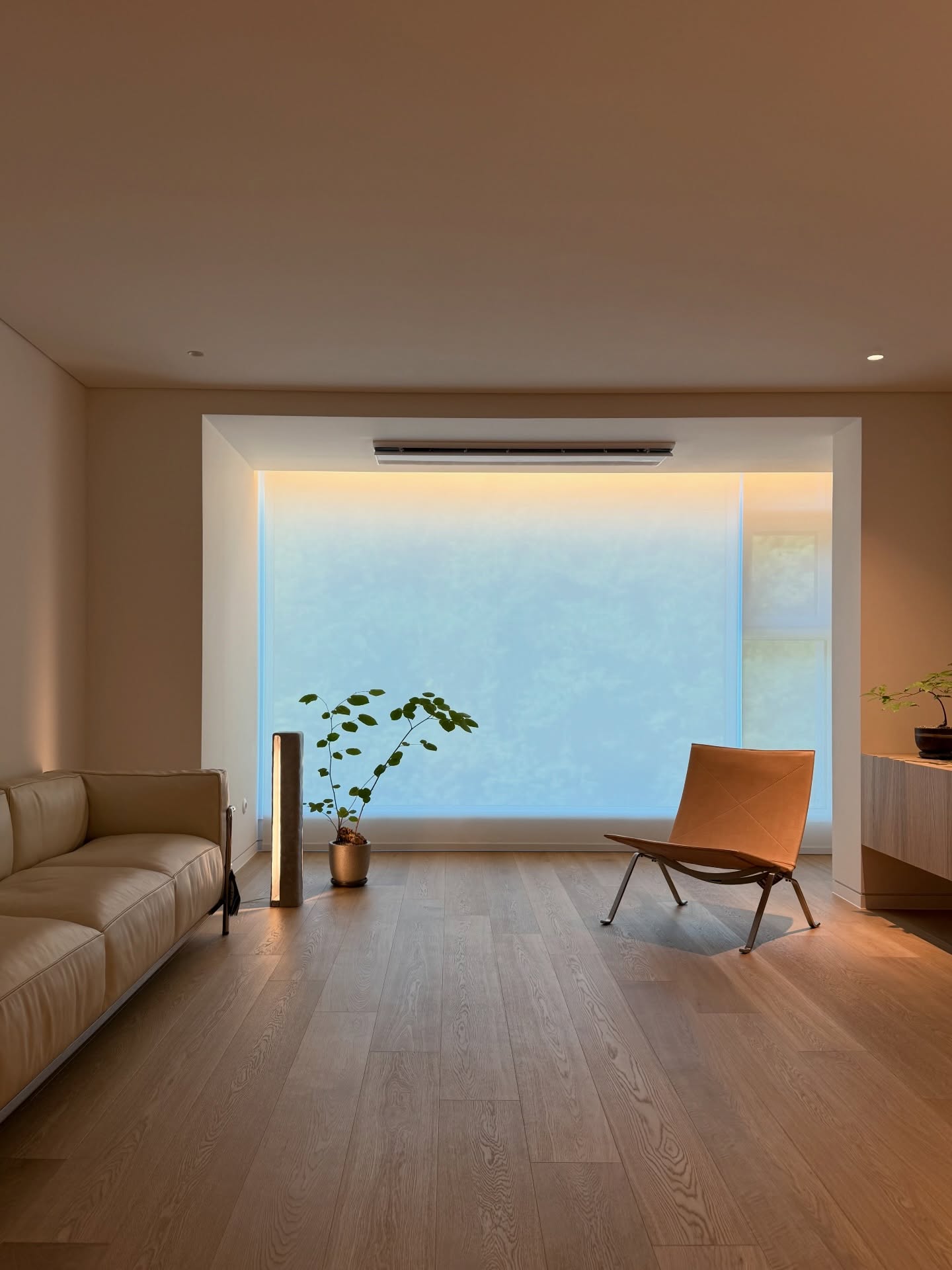
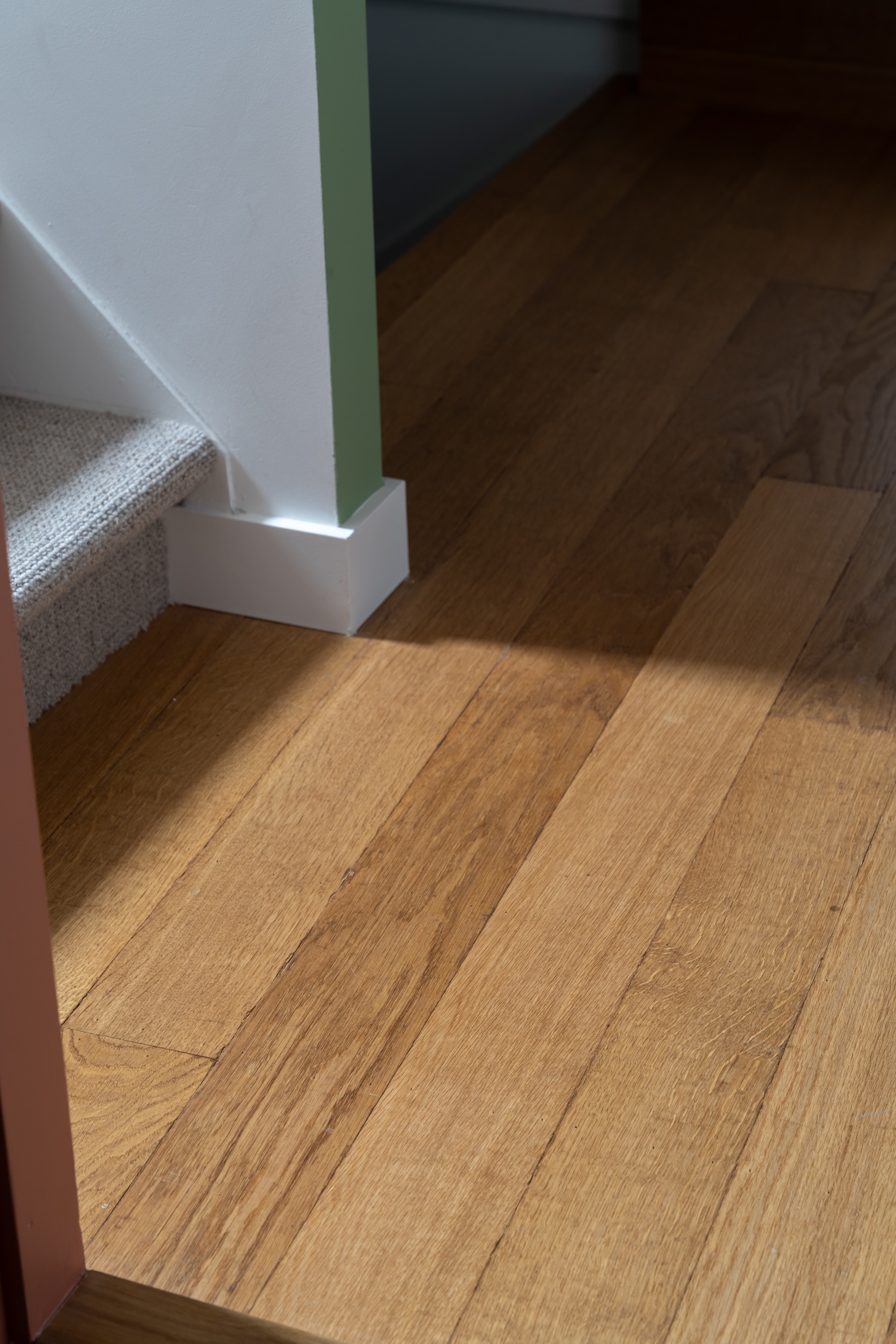
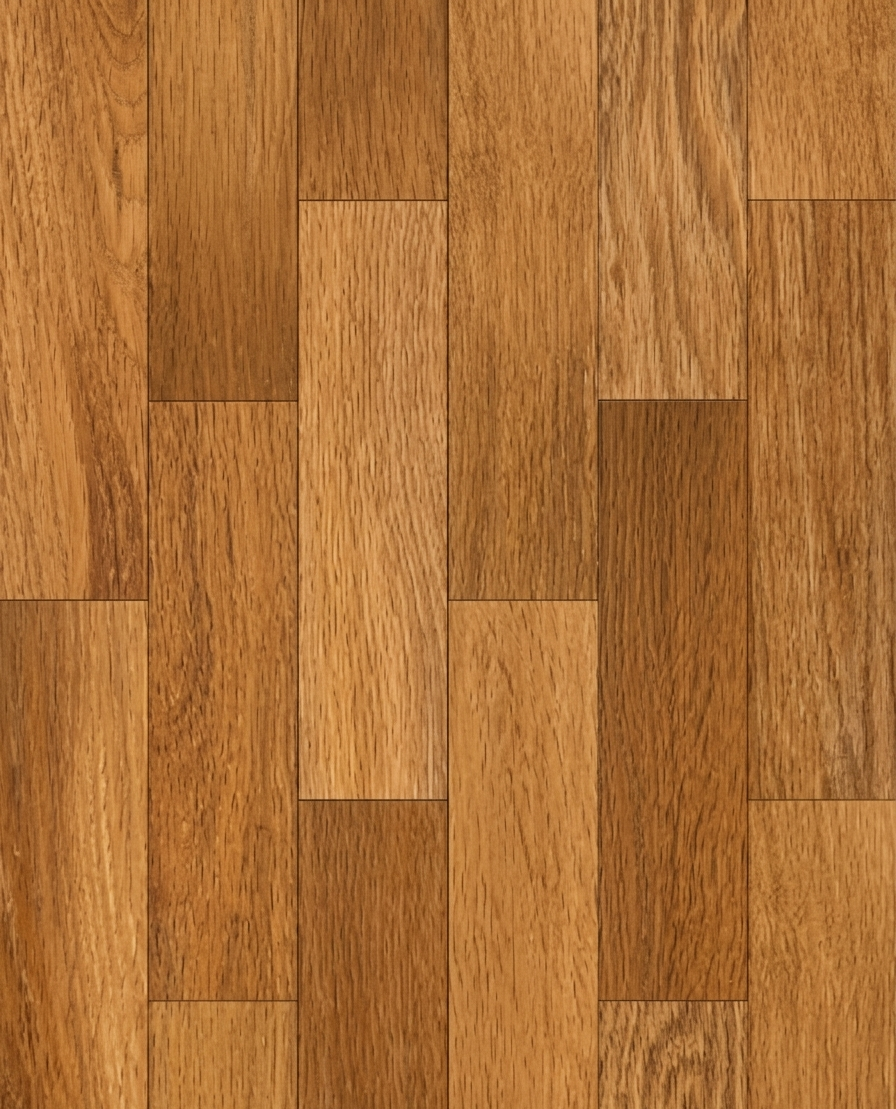
Plank flooring is the most straightforward installation pattern, with boards laid parallel in a consistent direction.
Its simplicity makes it versatile across many interiors. With considered board dimensions and colour, a straight-laid floor can feel both refined and contemporary.
Explore the Plank System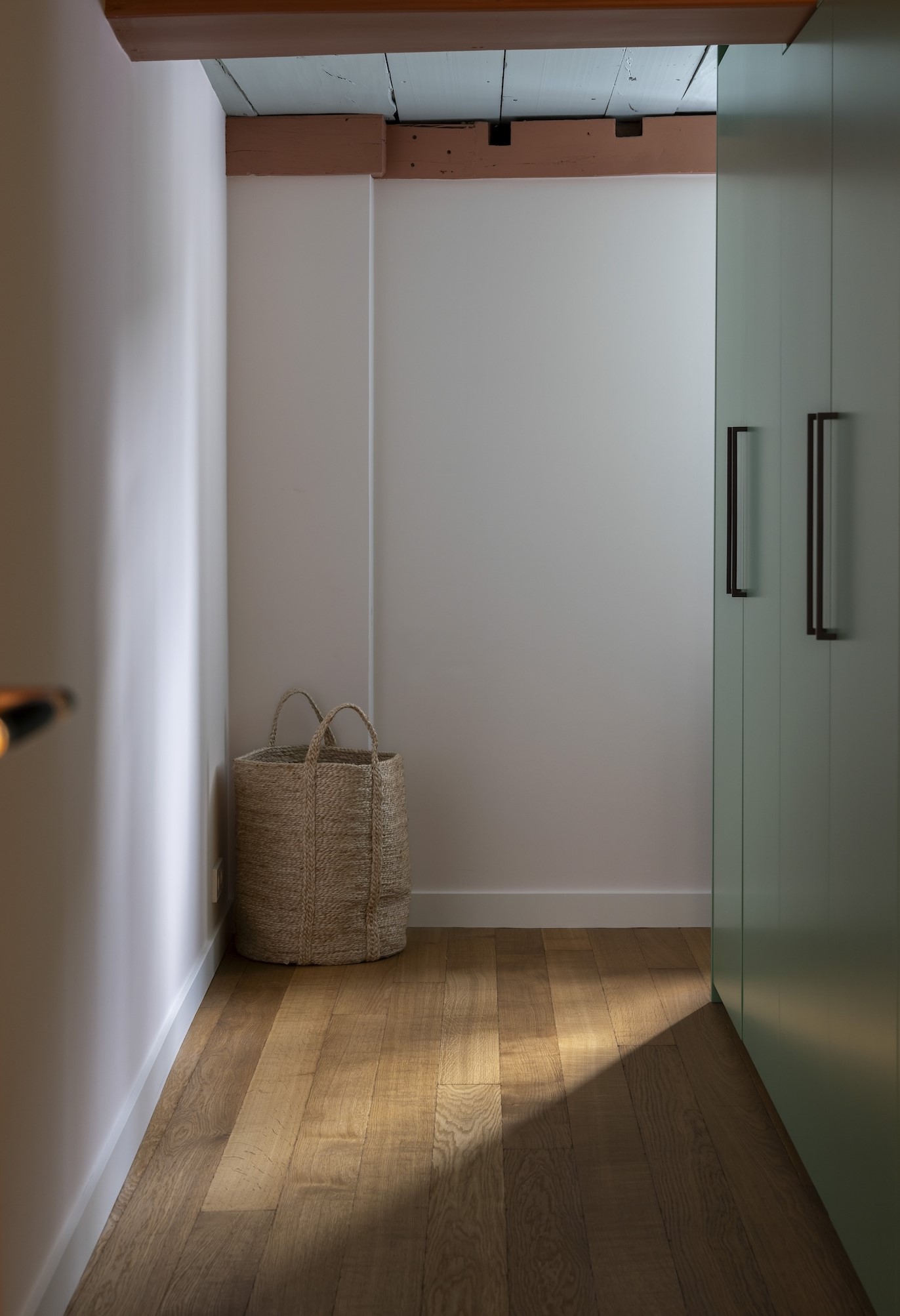
What Is Herringbone Flooring?
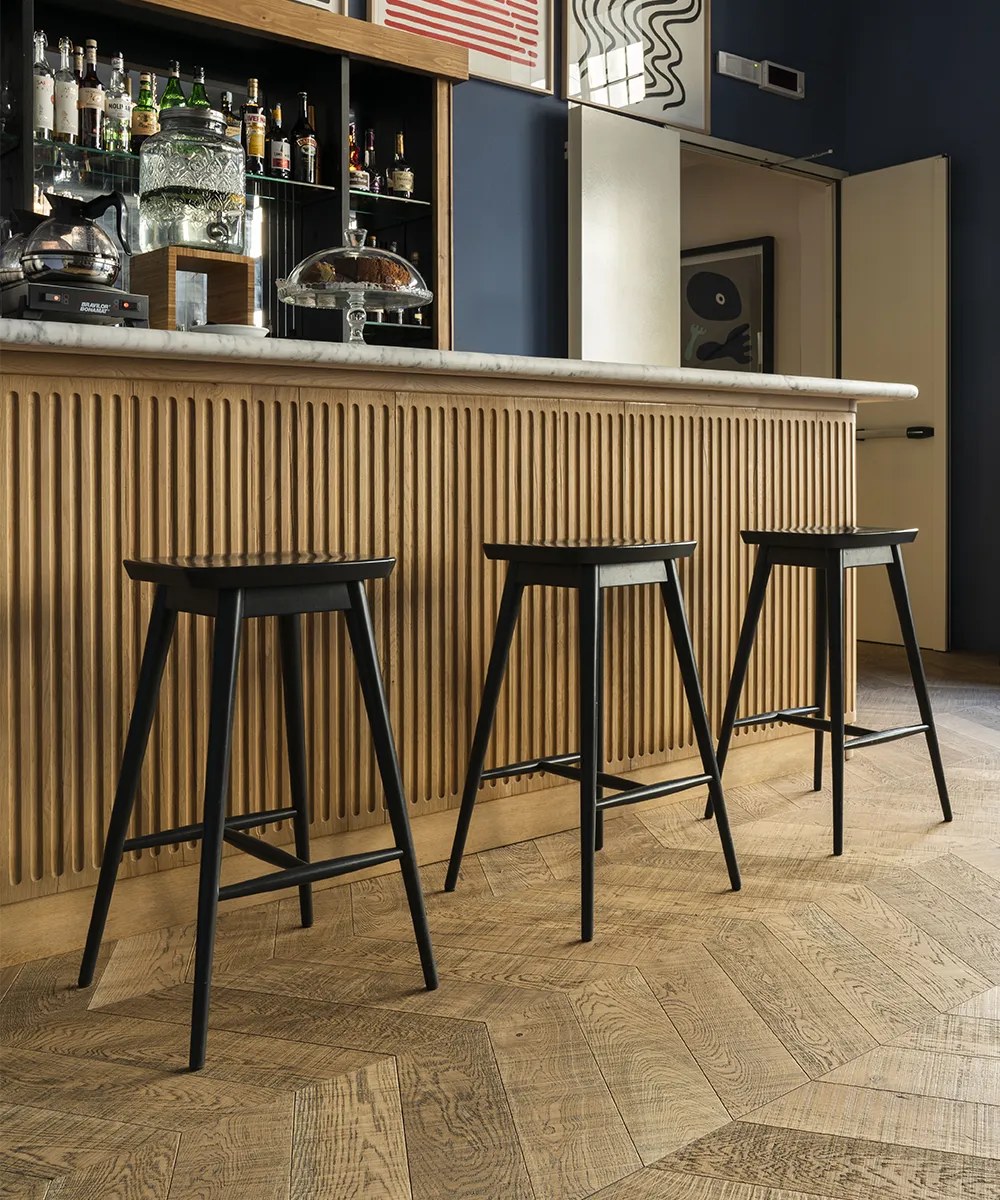
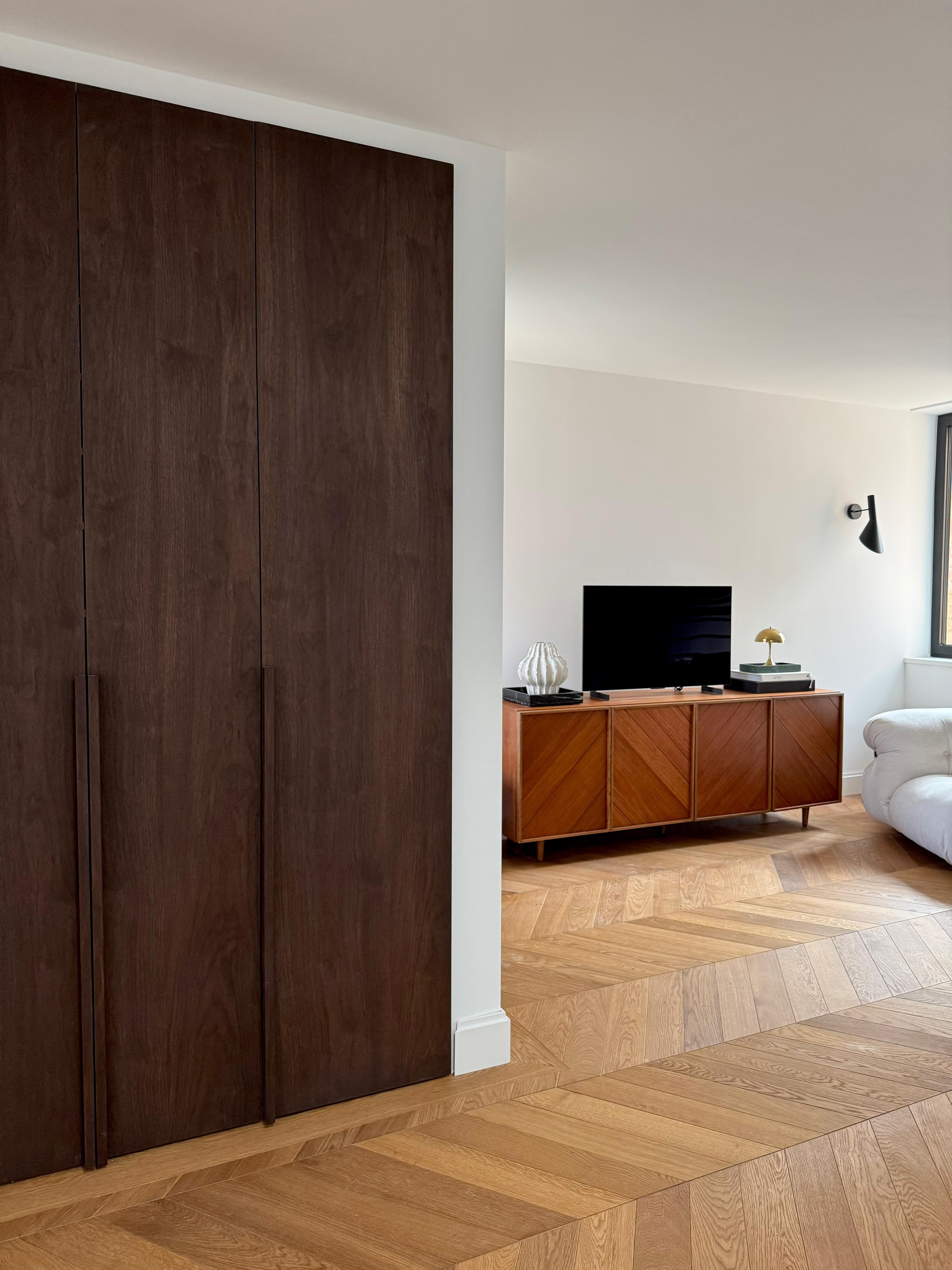
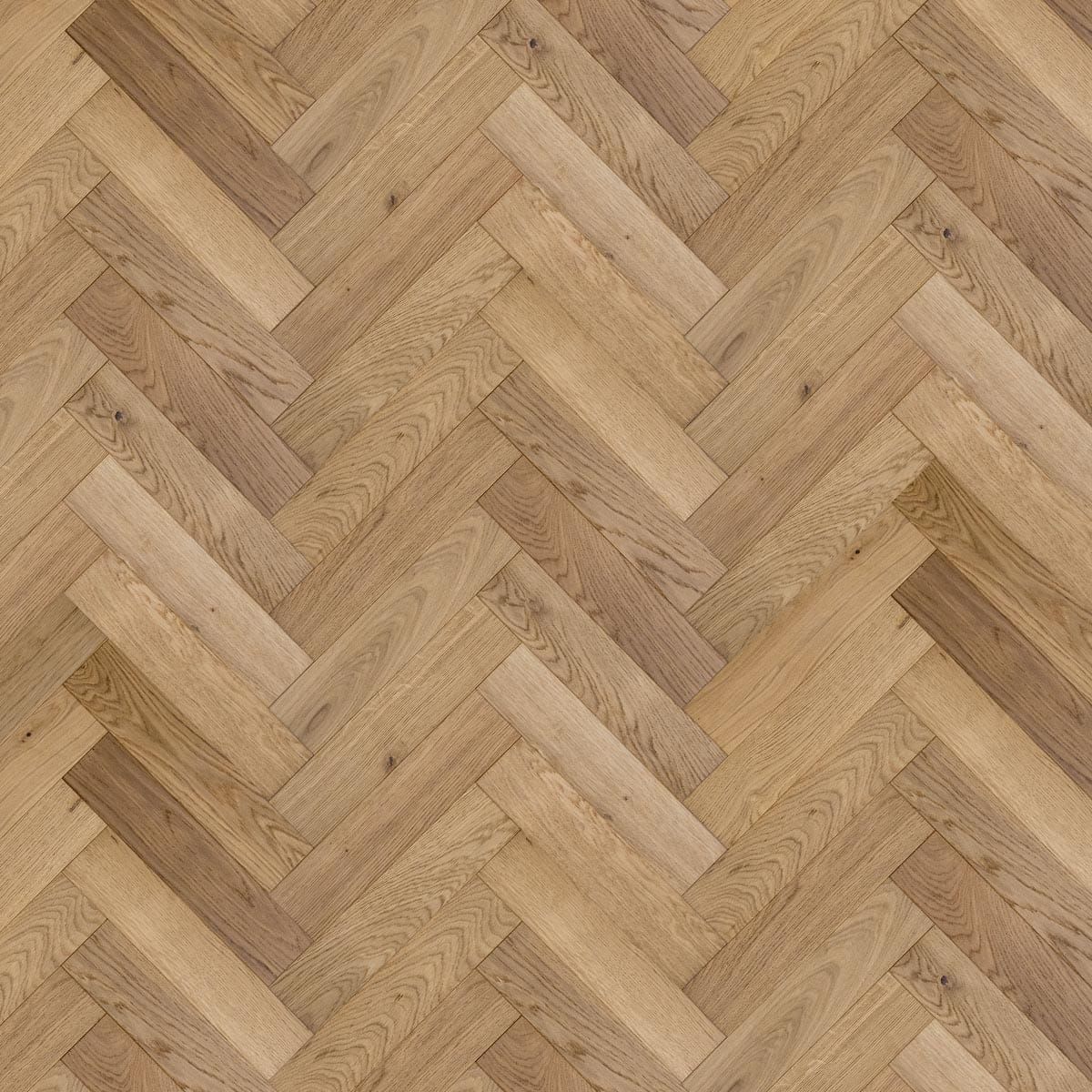
Herringbone arranges rectangular boards at right angles in a repeating zigzag, creating a distinctive visual rhythm.
Compared with plank flooring, herringbone introduces a stronger sense of movement and depth, making it effective where a more pronounced visual focus is desired.
What Is Chevron?
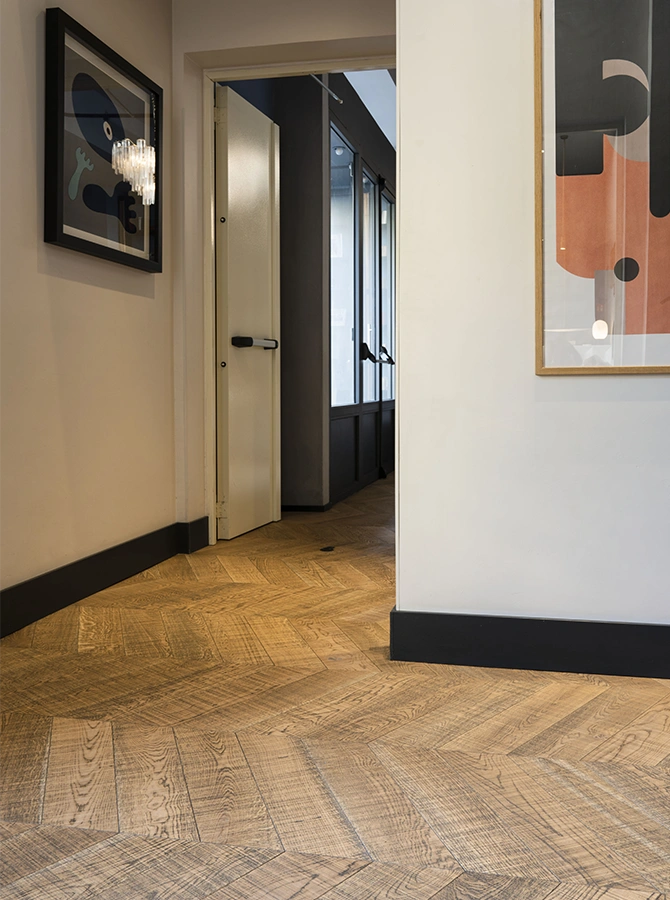
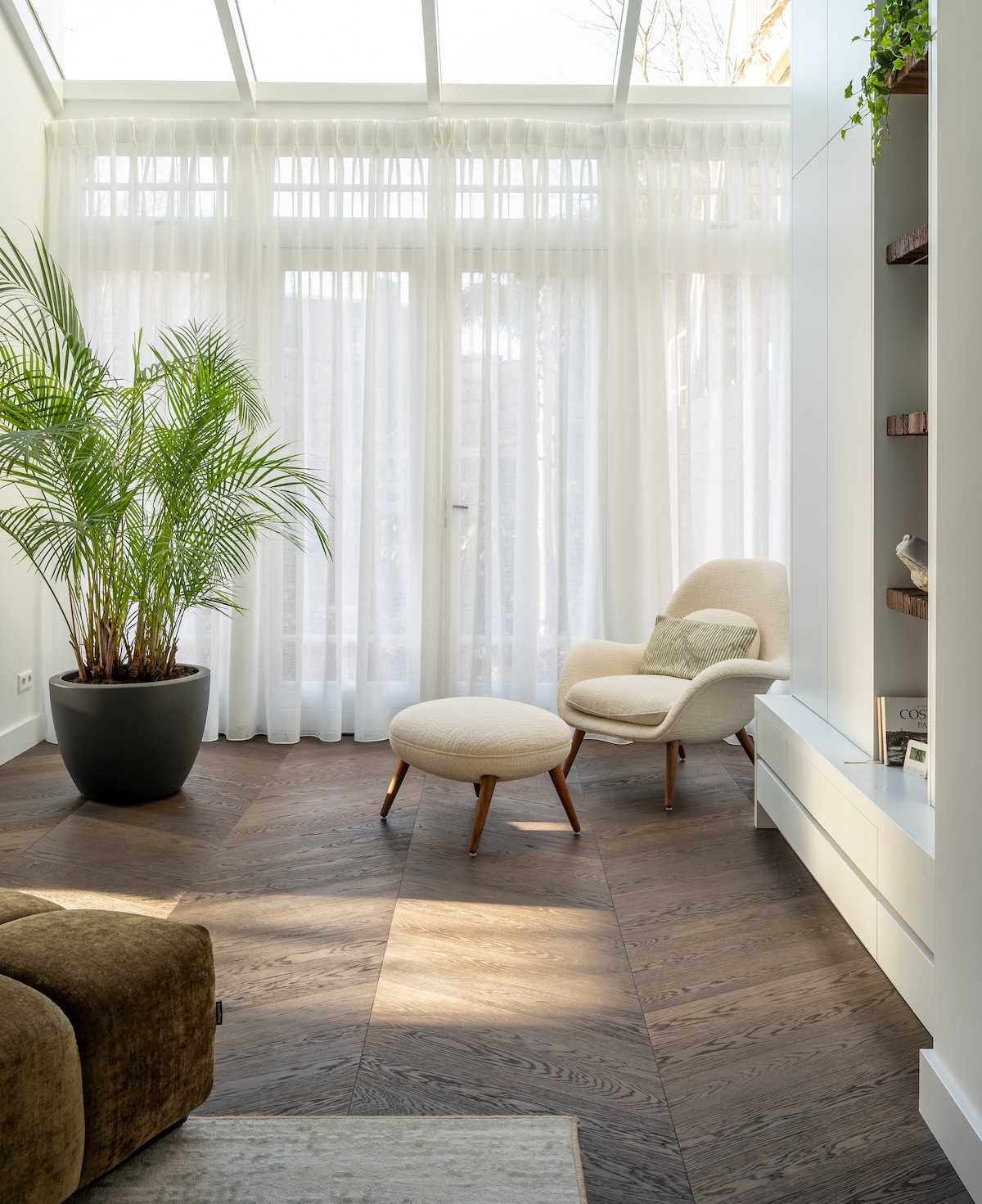
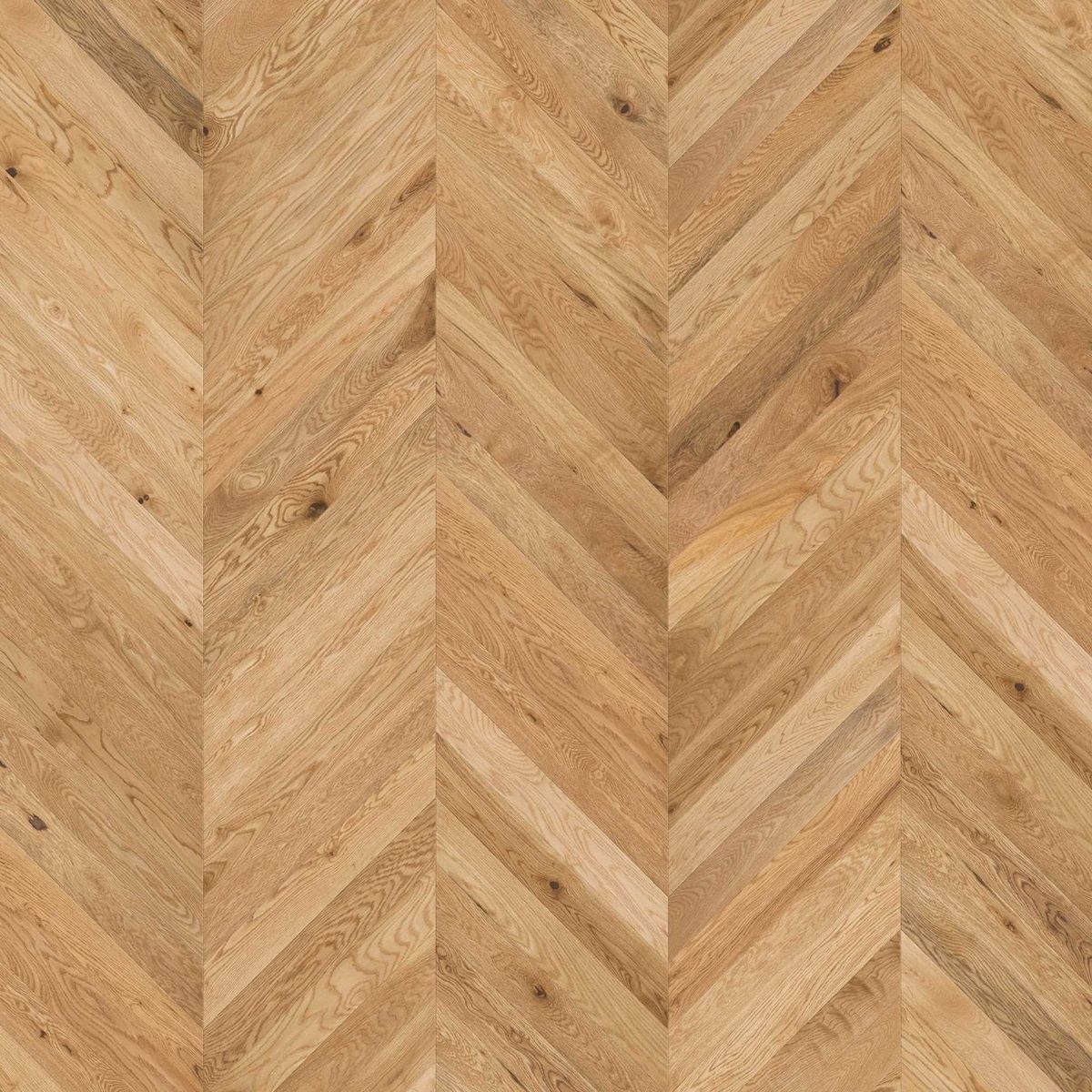
Chevron resembles herringbone, but the board ends are cut at an angle to form continuous V-shaped lines.
The result is cleaner and more directional, often complementing modern and minimalist interiors.
Explore Herringbone & Chevron Systems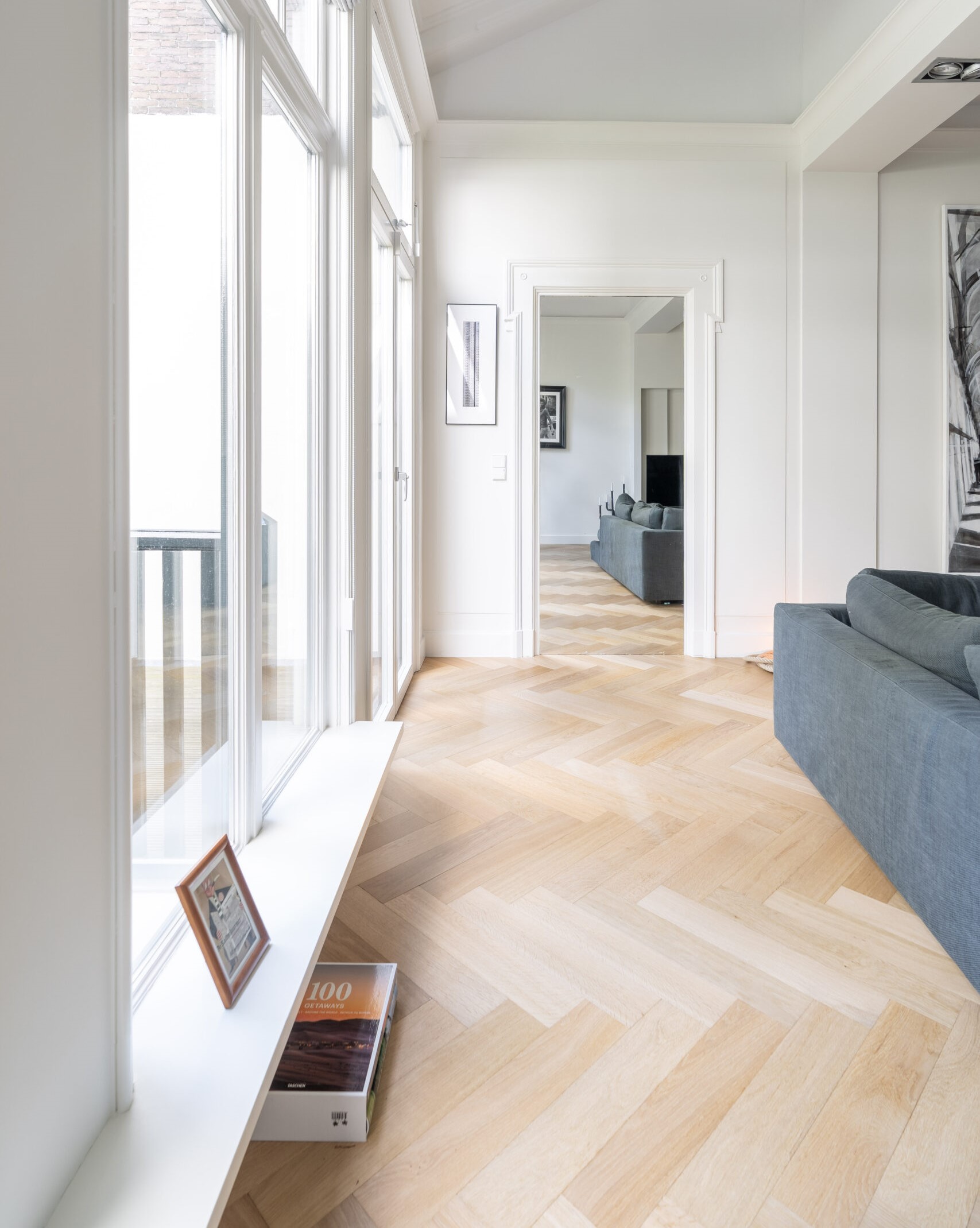
Pattern Flooring
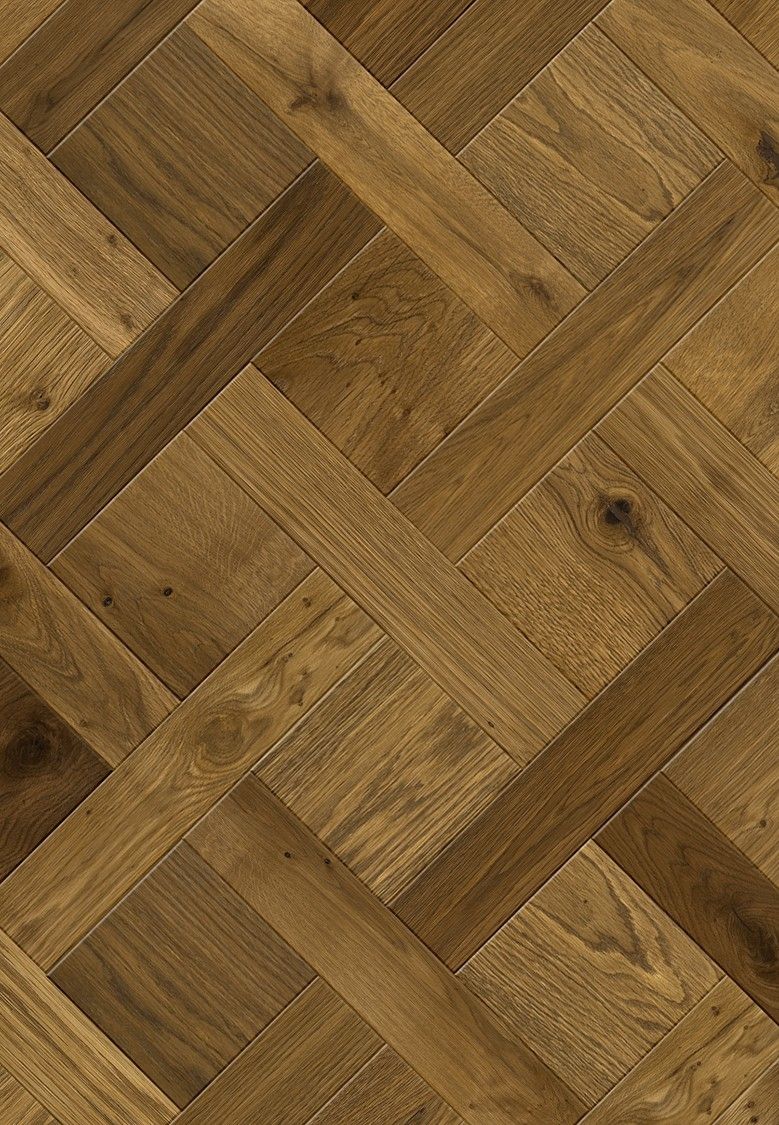
Beyond the familiar layouts, wood flooring can be assembled into more intricate patterns, often found in classical interiors or spaces with a strong decorative character.
These patterns demand greater precision in both design and installation, while giving the interior a highly distinctive identity.
Comparing Wood Flooring Patterns
Each layout creates a different aesthetic and spatial effect:• Plank: minimal, versatile and well suited to contemporary spaces
• Herringbone: creates rhythm and enhances visual depth
• Chevron: crisp, directional and strongly design-led
• Pattern: expressive and highly individual
How Does a Flooring Pattern Shape the Space?
A flooring layout does more than define the surface; it directly affects how the room is perceived:• Board direction can visually lengthen or narrow a space
• Repeated rhythm creates a sense of movement
• The pattern helps establish the room’s visual focus
Herringbone, for example, tends to make a space feel more dynamic, while plank flooring creates a calmer, more restrained impression.
Choosing a Flooring Pattern for the Space
The layout should respond to the scale and character of the room:• Smaller spaces: plank layouts can keep the visual field calm
• Medium-sized spaces: herringbone can introduce a considered focal point
• Larger spaces: chevron or more elaborate patterns can reinforce the architectural composition
Connecting Pattern with Flooring Structure and Material
Whatever the pattern, material quality and flooring construction remain fundamental to durability and long-term performance.
Today, patterns such as herringbone and chevron are often produced as engineered wood flooring to improve dimensional stability during and after installation.
Explore NOËL’s Flooring Structure