
 Vietnam (VIE)
 English (ENG)
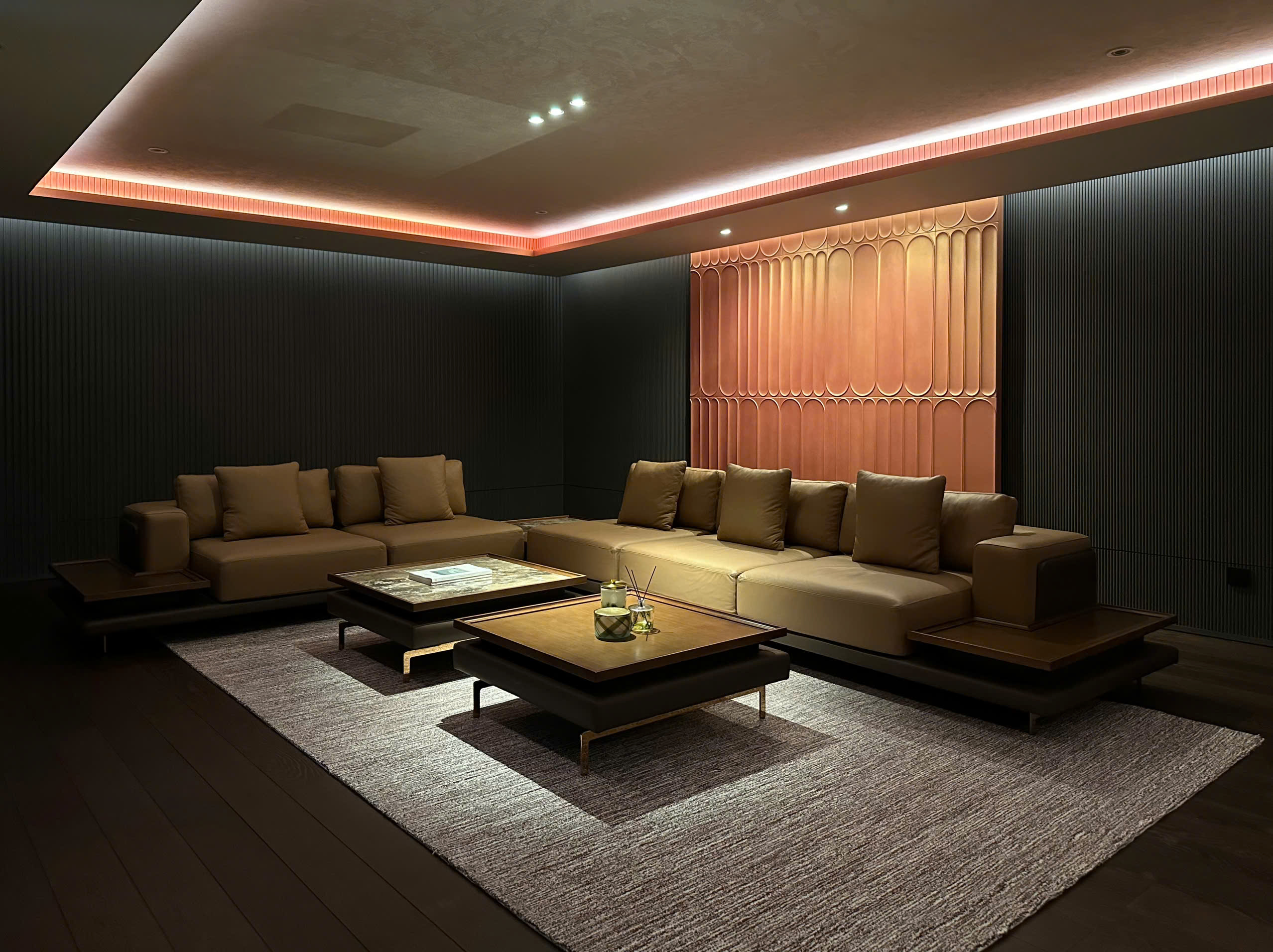
In Upper Nichols Canyon, a home designed in the 1960s retains the enduring clarity of Mid-Century Modern: precise geometry, considered light and a close relationship with the garden. Ome Dezin does not attempt to renew the house through a different style, but adds layers of materials and furnishings subtle enough to continue its original story. Tonal wood, plaster and stone form the foundation of that balance.
NOËL Parquet includes Home Tour Colony in the International Collection as a notable example of how natural materials can preserve an architectural spirit while allowing it to continue into a new generation.


The appeal of Home Tour Colony lies not simply in retaining the appearance of an era, but in extending those values without turning them into nostalgia.
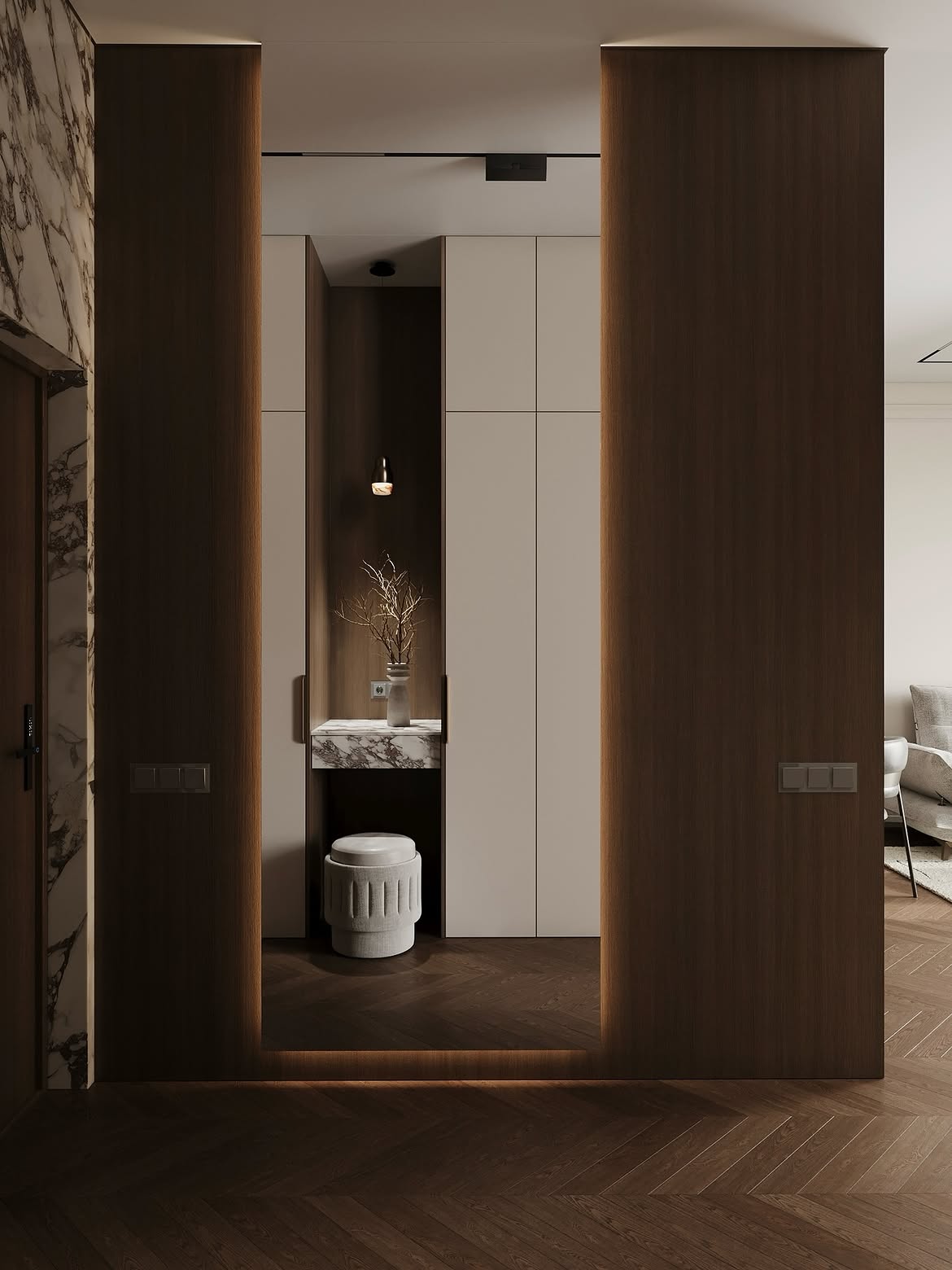
Stained white oak, Ceppo stone, marble and carefully considered interior details give the space warmth and depth while remaining faithful to the original structure.
For NOËL Parquet, the project shows that the value of natural materials lies not only in their beauty at completion, but also in their ability to move through time with the architecture.
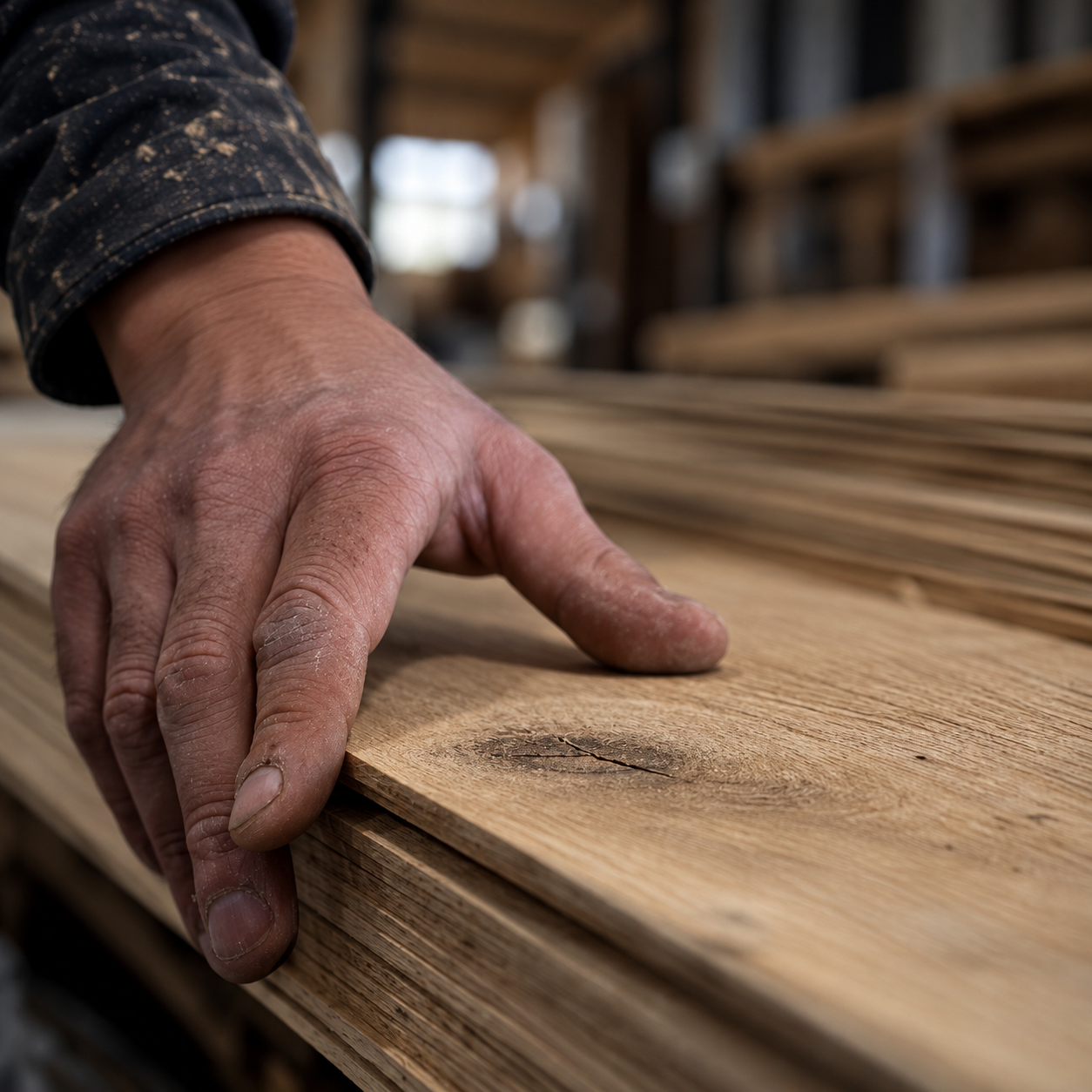
Solid wood flooring is cut from a single piece of timber and is therefore more susceptible to seasonal expansion, contraction, and warping. By contrast, engineered wood flooring uses a layered engineered structure: a natural wood wear layer is stabilized by cross-laminated Birch Plywood, helping control dimensional movement while preserving the authentic character of real wood.
Plank dimensions directly affect spatial perception. NOËL recommends considering the following factors:
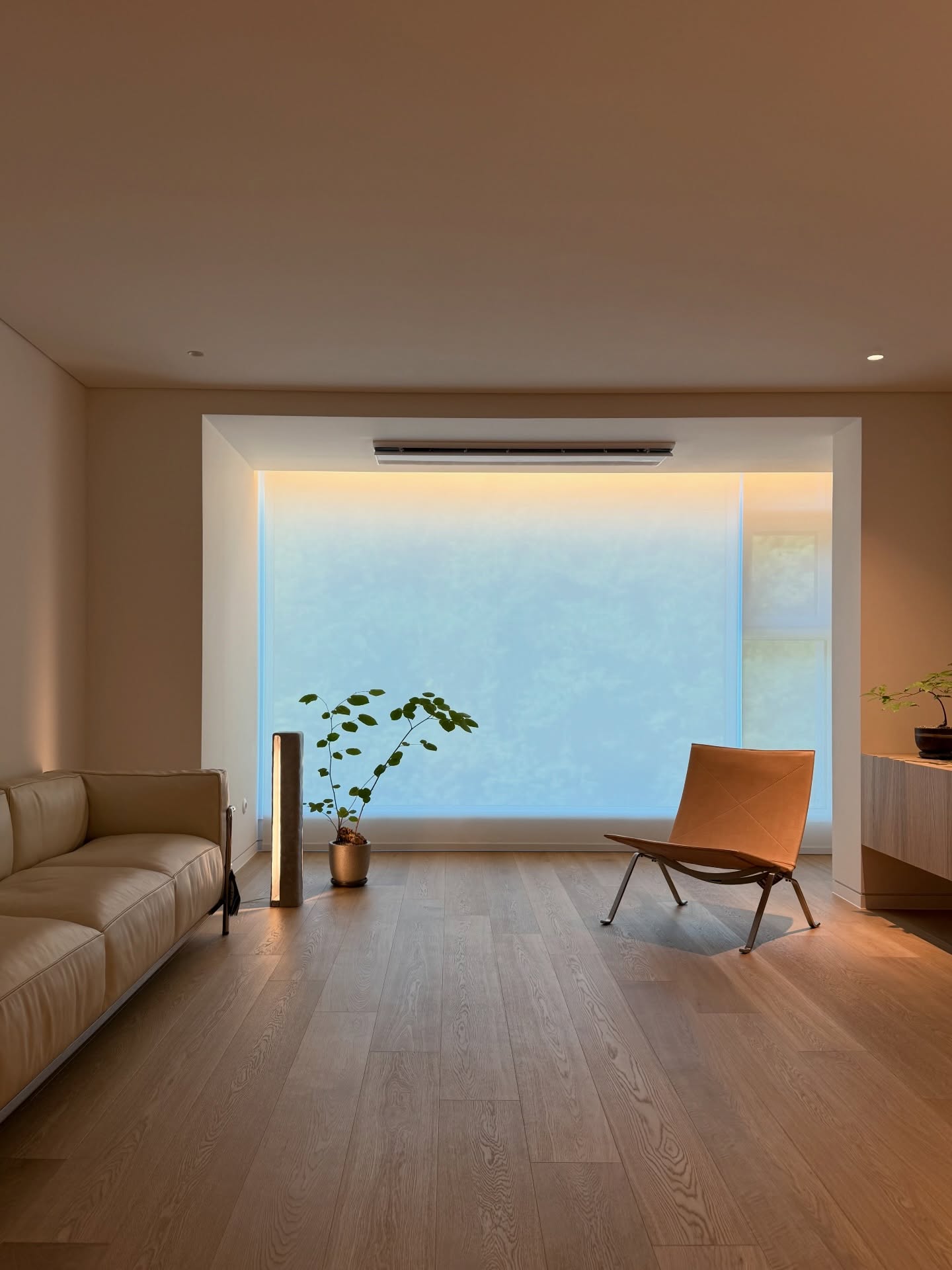
Spatial proportion: Larger spaces can accommodate wider planks to reduce visual joints and reinforce scale. Smaller rooms often benefit from medium-width planks for a more balanced composition.
Visual effect: Running planks along the room's length or in the direction of natural light can visually extend the space and enhance a sense of depth.
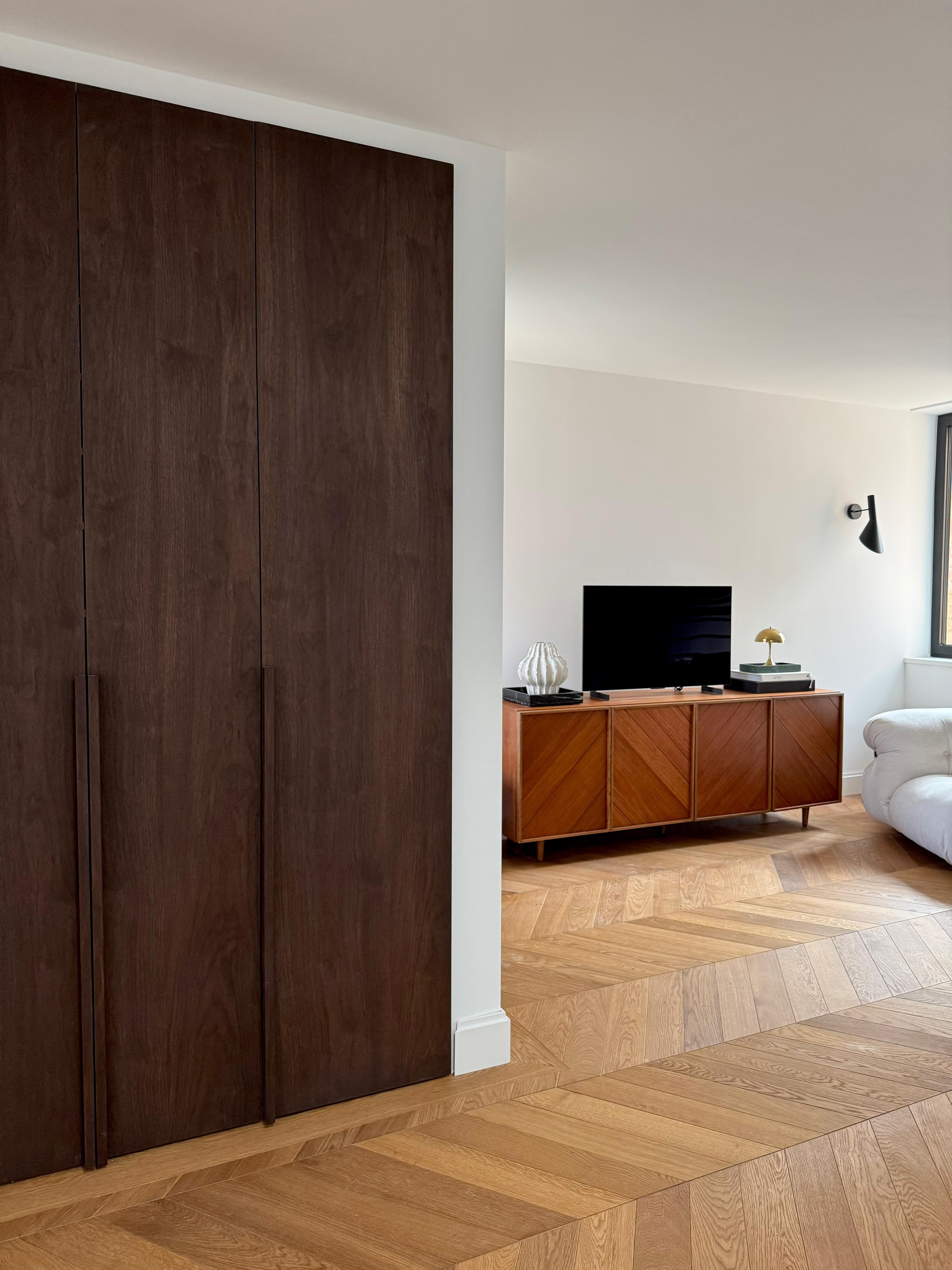
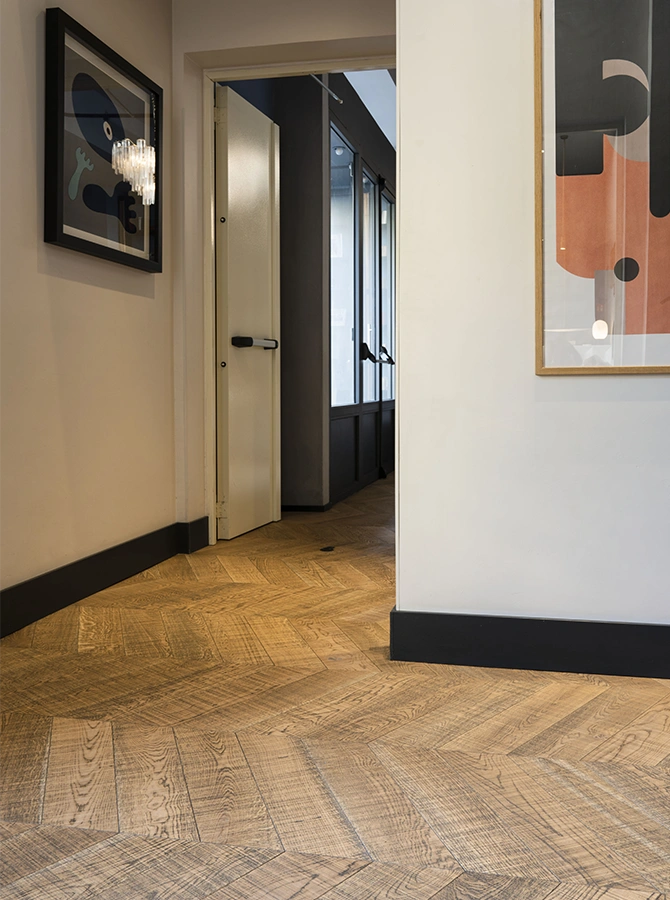
Personal aesthetic: You may choose a traditional straight lay for a restrained expression, or a more graphic pattern such as Herringbone to create a stronger architectural accent.
Installation quality depends on workmanship, subfloor flatness, and the use of appropriate installation materials such as adhesives and underlay. NOËL Parquet follows a process professional installation standard.
Yes. Our technical team can visit the site to take measurements, assess subfloor moisture, and recommend suitable flooring options for the space.
We provide a 12-month warranty for installation-related issues and a 10–25 year product warranty depending on the flooring range. Reported issues are handled within 48 hours. See the warranty policy of NOËL.
Dimensional stability is measured in laboratory conditions according to UNI EN 1910. By using a multilayer Birch Plywood core with a dedicated vinylic adhesive system, engineered wood flooring NOËL flooring maintains strong bending resistance and structural stability under changes in temperature and humidity.
Yes. With even heat transfer, natural flexibility, and the thermal behavior of wood, NOËL flooring can work with underfloor systems while maintaining comfort and dimensional performance.
Kitchen installations are suitable when the protective surface finish is properly maintained. In dry bathroom zones, flooring may be installed when the correct process moisture-control process is followed at wall edges and joints.
An oil finish penetrates into the wood fibers rather than forming a plastic-like film, preserving a more natural tactile quality. The product meets French VOC Label Class A+ for indoor air quality and also allows localized maintenance and restoration.
NOËL states that its adhesives and surface coatings do not use added formaldehyde. Products are specified to meet European Class A+ low-emission requirements for indoor air quality.
Technical test reports document measured performance such as hardness, abrasion resistance, and water resistance, while certifications such as CO/CQ, FSC, and CARB P2 relate to origin, compliance, or sourcing requirements.
Remove dust regularly and clean with a well-wrung damp cloth and a suitable neutral cleaner. Avoid excessive plain water, as mineral residue can dull the protective oil finish.
With an oil-finished, textured wood surface, everyday use can gradually develop a richer patina rather than producing the peeling associated with film-forming finishes.