
 Vietnam (VIE)
 English(ENG)
Set within a leafy property in Southampton, the house was transformed by Clive Lonstein from an old cottage into a retreat for family and friends. Its linear form and traditional cottage character remain, while the spatial organisation has been adapted for contemporary living, with six bedrooms and more generous shared spaces.
The relationship with the landscape is central to the design. French doors draw the garden into each room, while shifts in ceiling height and tall vaulted forms allow natural light to travel deeper inside. Rather than creating an interior defined by coastal motifs, a muted palette and natural surfaces keep attention focused on the greenery beyond.
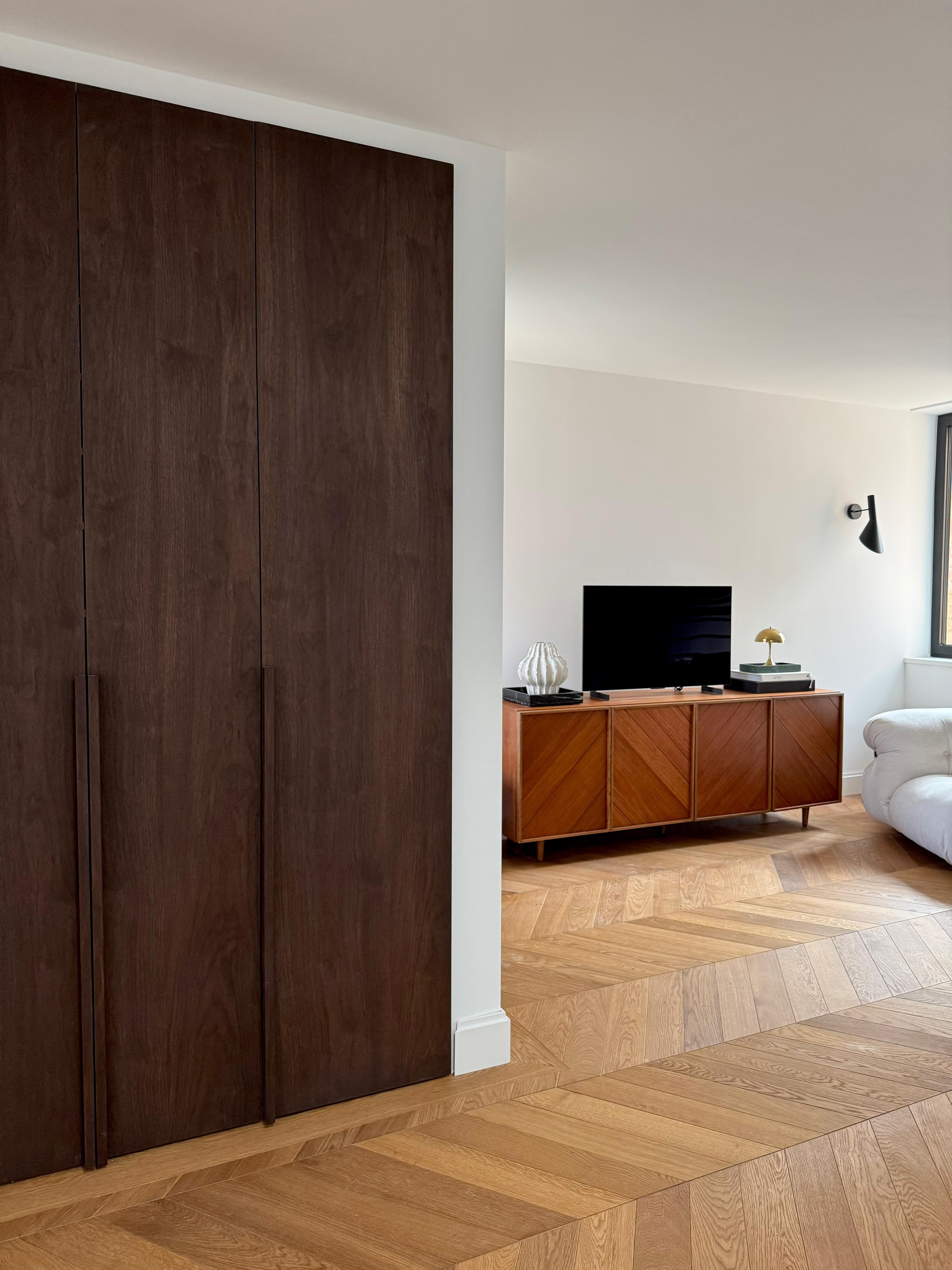
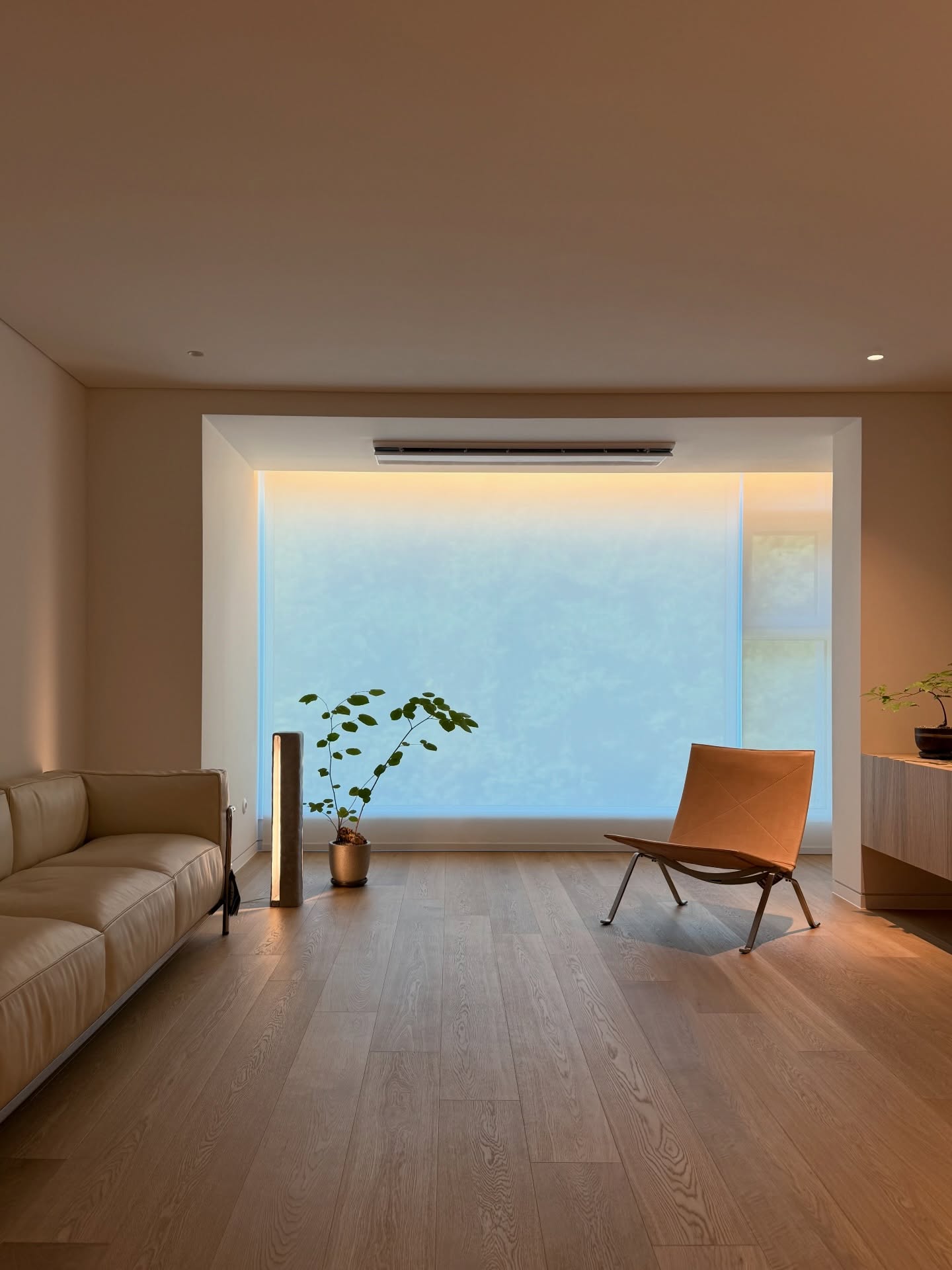
Inside, Oak flooring provides a warm foundation for an interior that feels naturally accumulated: contemporary pieces sit beside vintage finds, designer lighting is layered with artworks and textiles. Everything appears as though it has been here for years.


Southampton is particularly compelling in the way architecture and interior become a backdrop for the landscape rather than competing with it. Oak, a neutral palette, natural light and pieces from different periods form an interior that feels ordered yet genuinely lived in.
It also shows how Modern Organic can become more convincing when it is not reduced to a material checklist or aesthetic formula. When new and old elements are placed together naturally, a space begins to acquire memory, depth and an identity beyond the polished appearance of a newly completed project.
Collected over time.
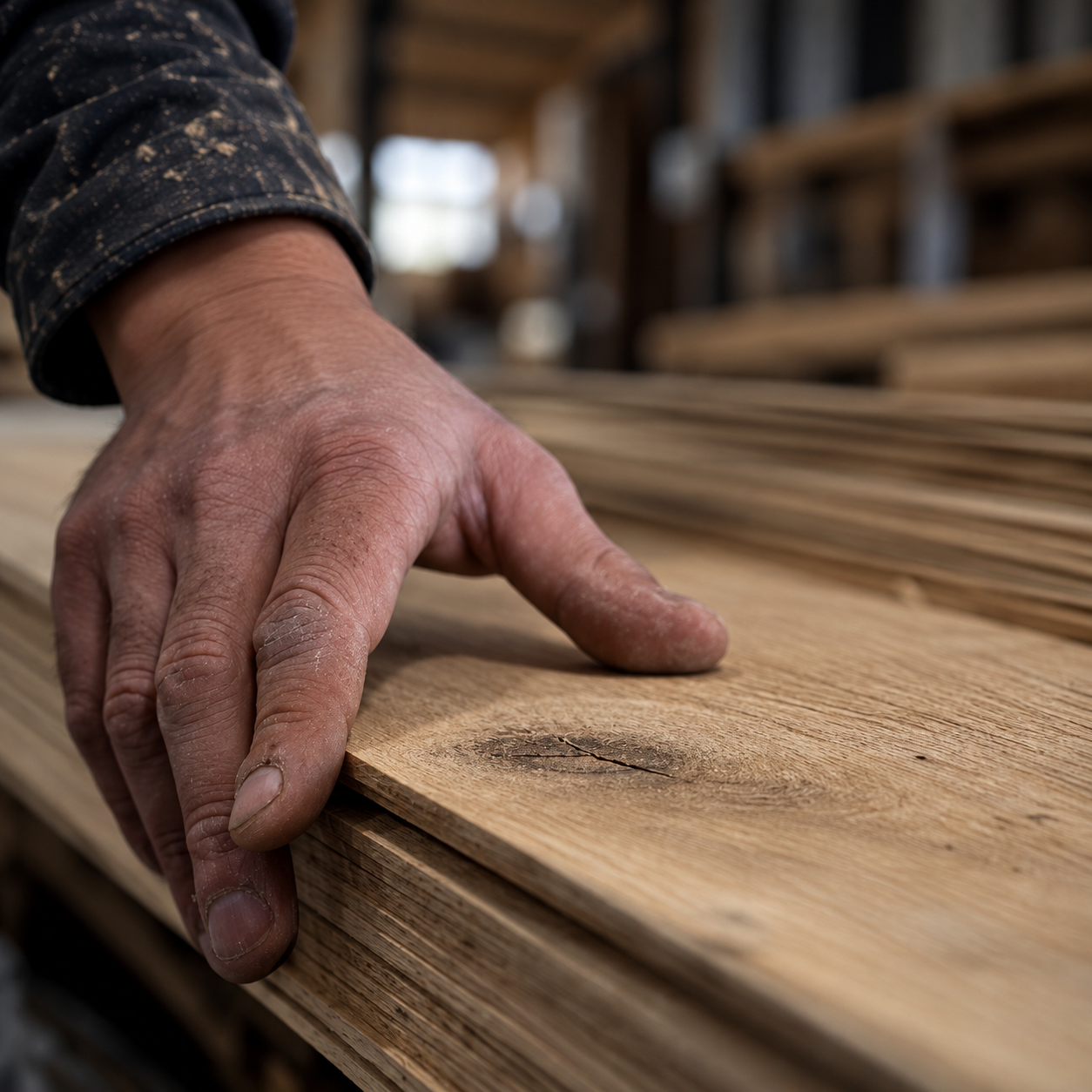
Solid wood flooring is cut from a single piece of timber and can therefore be more susceptible to expansion, contraction and warping as conditions change. By contrast, engineered wood flooring uses a multi-layer construction in which the natural wood surface is stabilised by cross-layered Birch Plywood beneath, helping control dimensional movement while preserving the authentic character of real wood.
Plank dimensions have a direct influence on how a space is perceived. At NOËL, we recommend considering the following factors:
Spatial Proportion: Larger spaces can accommodate wider boards, reducing the number of visible joints and reinforcing a more expansive sense of scale. Smaller spaces often benefit from more moderate board widths for a balanced composition.
Visual Effect: Laying boards along the length of a room or in the direction of natural light can visually extend the space and create a greater sense of depth.
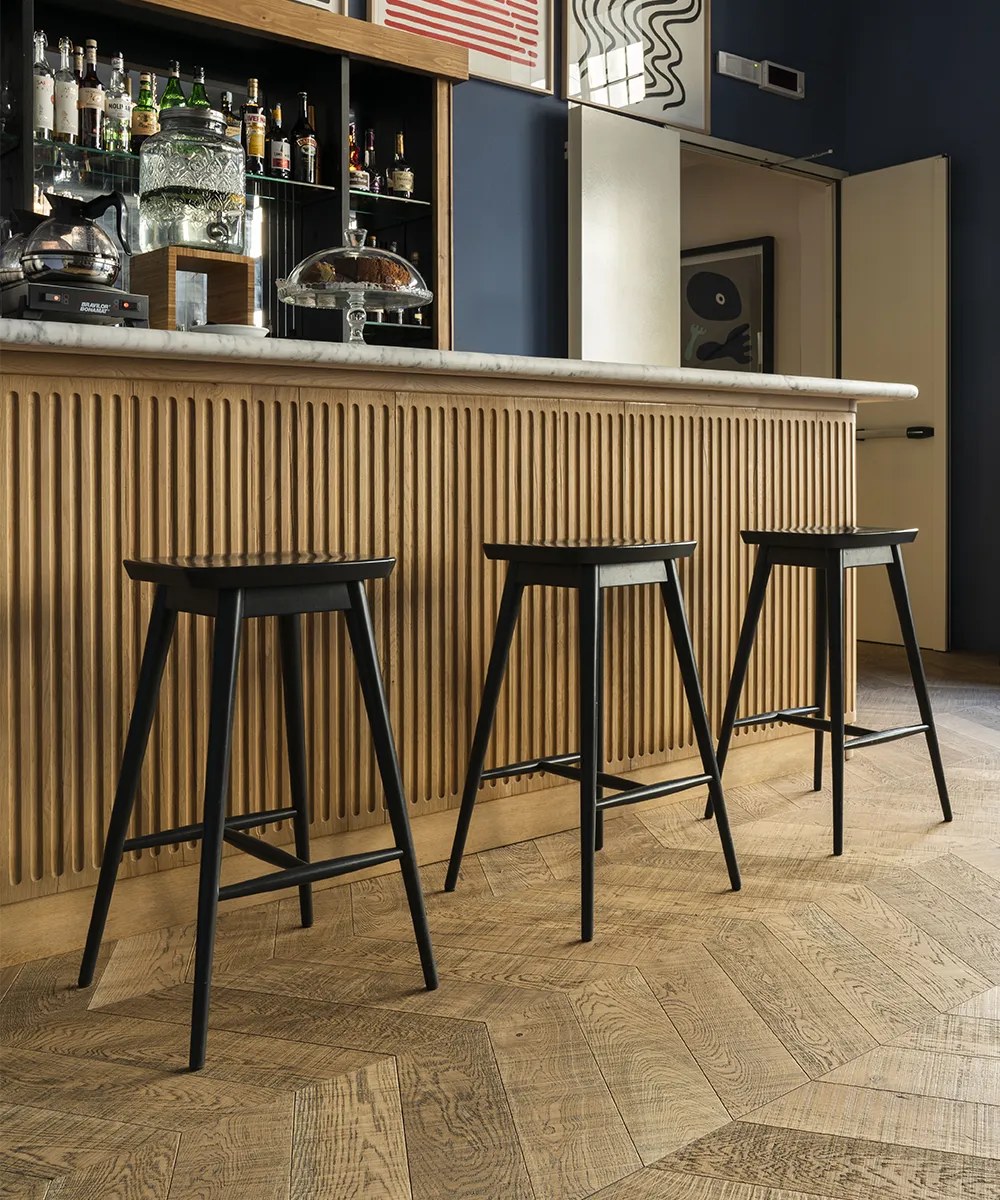
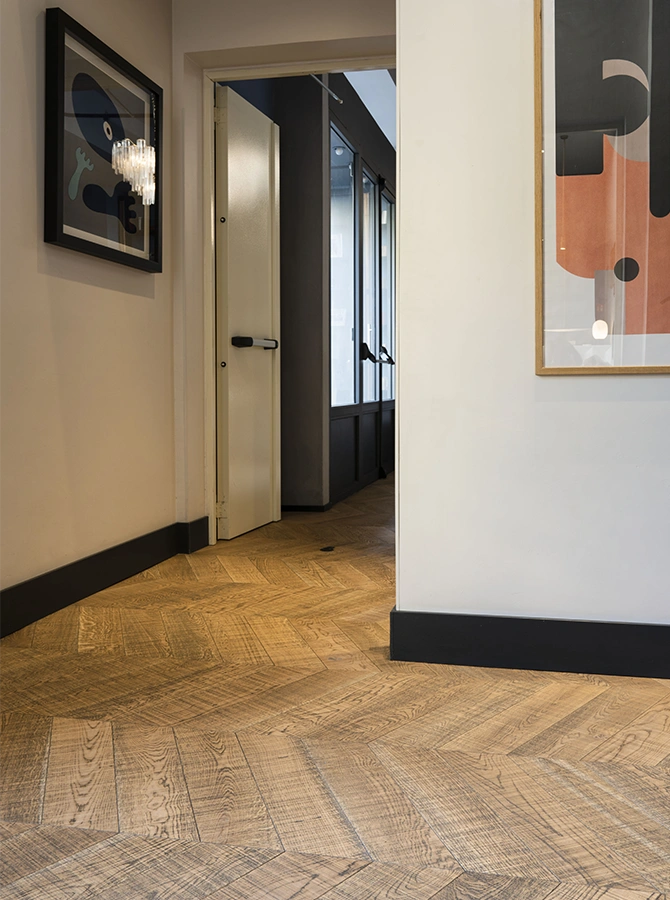
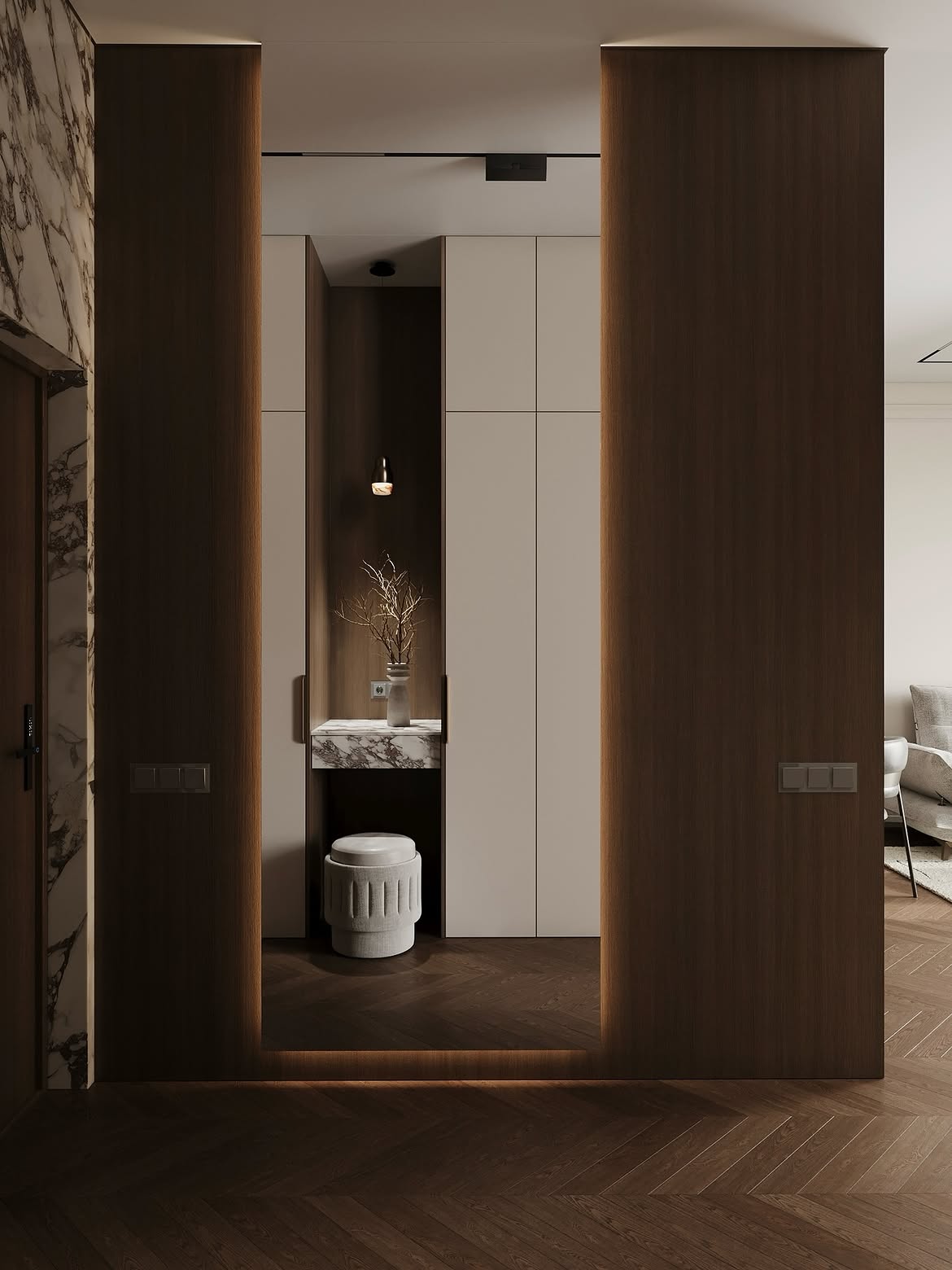
Personal Aesthetic: You may choose a traditional straight-lay pattern for a restrained expression, or a more graphic pattern such as Herringbone to create a distinctive architectural rhythm.
Installation quality depends on workmanship, subfloor flatness and the use of appropriate installation materials such as adhesives and underlay. NOËL Parquet follows a process designed to support professional installation standards.
Yes. NOËL’s technical team can visit the site to measure the space, check subfloor moisture and advise on suitable product specifications.
NOËL provides a 12-month warranty for installation-related issues and a 10–25 year product warranty depending on the flooring line. Reported issues are handled within 48 hours. Learn more about our warranty policy from NOËL.
Dimensional stability is measured in laboratory conditions according to UNI EN 1910. By using a multi-layer Birch Plywood core with a dedicated vinylic adhesive system, engineered wood flooring NOËL flooring is designed to resist bending forces and maintain structural stability as temperature and humidity conditions change.
Yes. The source specifies NOËL flooring as suitable for underfloor heating and cooling systems, supported by the natural thermal behaviour and dimensional performance of the engineered construction.
The source specifies that kitchens are suitable where the protective surface finish is maintained. In dry bathroom zones, installation is possible when the appropriate process wall-edge moisture protection and specialised joint waterproofing procedures are followed.
The oil finish penetrates into the wood fibres rather than forming a plastic-like film over the surface, helping preserve a more natural tactile quality. The product is stated to meet French VOC Label Class A+ for indoor-air safety and allows localised restoration and maintenance.
The source states that NOËL does not use adhesives or surface coatings containing formaldehyde and that its products meet European Class A+ requirements for very low emissions.
Technical test reports document measured physical and mechanical properties such as hardness, abrasion resistance and water resistance. Certifications such as CO/CQ, FSC and CARB P2 relate to origin, compliance or responsible sourcing requirements.
Remove dust regularly and clean with a well-wrung damp cloth together with a suitable neutral cleaning solution. Avoid leaving excess water on the surface, as mineral residue can affect the appearance of the protective oil finish.
With an oil-finished surface and textured wood treatment, everyday use can gradually develop a natural patina, giving the material a deeper and warmer appearance over time.