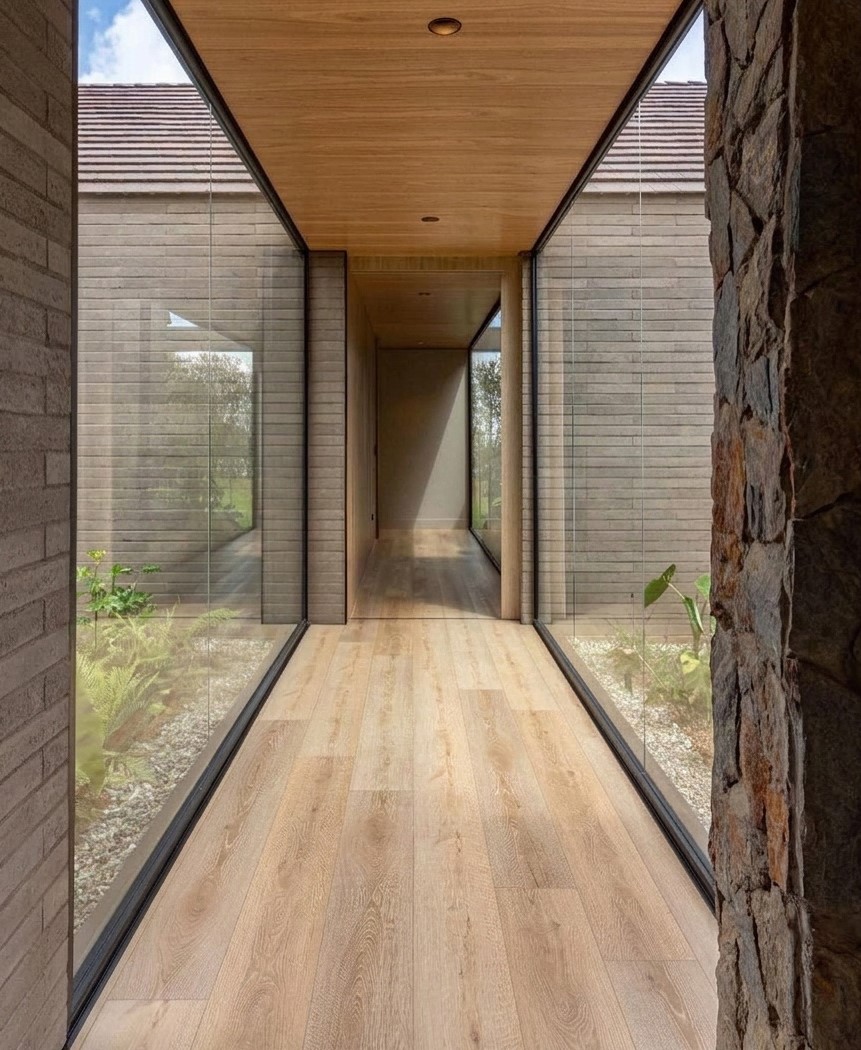
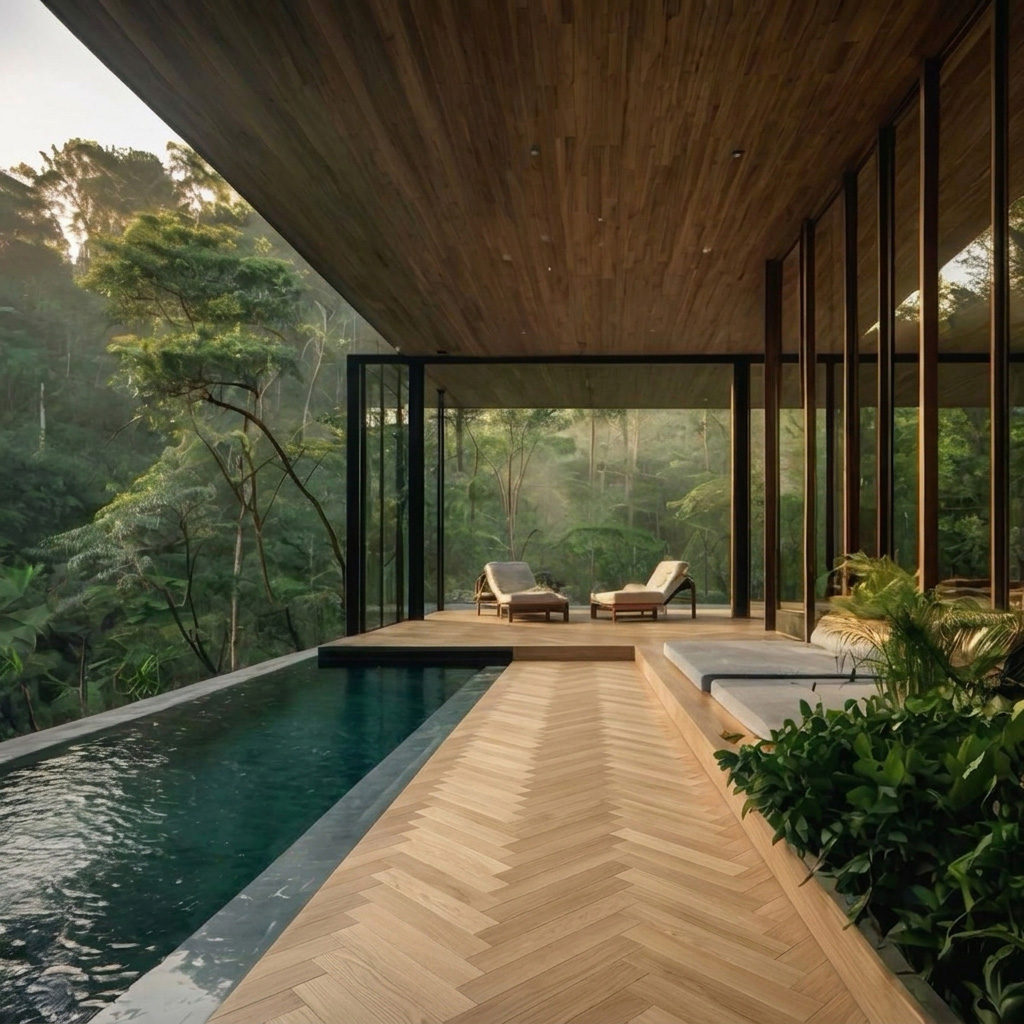
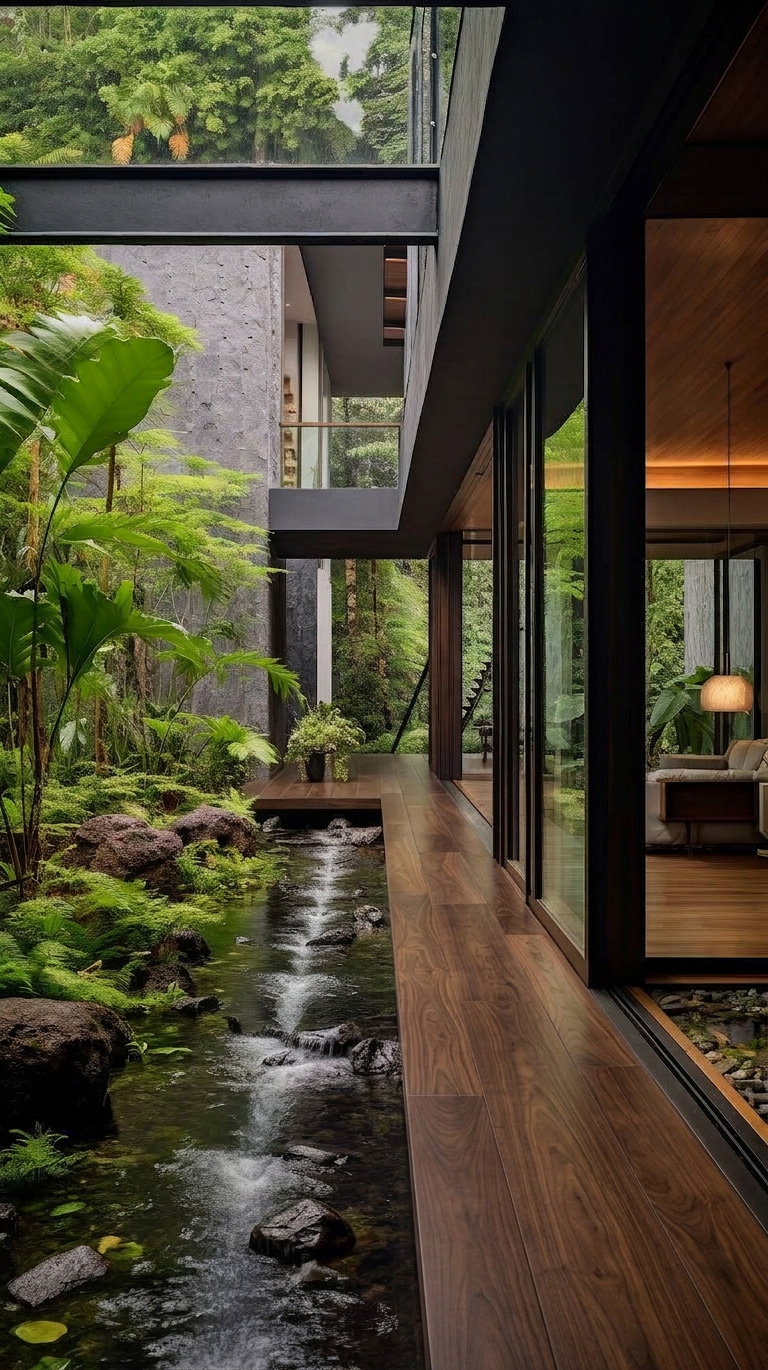
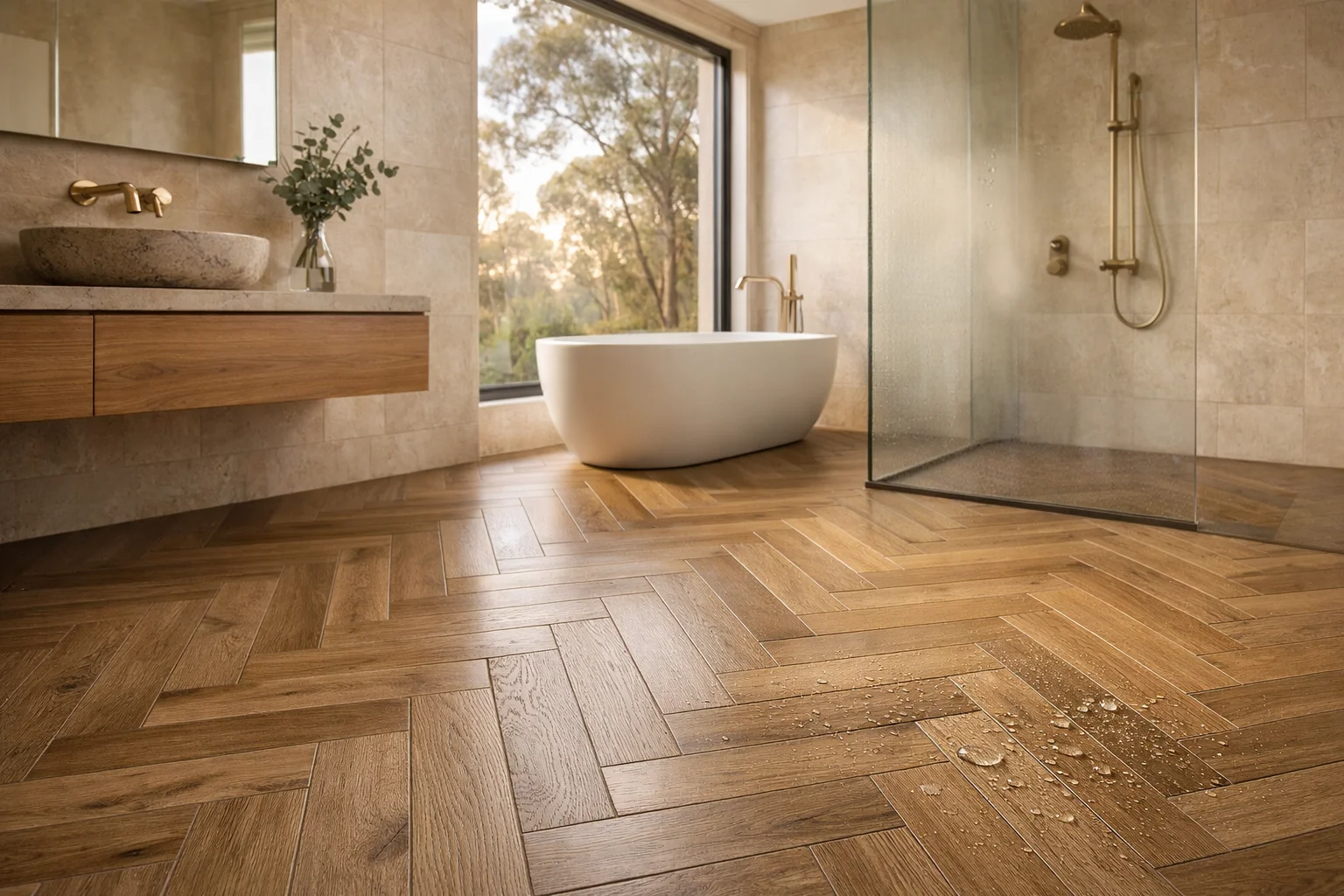
Understanding how wood flooring responds to water and humidity in real-world conditions.
Can Wood Flooring Handle Water? Understanding Water and Humidity
How well wood flooring remains stable around water and humidity depends on its construction, surface finish, installation conditions and the way the material is used.
Can wood flooring handle water? This is one of the most common questions when selecting materials for a living space. With natural wood, however, the answer is not simply yes or no. Wood exchanges moisture with its surroundings, so the way a floor responds to water also depends on exposure time, board construction, surface finish and conditions of use.
A small amount of water removed promptly from the surface is very different from prolonged standing water, moisture entering through board joints or persistent damp rising from the subfloor. Understanding these situations makes it possible to assess wood flooring more realistically instead of relying on a broad idea such as “waterproof”.
Can Wood Flooring Handle Water?
Under normal conditions of use, a wood floor can tolerate a certain amount of surface water when the liquid is dealt with promptly. The surface finish helps limit direct contact between liquid and the wood fibres while also supporting routine cleaning and maintenance.
This does not mean wood flooring can be submerged or left with standing water for long periods. When water has enough time to pass through the surface, board edges, joints or unprotected areas, the moisture content of the wood can change and dimensional movement may follow.
When discussing the water resistance of wood flooring, the specific conditions of exposure therefore matter more than treating it as an absolute property.
“Water-Resistant” and “Waterproof” Are Not the Same
These terms are often used interchangeably, but they should not be understood in exactly the same way. Water resistance can describe a material remaining stable when exposed to water under certain conditions and for a limited period. “Waterproof”, by contrast, is commonly understood to mean that water cannot penetrate or affect the material.
With natural wood, the second interpretation requires particular caution. The cellular structure of wood allows it to absorb and release moisture in response to its surroundings. A finish can protect the surface, but it does not remove this natural behaviour.
Rather than asking only whether a product is “waterproof”, it is more useful to consider board construction, finishing method, edge treatment, subfloor conditions, installation environment and the length of time water may remain on the surface.
What Happens When Wood Comes Into Contact with Water?
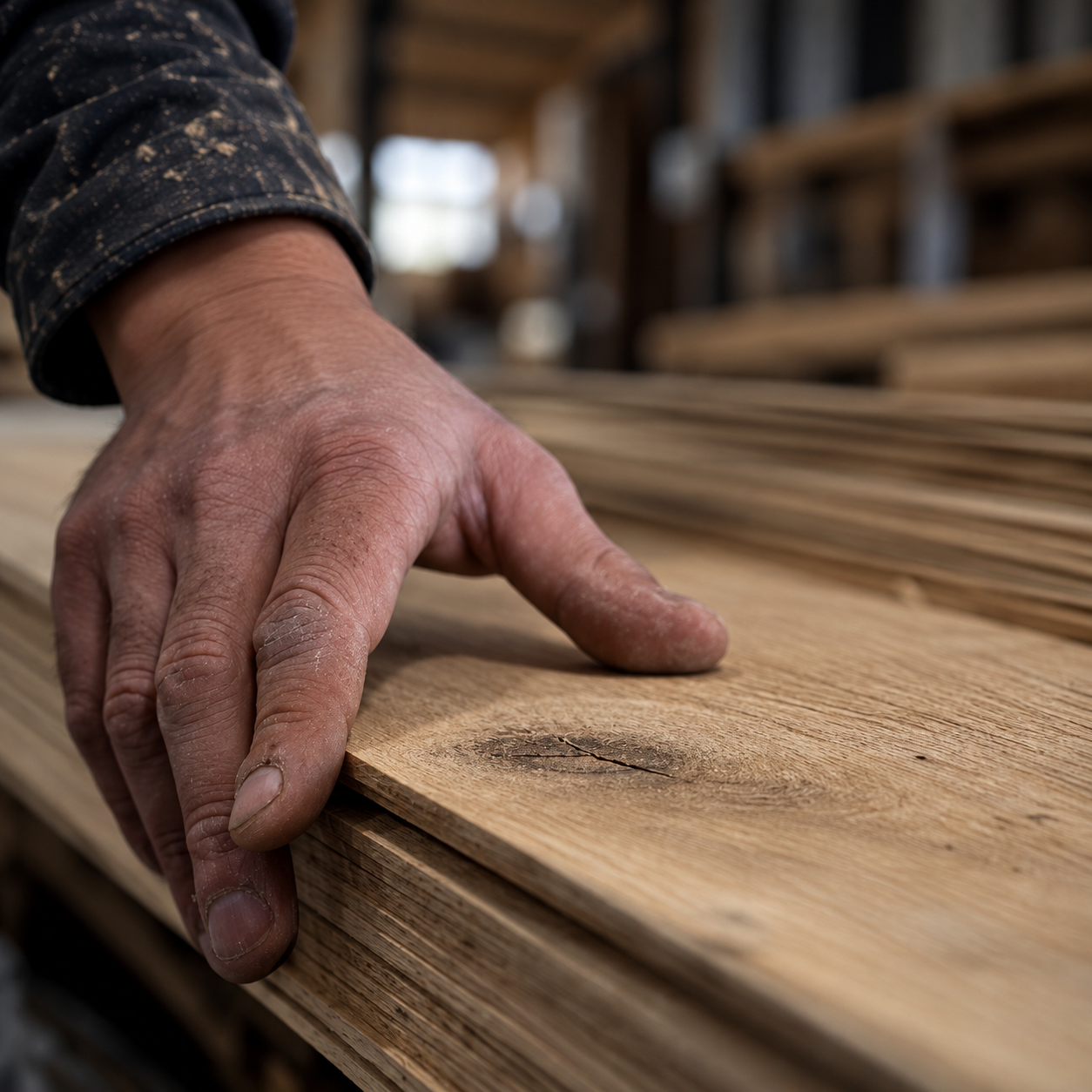
Wood is hygroscopic. As its moisture content changes, its dimensions can change as well. This natural characteristic needs to be considered whenever wood is used for flooring, furniture or other architectural elements.
A small amount of liquid sitting on the finish and wiped away quickly can have a very different effect from water left in place for a prolonged period. Risk increases when water enters joints, board edges or reaches parts of the timber that are less protected.
With larger amounts of water or prolonged exposure, changes in moisture content can lead to expansion, distortion or movement at the joints. The severity depends on the wood species, product construction, amount of water, duration of exposure and surrounding conditions.
Humidity Matters Just as Much as Surface Water
Not every moisture-related issue begins with a spill. Air humidity, subfloor moisture and changes in environmental conditions over time can all affect wood flooring.
Wood continually moves toward equilibrium with the humidity of its surroundings. As the environment becomes more humid, the material tends to absorb moisture; when the air becomes drier, wood releases moisture. This process is accompanied by a certain degree of dimensional movement.
This is why controlling subfloor and installation conditions is important for a wood flooring system. A floor with no standing water can still develop problems if moisture from the subfloor or surrounding environment remains unsuitable for an extended period.
How Does Engineered Wood Flooring Respond to Humidity?
Engineered wood flooring is built with a multi-layer structure rather than a single solid piece of timber through the full board thickness. This construction helps control material movement more effectively as temperature and humidity change.
This offers an advantage in dimensional stability, particularly compared with relying entirely on the natural movement of a solid timber board. Greater stability, however, does not mean the floor can be submerged or is completely waterproof.
The natural wood top layer is still timber, and the flooring system as a whole must still be used under suitable conditions. Engineered construction is best understood as a way to help the material perform more stably in architecture, not as a method of making wood immune to moisture.
Does the Surface Finish Improve Water Resistance?
The finish is the first line of protection for the wood surface in use. It helps limit direct contact between liquids, dirt and the timber fibres while supporting cleaning and maintenance.
A finish should not, however, be treated as an absolute waterproof membrane for the entire flooring system. Water can still reach the material through joints, board edges, damaged areas or places where the protective layer does not provide complete coverage.
Oil Finish and Water-Based Finish also create different surface characteristics. Selection should be based on appearance, maintenance approach and conditions of use rather than on a single water-related criterion. See our article on Oil Finish and Water-Based Finish for a clearer comparison of the two finishing methods.
Which Areas Require More Care When Using Wood Flooring?
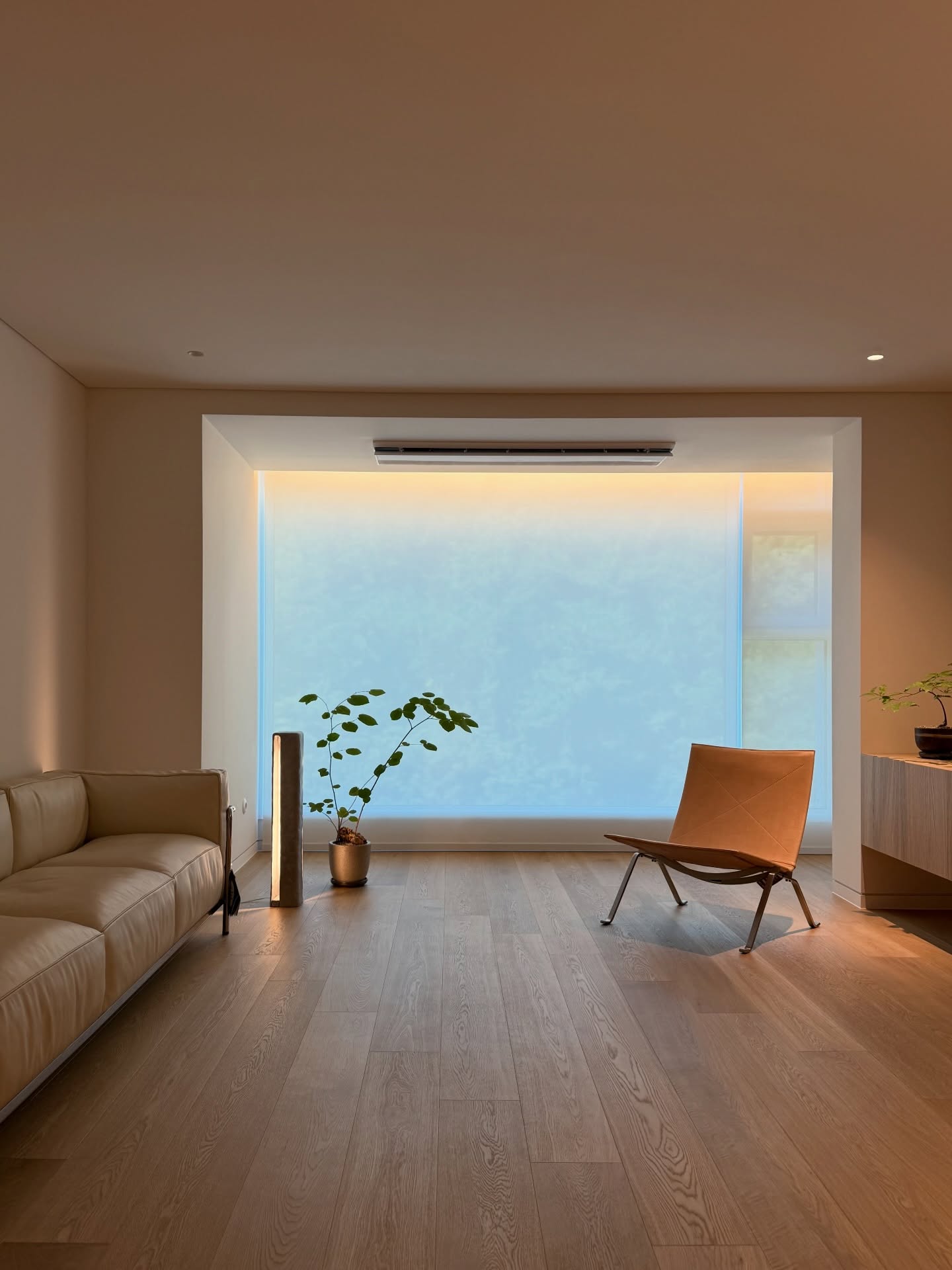
In living rooms, bedrooms and other normally dry living areas, water management mainly concerns cleaning, accidental spills and maintaining suitable environmental conditions.
Areas such as entrances and kitchens are more likely to encounter water regularly. Moisture from footwear, cooking, cleaning or appliances can place greater demands on how the floor is used and maintained.
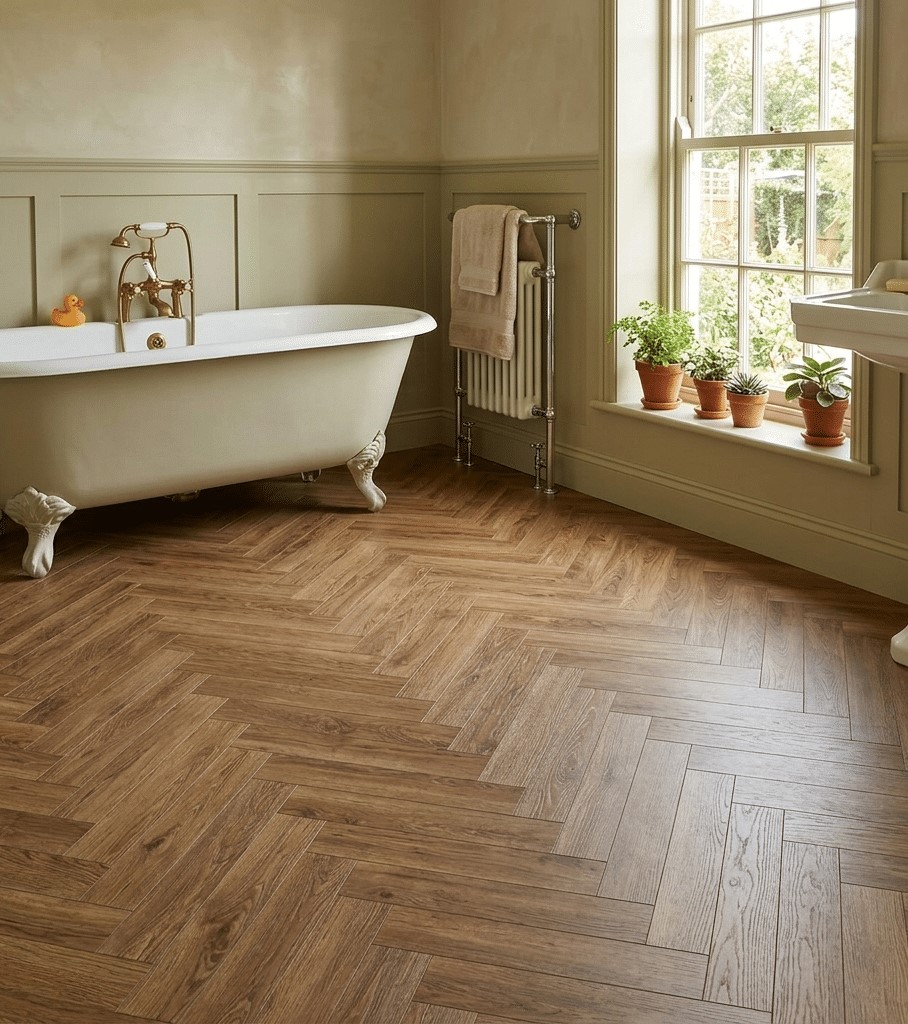
Bathrooms, shower areas and locations that remain frequently wet present very different conditions. The use of wood in these spaces needs to be assessed in relation to the complete flooring design, subfloor waterproofing, ventilation, product construction and the project’s specific technical requirements—not only the properties of the board itself.
What Should You Do If Water Spills on Wood Flooring?
For ordinary household spills, the simplest principle is to remove water from the surface as soon as possible. Use a soft cloth or absorbent material to dry the area rather than allowing the liquid to evaporate on the floor.
If a large amount of water has remained for some time or may have entered the board joints, inspect the affected area carefully. Any unusual signs at board edges or joints should be monitored rather than repeatedly wetting the area during cleaning.
More importantly, if the water comes from leaking pipes, appliances, walls or the subfloor, addressing the moisture source should take priority. Drying the visible floor only deals with the water you can see and does not replace identifying the underlying cause.
Understanding the Water Resistance of Wood Flooring
The performance of a wood flooring system around water and humidity does not depend on a single factor. Wood species, board construction, surface finish, subfloor conditions, installation method and the environment of use all influence how well the floor remains stable over time.
The idea of “water resistance” is most useful when placed in a specific context: what kind of water the floor encounters, for how long, where the exposure occurs and how the product is constructed. This is more practical than treating “waterproof” as a universal standard for every type of wood flooring.
Wood remains a natural material that responds to its environment. Understanding this does not diminish its value; instead, it helps inform a more appropriate flooring structure, finishing method and approach to use from the outset.