

Language

Background

WOOD FLOORING FOR BEDROOMS

Colour, wood species and surface choices for a balanced, comfortable bedroom.

Wood Flooring for Bedrooms: Choosing Colour, Wood Species & Surface

From timber tone to surface feel, each choice influences the balance and everyday experience of a bedroom.

The bedroom is one of the spaces where material and everyday experience are most closely connected. While a living room is often perceived through the wider architecture and the way different zones relate to one another, bedroom flooring is experienced at closer range: through footsteps, early daylight, the colours of furniture and the atmosphere as the room settles into quiet.

For that reason, choosing wood flooring for a bedroom does not have to begin with a trending colour or a particular species. Tone, grain, surface character and lighting conditions should be considered together to create a material foundation suited to both the architecture and the way the room is used each day.

What Is Different About Choosing Wood Flooring for a Bedroom?

Compared with shared living areas, bedrooms are often smaller, have less circulation and are organised around a few key pieces such as the bed, wardrobe, bedside tables or a lounge chair. The visible floor area may therefore be limited, yet it still has a clear influence on the room’s overall tone.

The material experience is also more immediate. Stepping directly from the bed onto the floor makes underfoot feel, surface texture and the way timber responds to room temperature perceptible in everyday use.

A suitable choice therefore does not necessarily need strong contrast. In many cases, the floor’s ability to connect naturally with the bed, textiles, walls, cabinetry and light is what allows it to maintain long-term balance within a restful space.
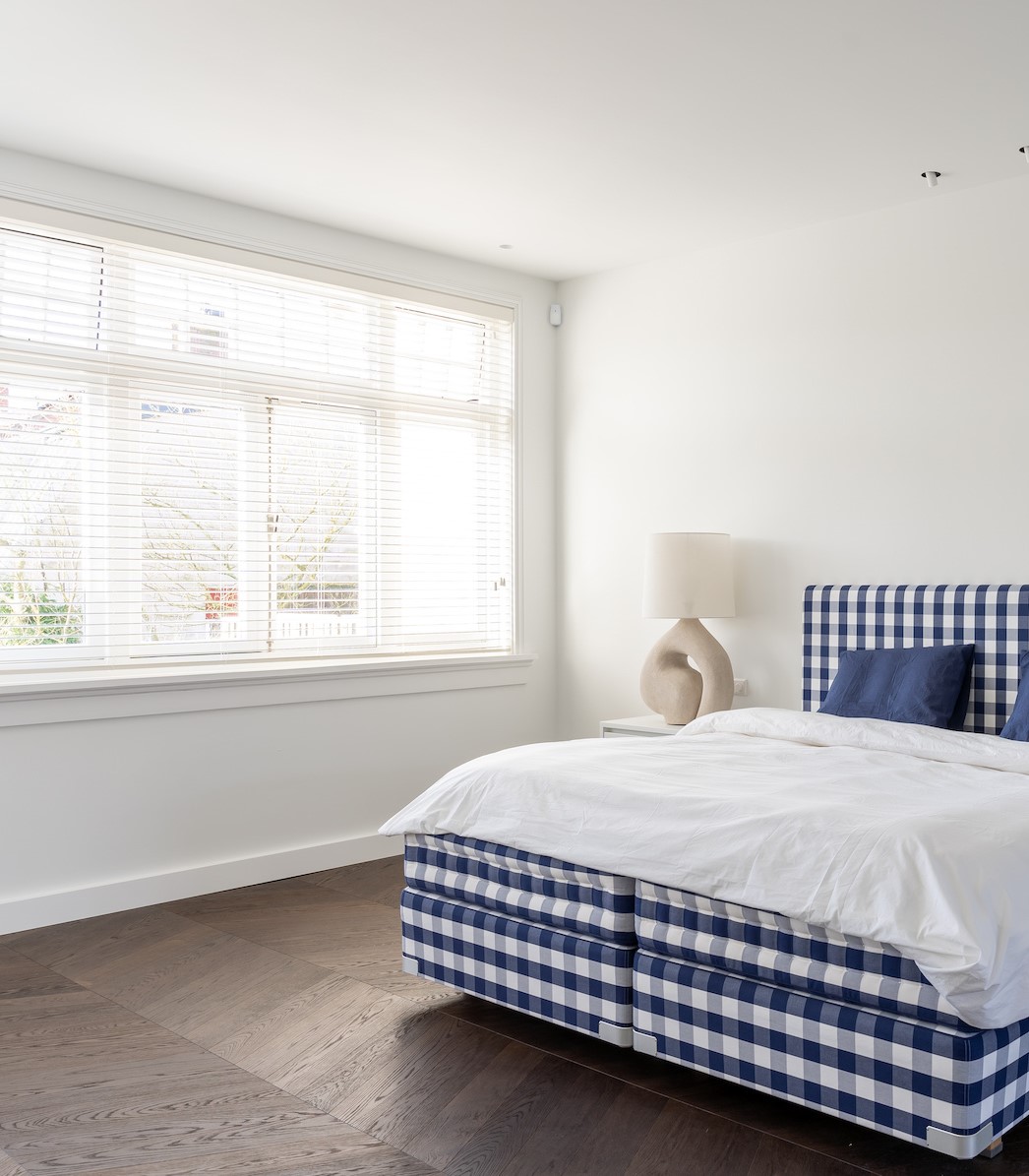
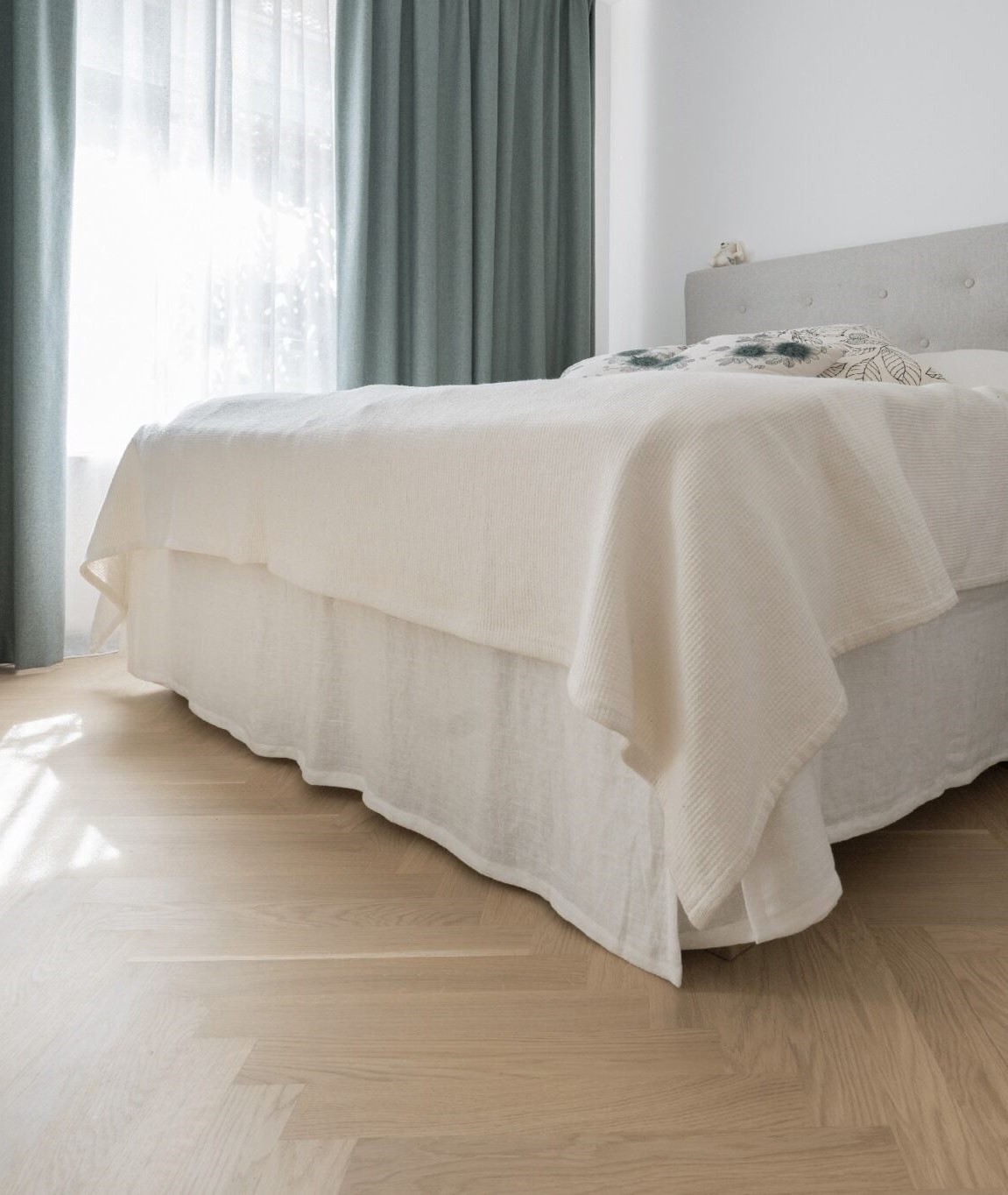
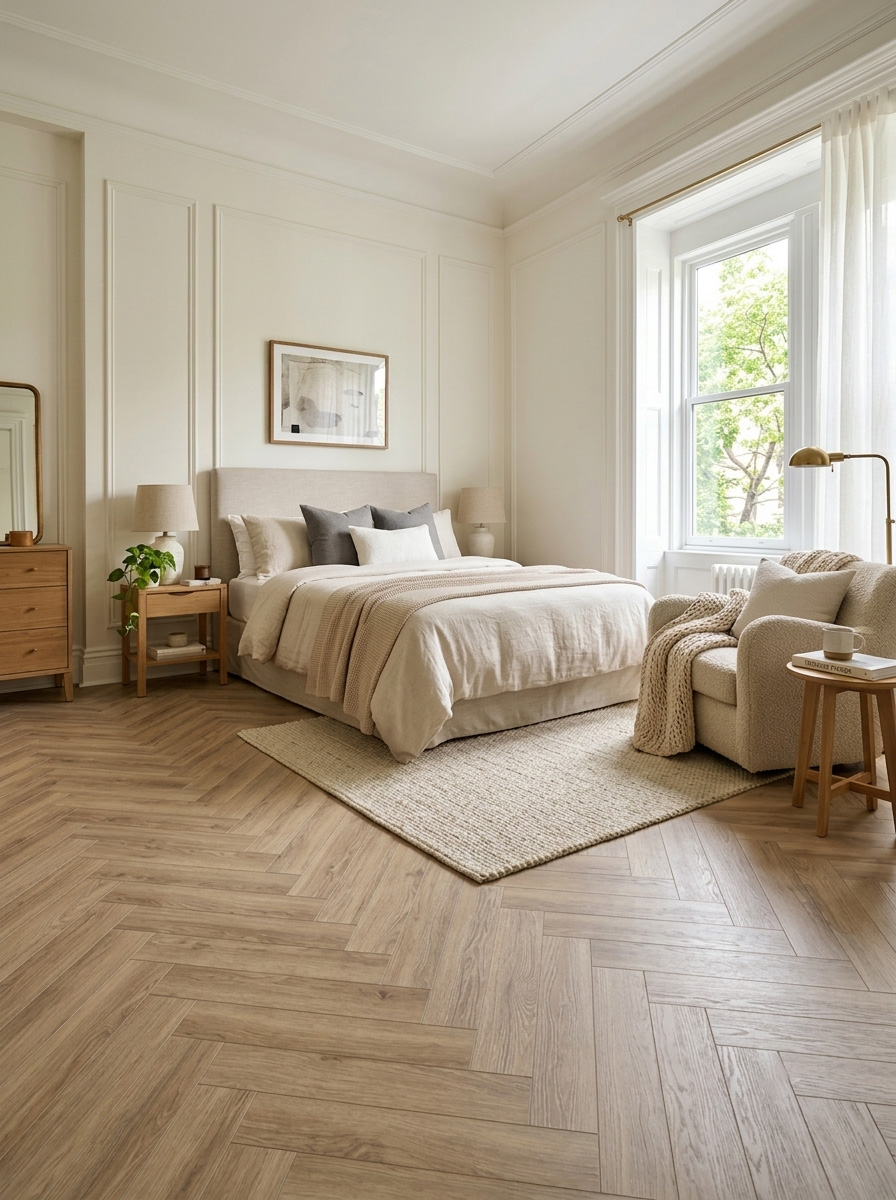
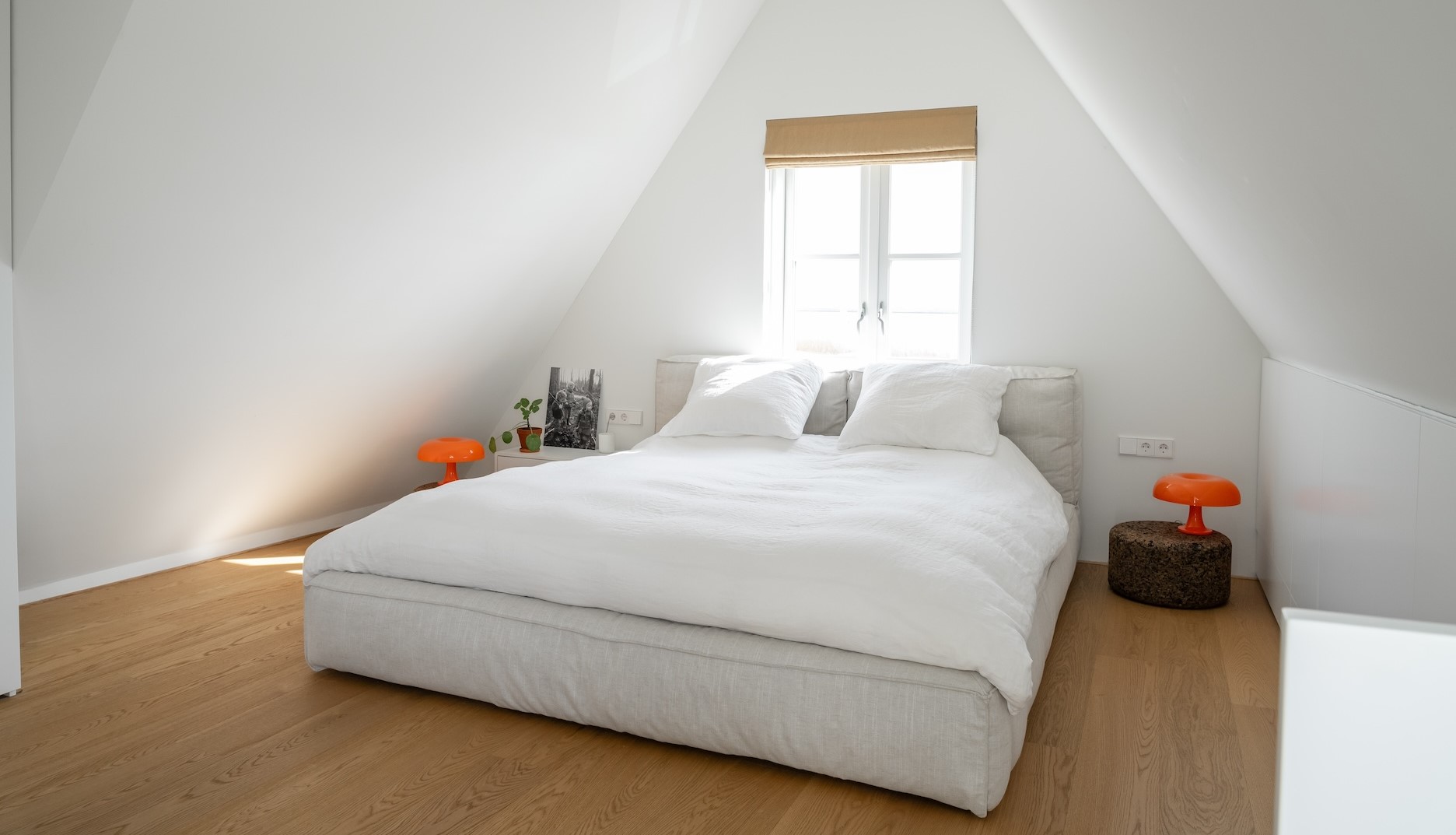
Bedroom with light wood flooring and natural light
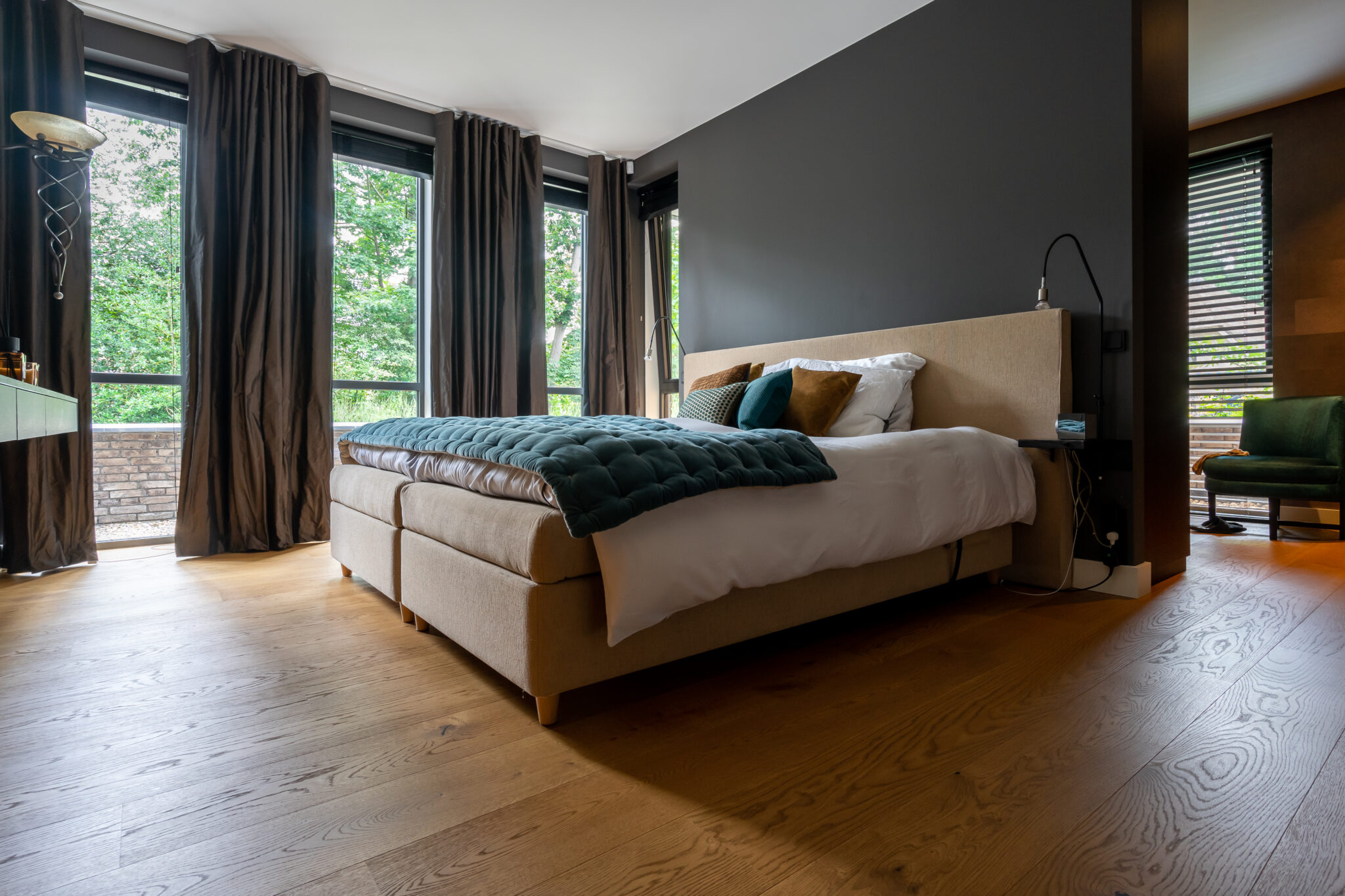
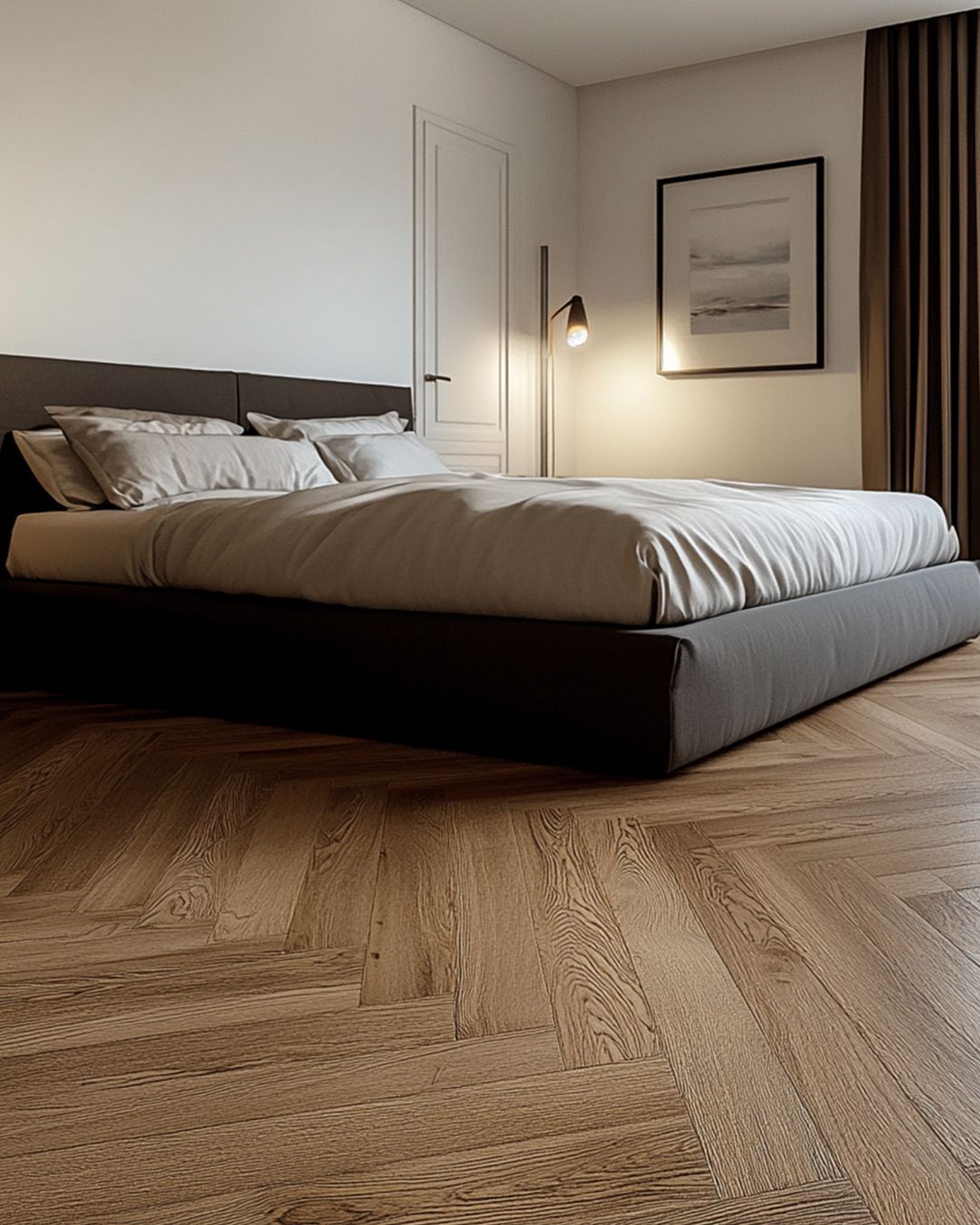
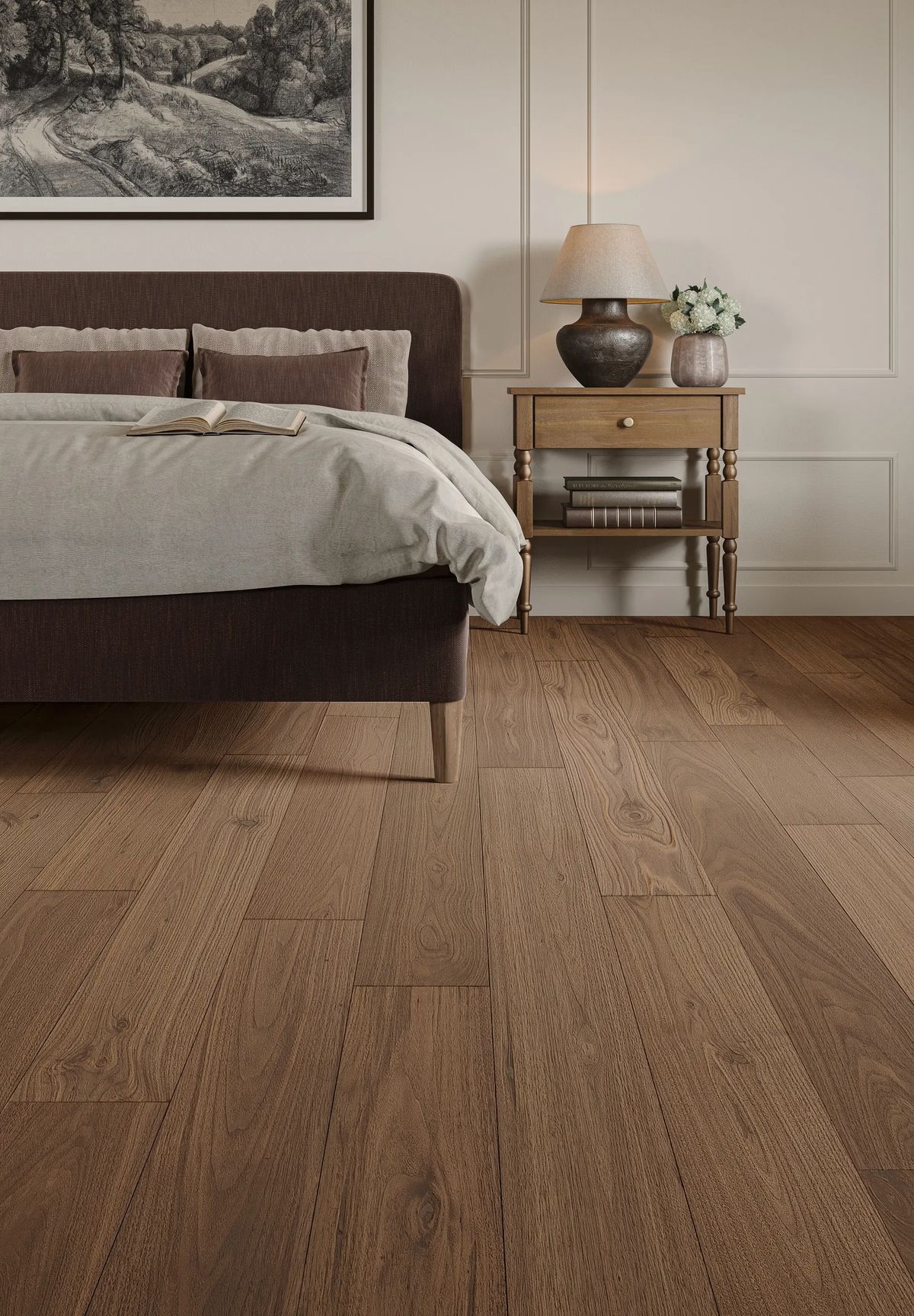
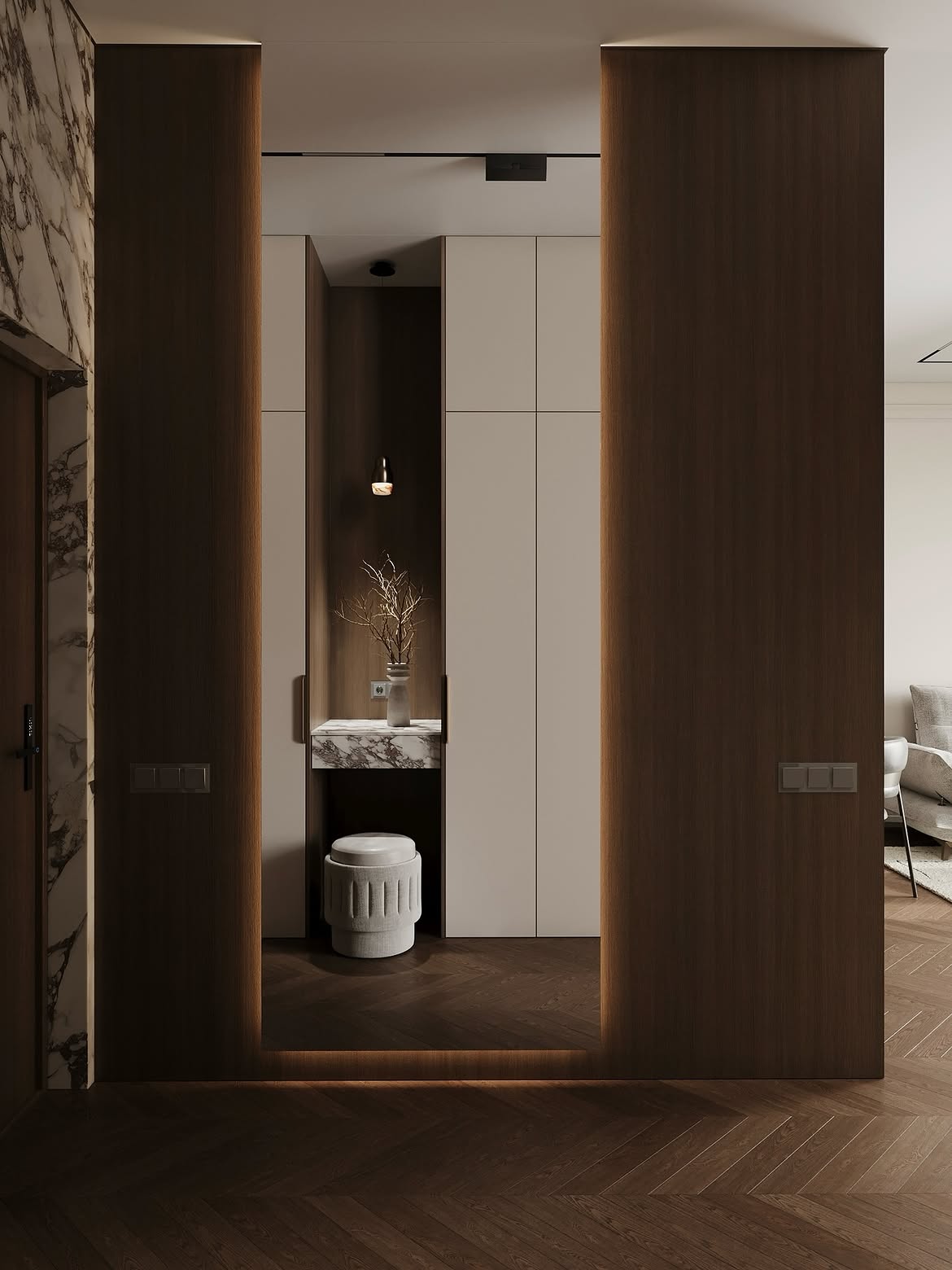
Bedroom with dark-toned wood flooring

Bedroom Wood Flooring Colour: Light, Neutral or Dark?

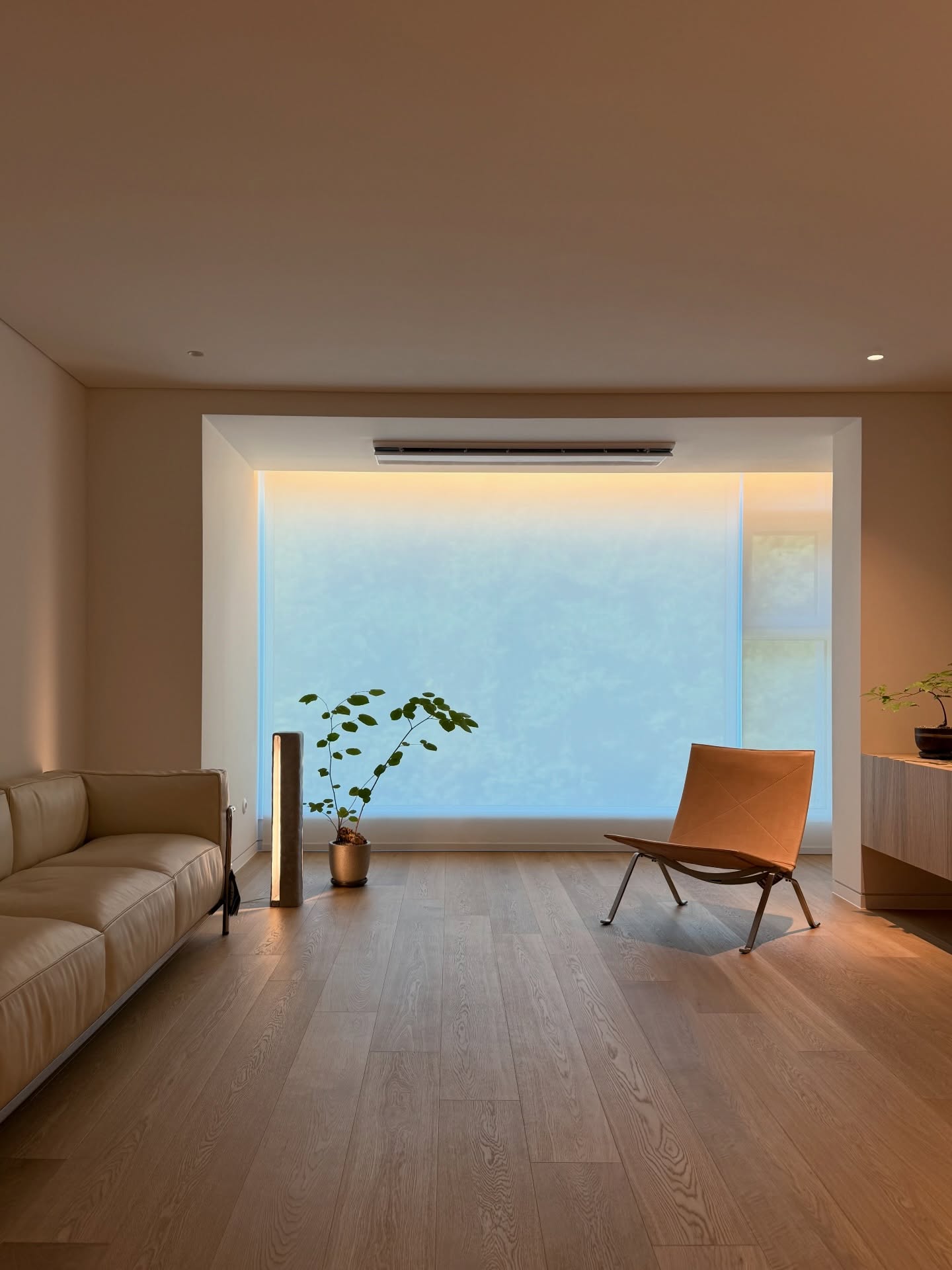
Floor colour is one of the first elements to change how a bedroom is perceived. Lighter timber tones tend to reflect more light and keep the room visually light, while neutral browns introduce warmth and work easily with varied material palettes. Darker timber tones bring greater depth, particularly beside pale walls, natural textiles or neutral furnishings.

There is no fixed rule that a small bedroom must use a light floor or that dark timber only suits a large room. Natural light, wall colour, furniture proportions and the desired level of contrast can all change the effect of the same timber tone.

A moderately sized room with abundant daylight can still accommodate deeper timber tones without feeling heavy. Conversely, in a large but poorly lit space, an overly dark surface may reduce the sense of openness. Wood flooring colour should therefore be assessed under the room’s actual lighting conditions rather than from an isolated material sample.

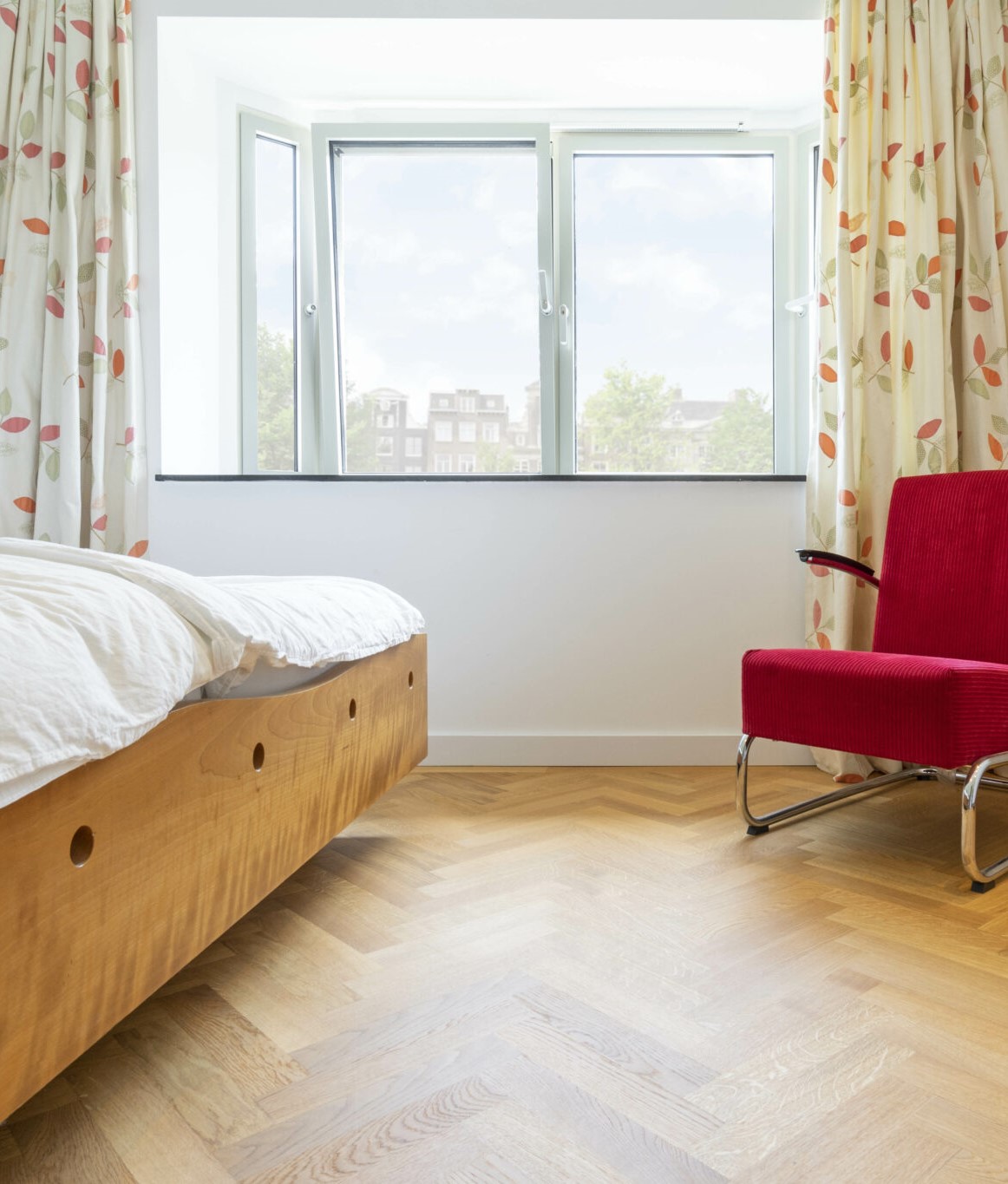
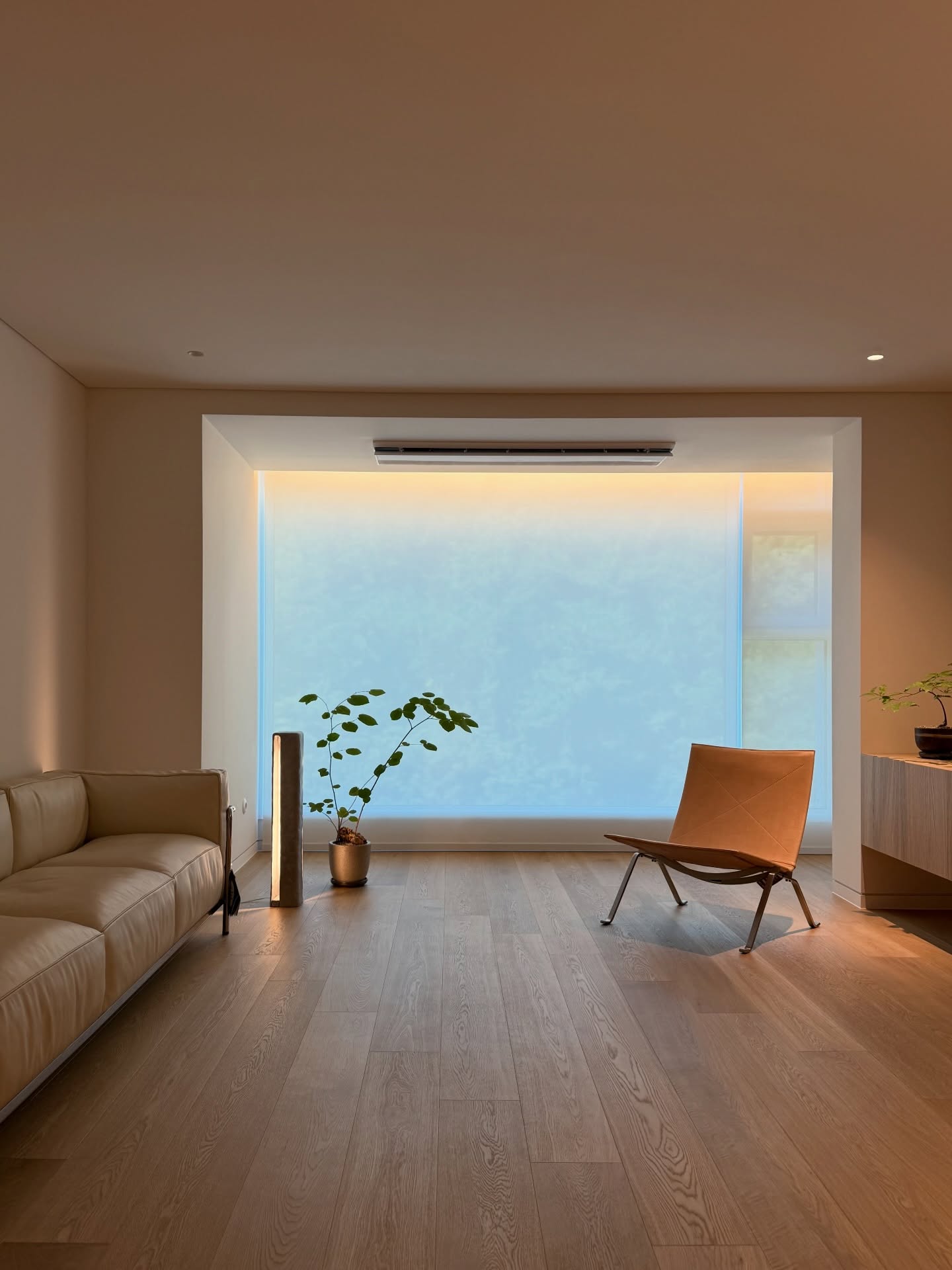
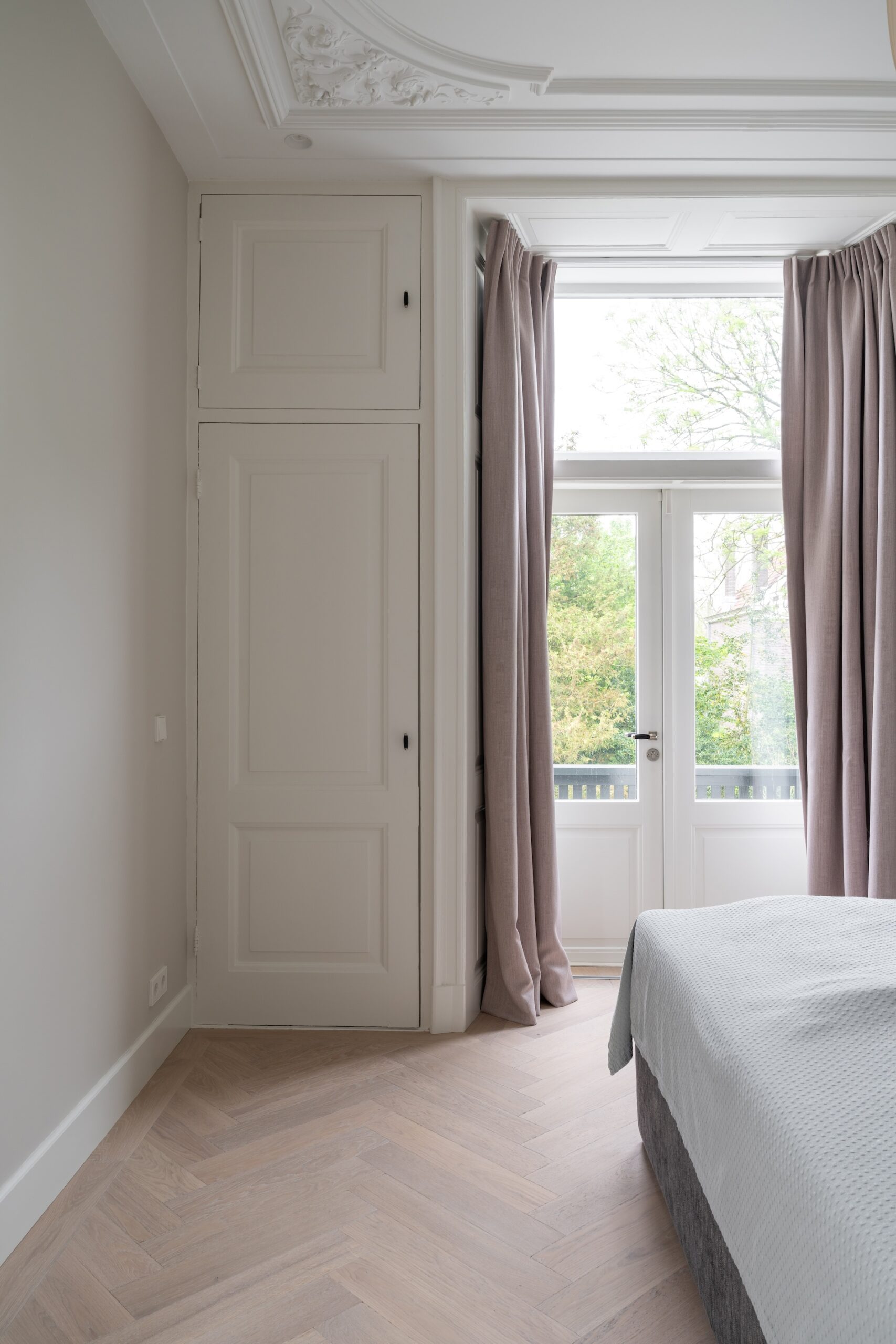
Natural wood flooring in a modern bedroom
Bedroom with natural wood flooring in bright daylight

Choosing a Wood Species by Tone and Grain

Each natural wood species has its own colour range and grain structure. This is why two floors with a similar overall tone can still feel very different within the same bedroom.

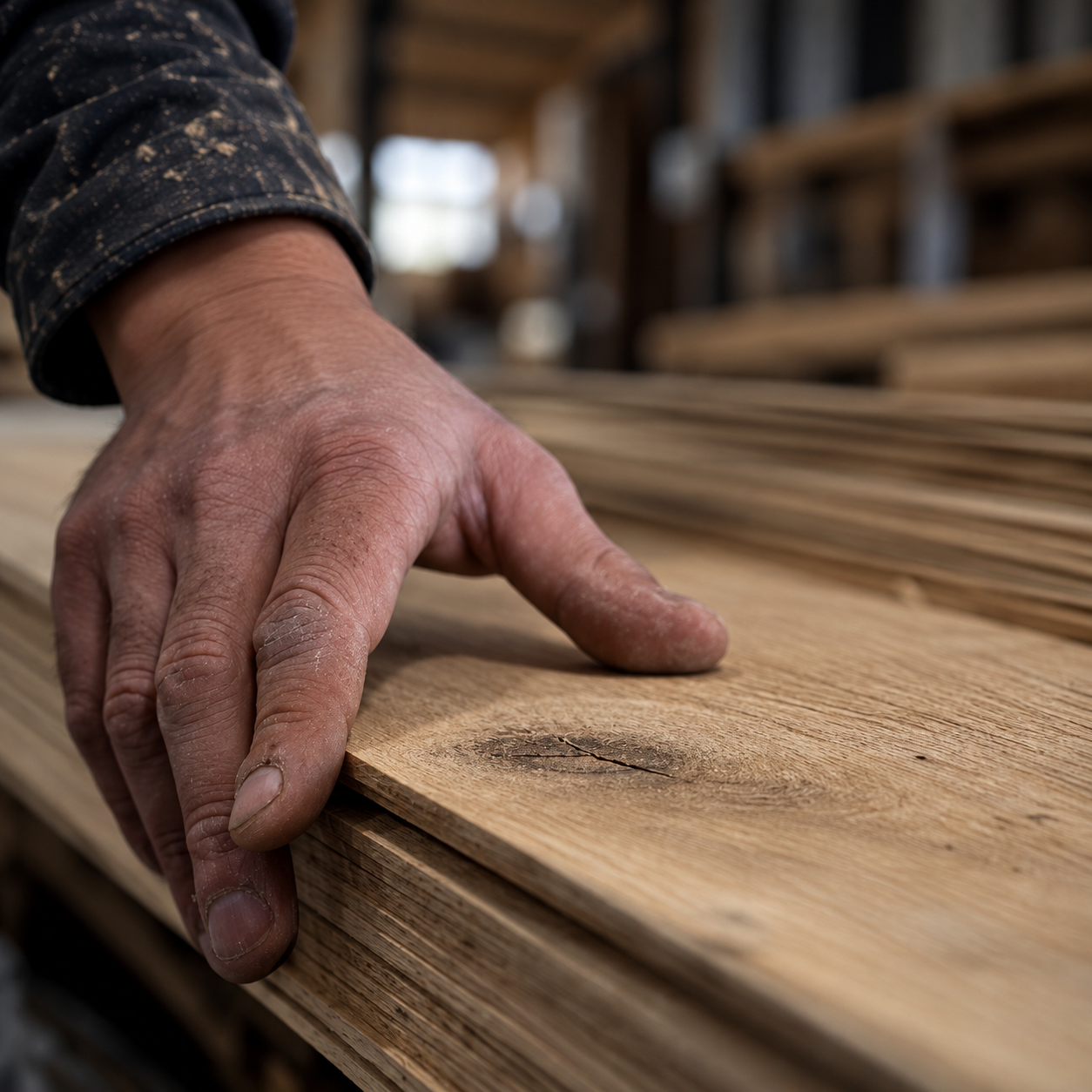
Oak typically has a clearly expressed grain and a versatile colour range that works with many interior arrangements. Walnut brings deeper brown tones and natural colour movement between the fibres, creating more visible contrast across the surface. Teak is recognised for its warm golden-brown tone and relatively harmonious grain, while Ash is lighter, with distinctive grain lines that give the surface presence without necessarily making the room feel heavy.

Rather than choosing by species name alone, consider how colour and grain interact with the materials already present in the room. Cabinet timber, the bed, curtain fabrics, stone and metal can all change how the floor is perceived. Reviewing the characteristics of natural wood species helps place the decision within a more complete material palette.

How Does the Floor Surface Affect the Experience?

If colour shapes much of the visual impression, the surface directly affects how the material is experienced at close range. Smoothness, timber texture and the degree of light reflection all contribute to how a bedroom floor feels.

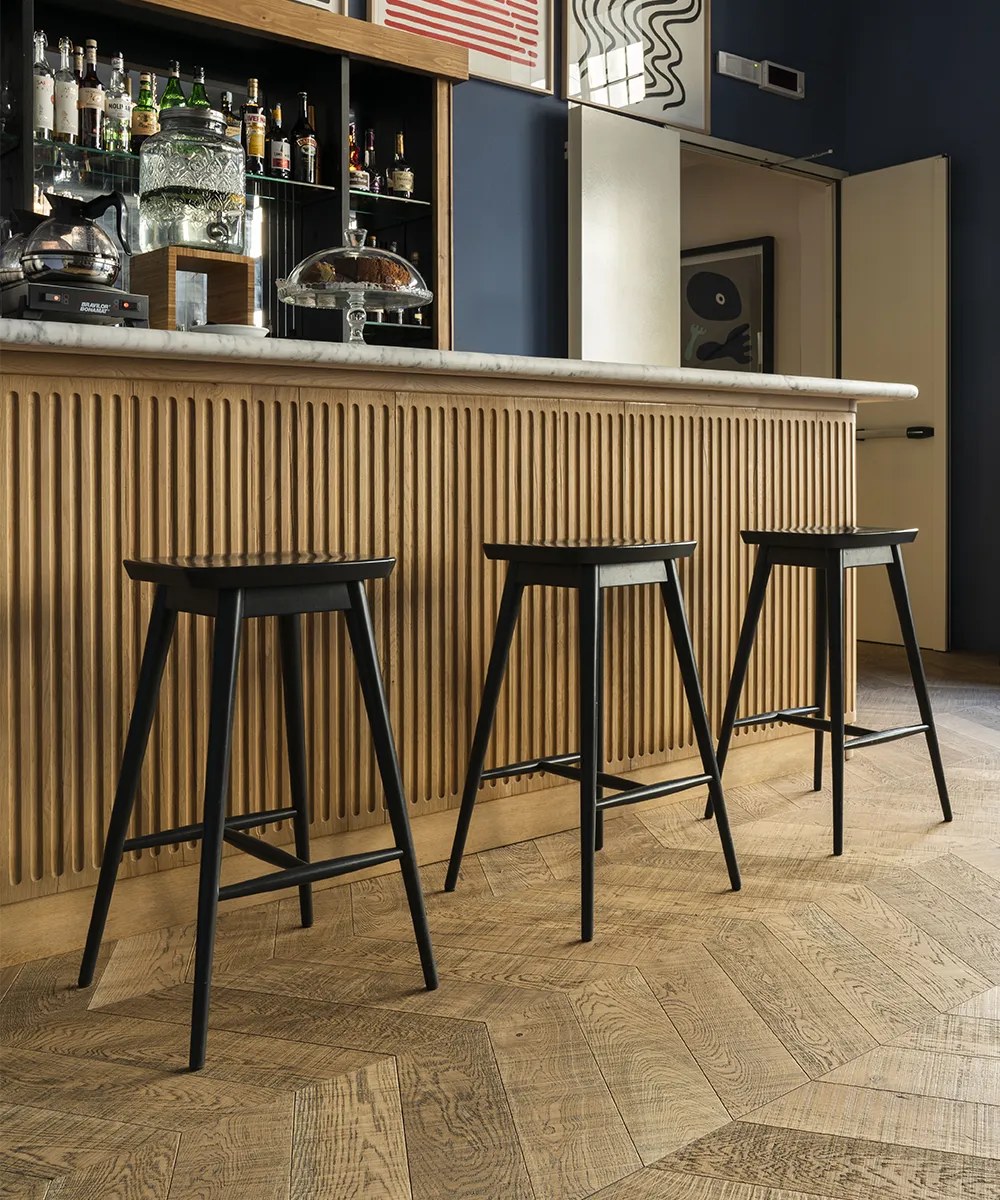
A low-sheen surface generally diffuses light more softly and keeps the grain visually natural. Textured treatments, meanwhile, can make the timber fibres more pronounced as light moves across the surface. These differences are not only visible in sample images; they also change with the direction of light and the time of day.

The finishing method is also part of this experience. Oil Finish and Water-Based Finish differ in how the surface appears and how the finish interacts with the timber. See the comparison of oil finish and water-based finish for a clearer understanding before choosing.

How Light Changes Wood Colour in the Bedroom

Wood colour is not perceived the same way at every moment. Morning daylight, light diffused through curtains and artificial lighting at night can all noticeably change the apparent tone of the floor.

Warm-colour-temperature lighting tends to emphasise the yellow and brown notes in timber, while neutral light can keep the material closer to its natural appearance. In bedrooms with large windows, the direction of light also changes how grain and surface texture appear throughout the day.

When selecting a flooring sample, observing it under the project’s actual lighting conditions is therefore more meaningful than judging it entirely under showroom lighting or from an image on a screen. This also helps reduce the difference between the colour initially imagined and the way the finished floor is ultimately perceived.

Straight Plank or Herringbone for a Bedroom?

Straight plank flooring creates a simpler visual rhythm and can reinforce the room’s length or primary sightline. In a bedroom, where much of the floor is interrupted by the bed and larger furniture, this layout allows the timber grain to remain continuous without introducing excessive movement.

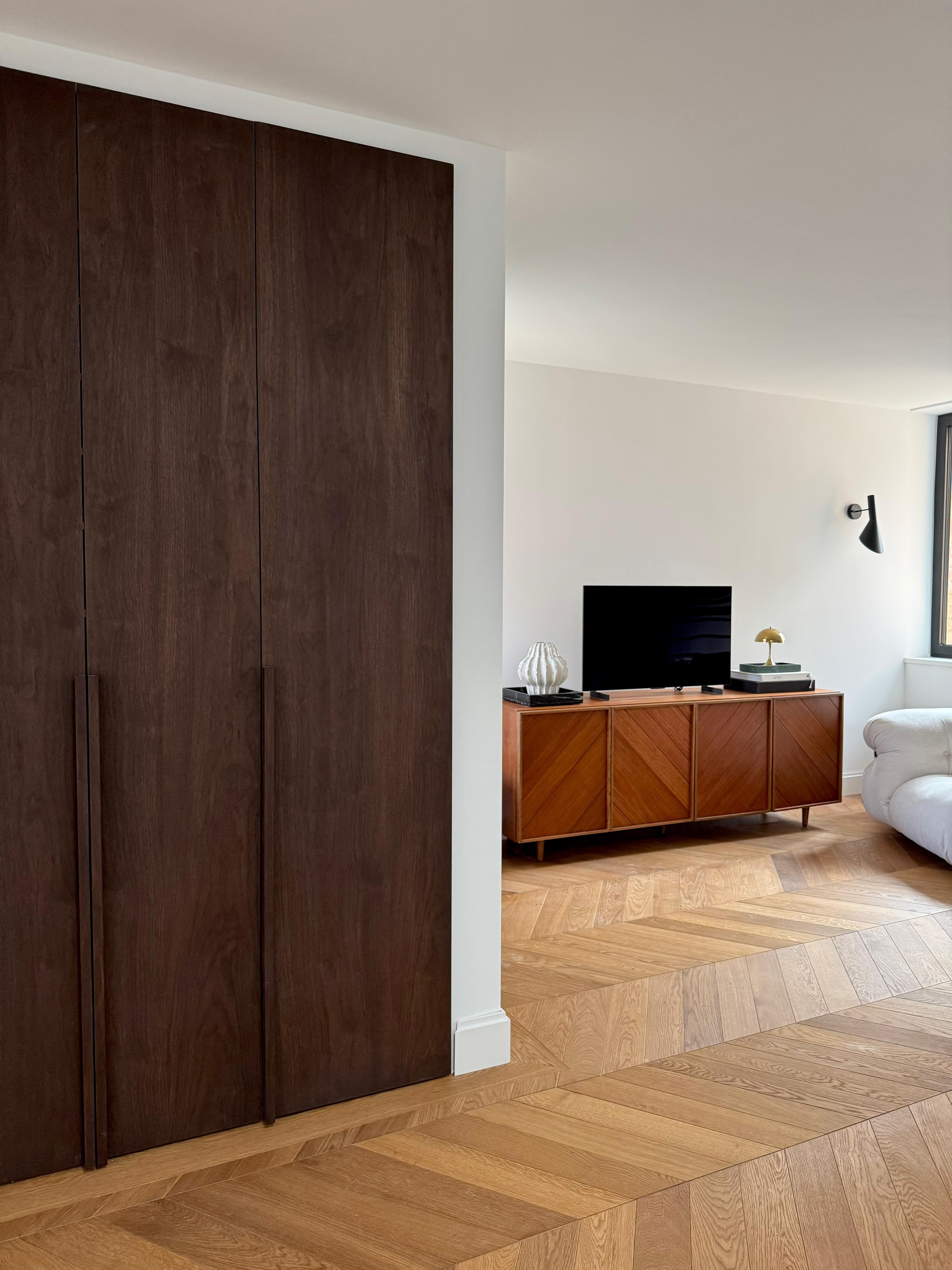
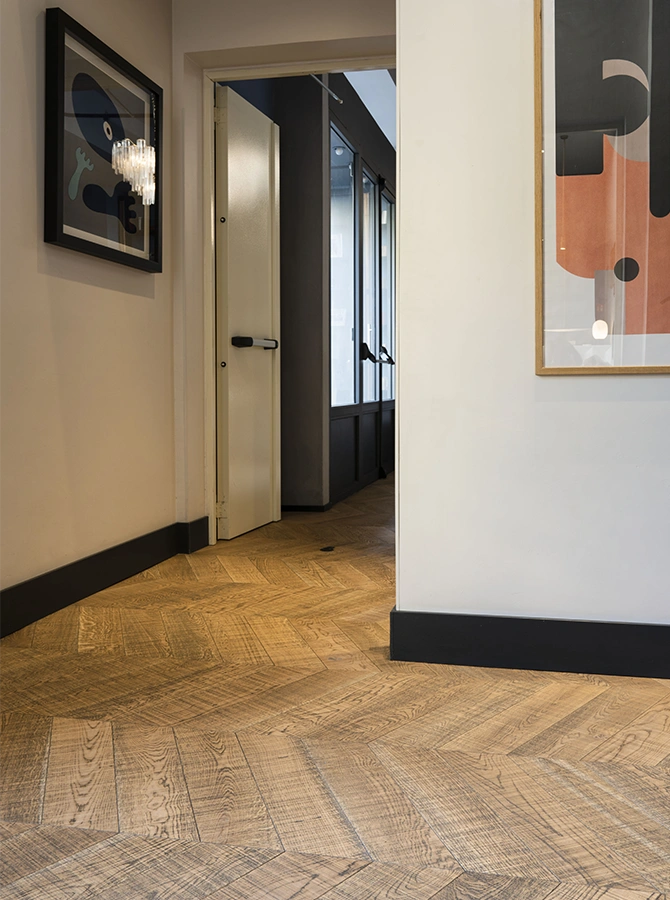
Herringbone or Chevron creates a more pronounced rhythm and can be used when the floor is intended to play a stronger role in the design. Its effect, however, depends greatly on the visible floor area, plank proportions and furniture layout. A detailed pattern may not achieve the intended result if much of its geometry is concealed.

Rather than assuming one pattern is inherently better for a bedroom, consider the actual proportions and the intended role of the floor within the overall composition. Our guide to wood flooring patterns explains the differences between straight plank, Herringbone and Chevron.

Choose Flooring Around the Experience of the Room

A suitable bedroom floor should do more than look appealing on its own. It needs to work with wall colours, timber furniture, textiles, light and the room’s proportions to create a composition without excessive visual competition.

Floor construction should also be considered alongside aesthetics. With engineered wood flooring, the natural timber top layer retains the material’s colour and grain, while the multi-layer structure beneath supports dimensional stability in use.

When colour, wood species, surface and construction are considered within the same context, the flooring decision becomes clearer. Rather than searching for the most striking sample, the aim is to find a material that can remain balanced with the room as furnishings and patterns of use evolve.

Explore NOËL’s Natural Wood Species

Warranty Policy

View warranty terms

Engineered Structure

Explore the engineered wood layers

Laying Systems

Explore flooring patterns
Zalo Call
SAMPLE BOX

Exclusive Sample Collection

Request our wood flooring sample set.

Select wood type / tone
Oak - Light / Natural Tone
Walnut - Deep Tone
Ash - Natural
Teak - Natural
Herringbone / Chevron
Straight Lay