

Language

Background

WOOD FLOORING IN VILLA DESIGN

Wood species, plank dimensions and laying patterns should be considered in relation to proportion, light and the architectural character of each space.

Wood Flooring for Villas: From Wood Species and Plank Size to Laying Pattern

A suitable choice depends on the character of the wood, plank proportions and the way the floor connects with the architecture and the wider living environment.

In a villa, flooring often extends across large areas and connects spaces with different functions. Choosing wood flooring therefore involves more than colour or an attractive grain pattern. Wood species, plank dimensions, laying direction and the proportions of each room all influence how the material is experienced within the architecture.

A well-considered flooring system should create continuity between the living room, corridors, bedrooms and transitional areas, while remaining balanced with light, furniture and surrounding materials. With wood flooring for villas, the value lies in how these elements are selected and coordinated rather than in any single feature.

Wood Flooring and the Architectural Proportions of a Villa

Villas often benefit from generous floor areas, higher ceilings and abundant natural light. These conditions give materials more room to express themselves, while also making proportion a critical consideration when selecting flooring.

A plank size that feels appropriate in a bedroom may not create the same effect in a large living room or an open-plan space. Likewise, a highly rhythmic laying pattern can become a strong focal point in a central area, yet feel overly dense if applied indiscriminately throughout the entire property.

Rather than treating the floor as an isolated finish, selection should begin with architectural proportion: room width, the length of sightlines, door positions, light sources and the way spaces connect. This provides the basis for determining the appropriate wood species, dimensions and laying pattern.
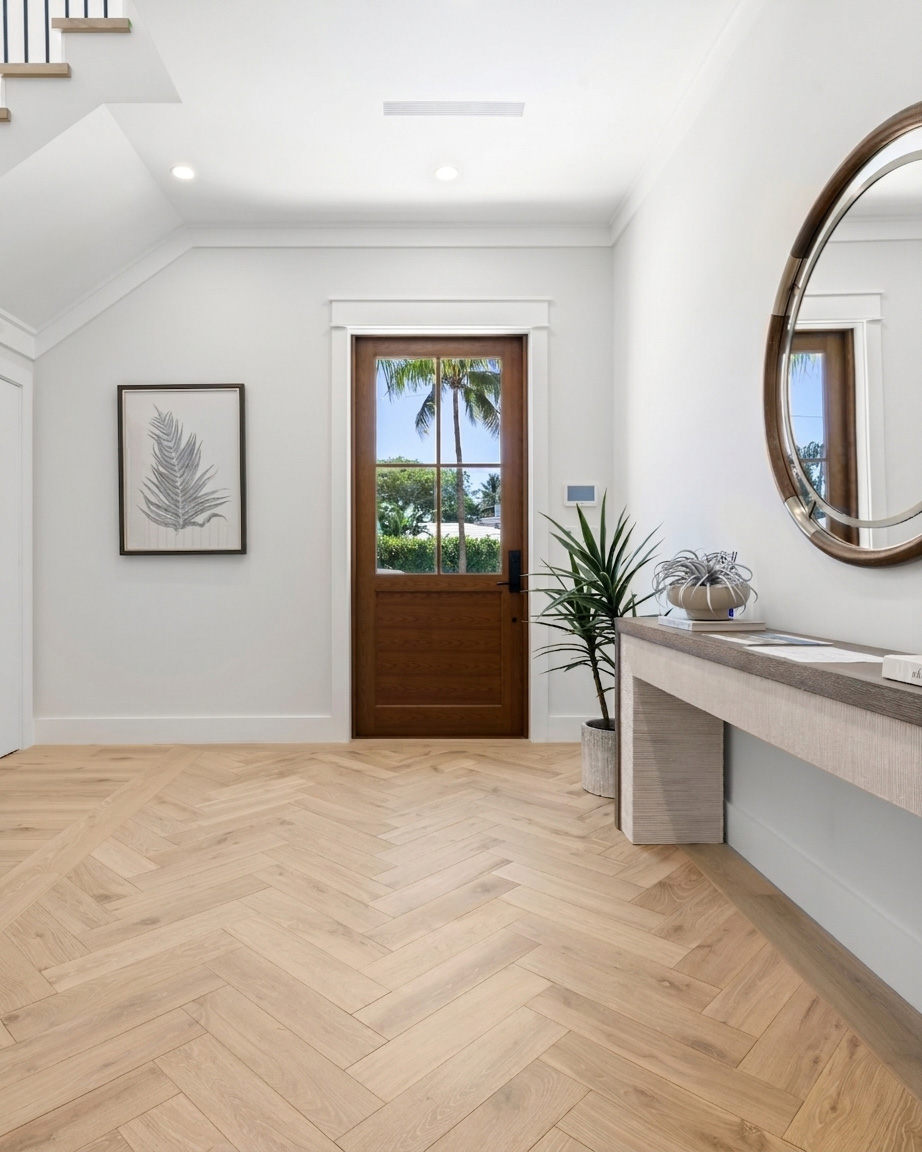
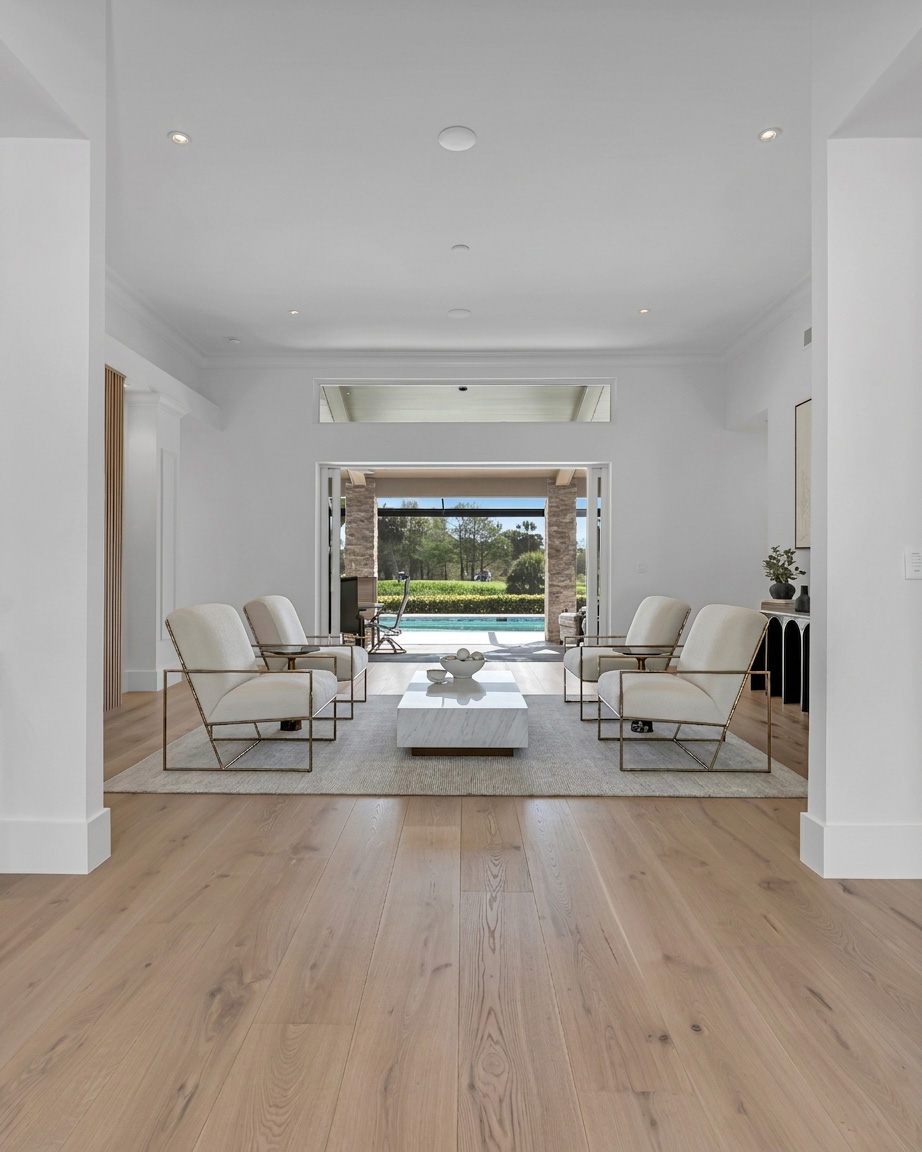
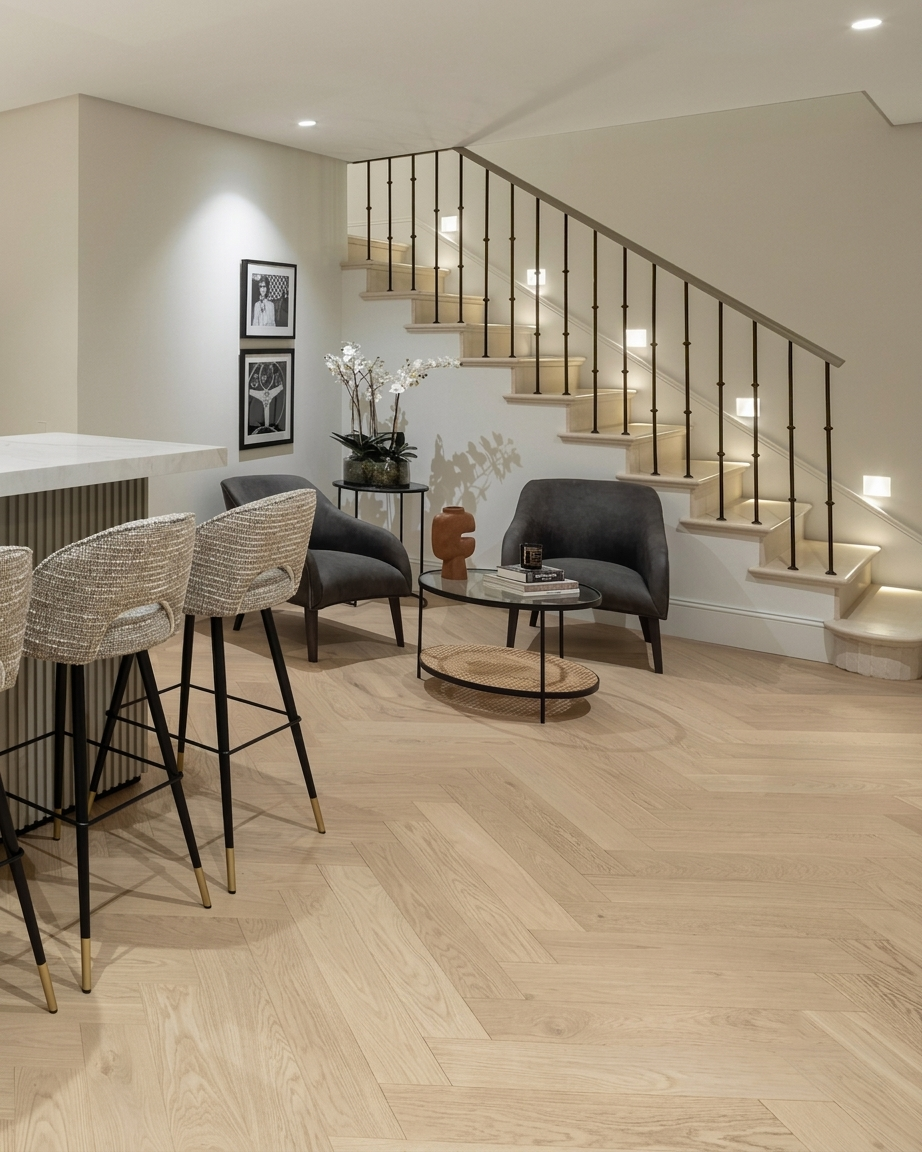
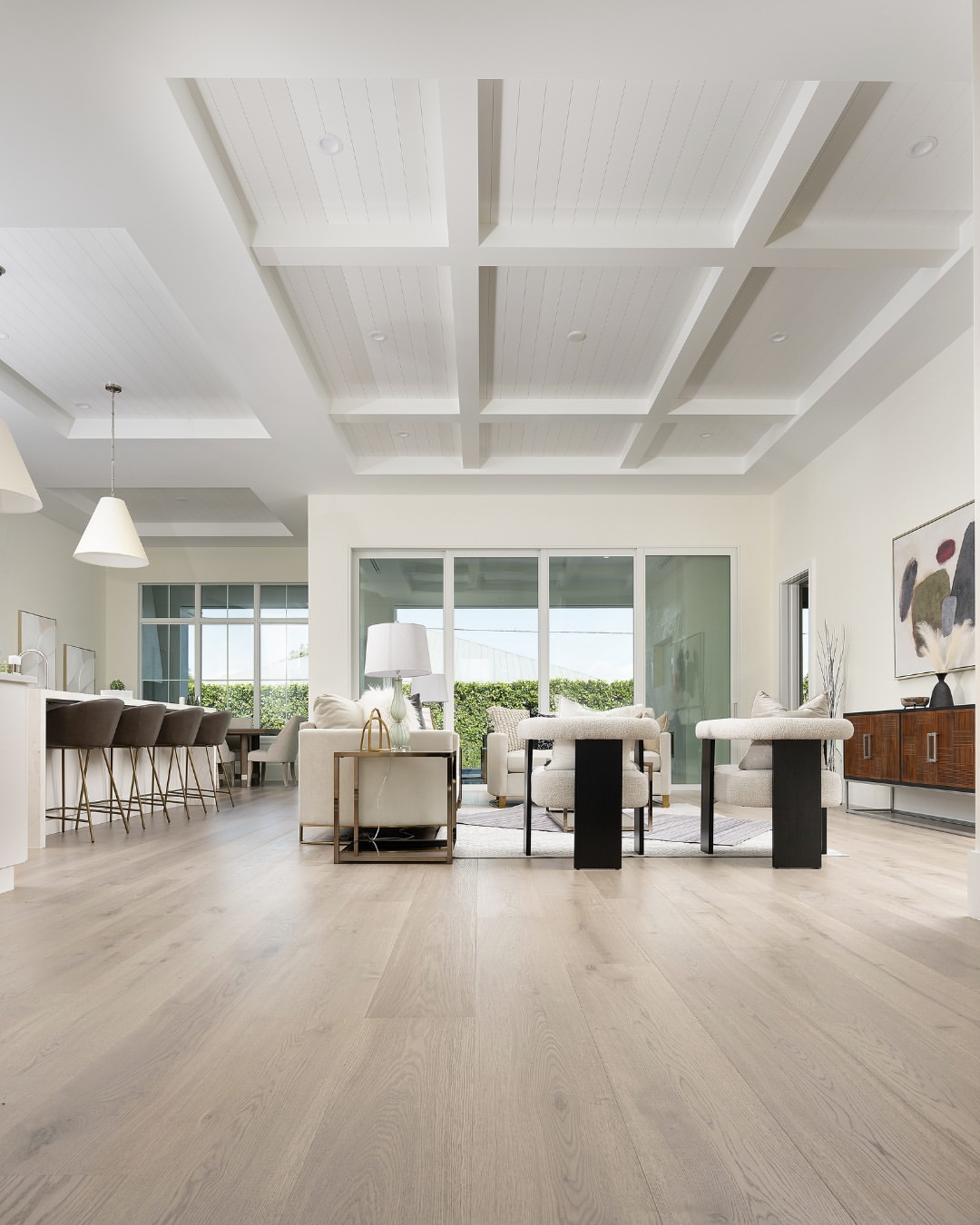
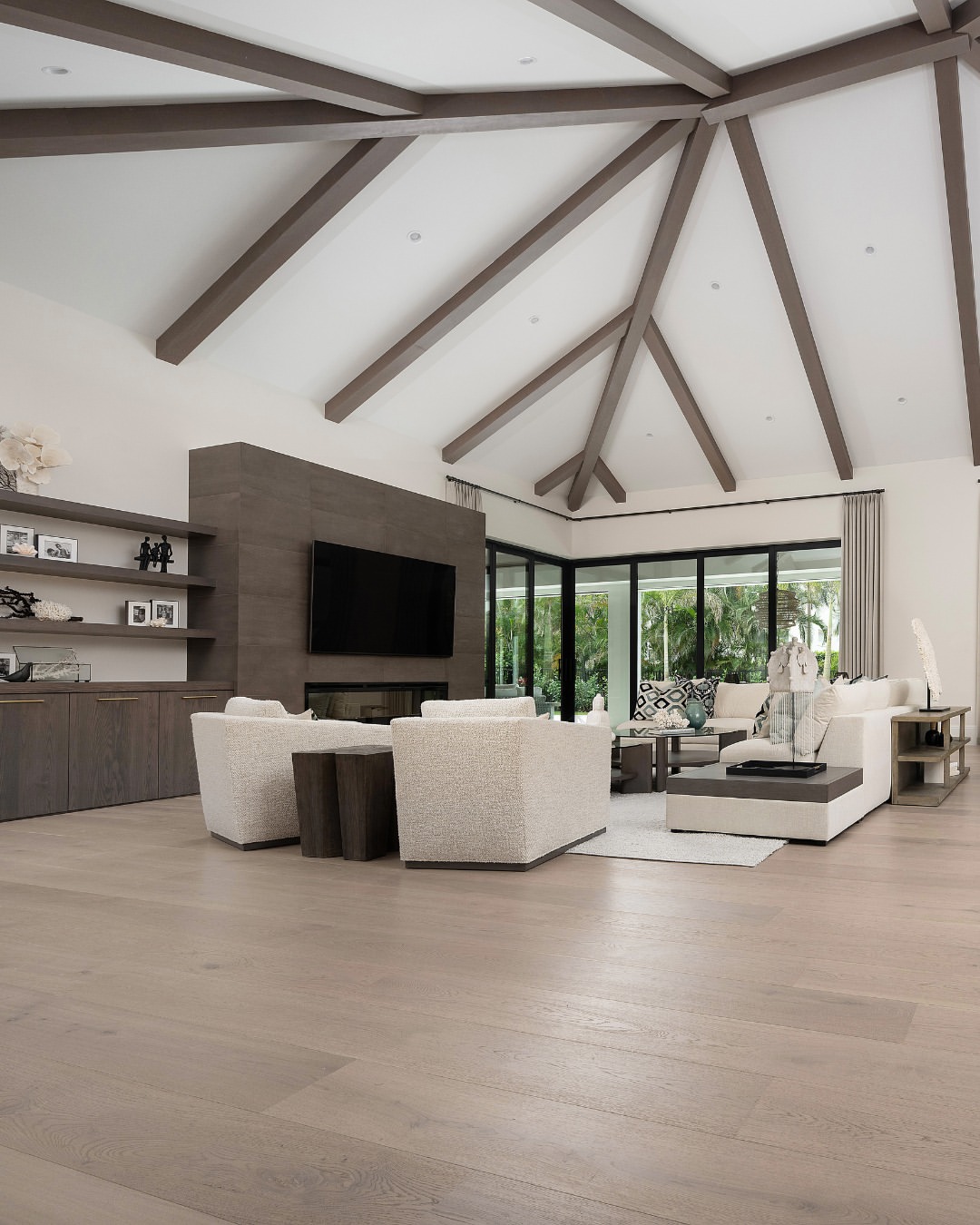
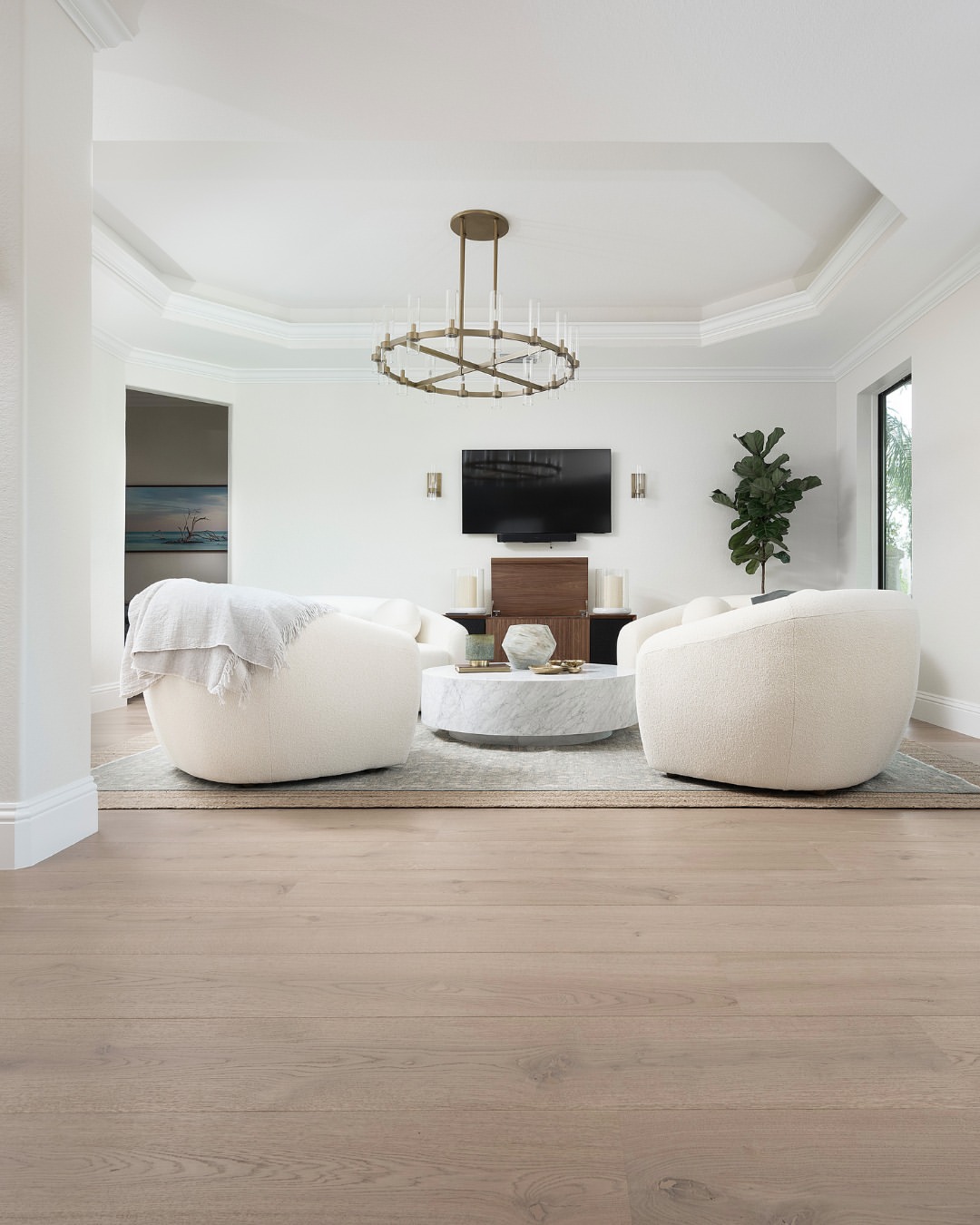
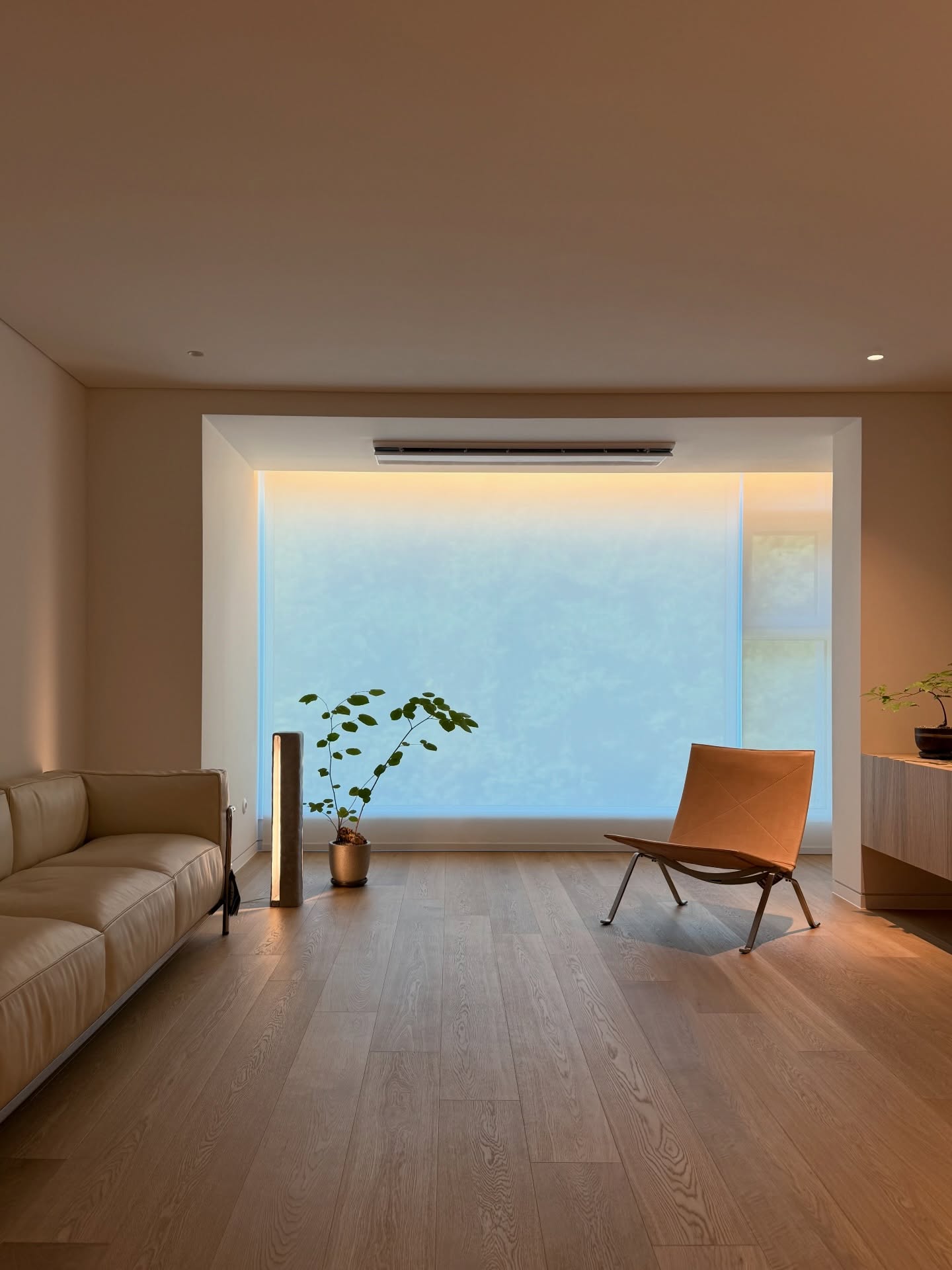
Natural wood flooring in a contemporary villa interior
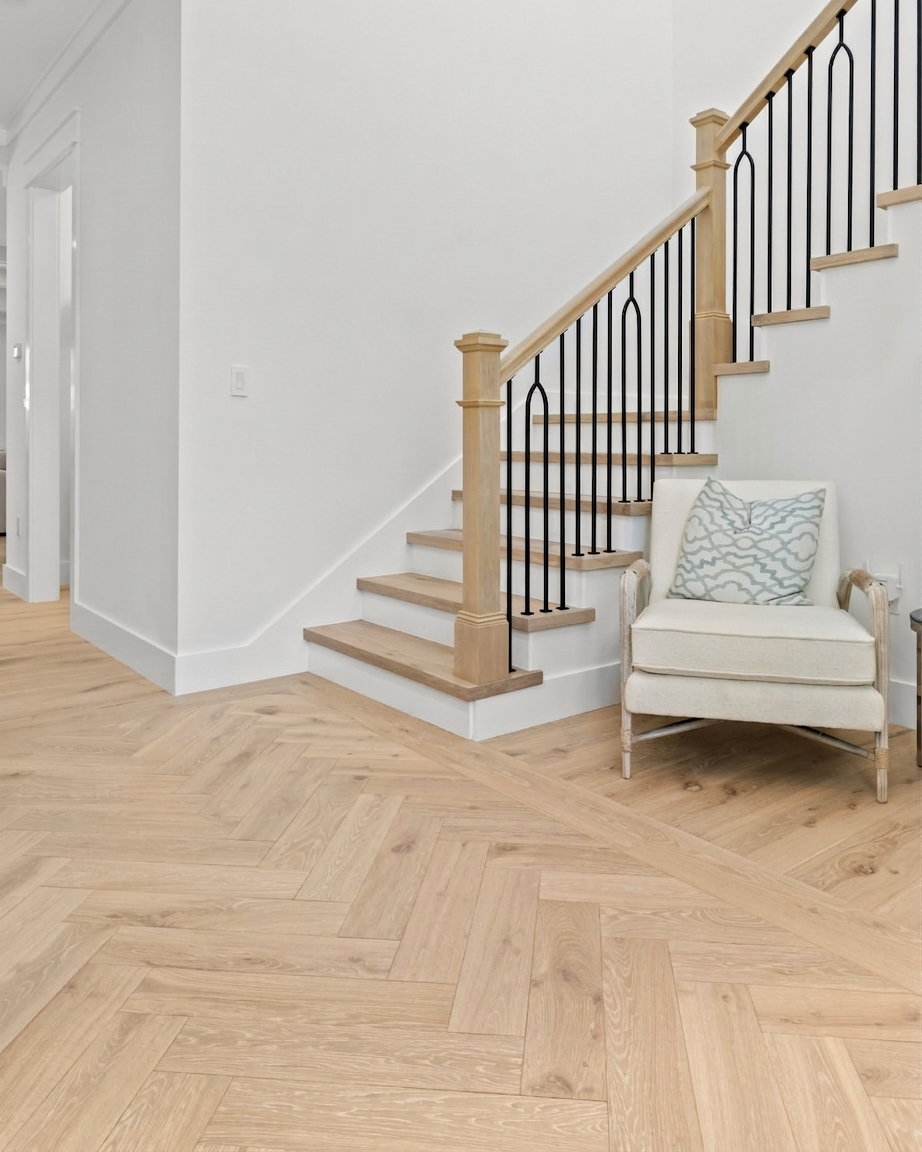
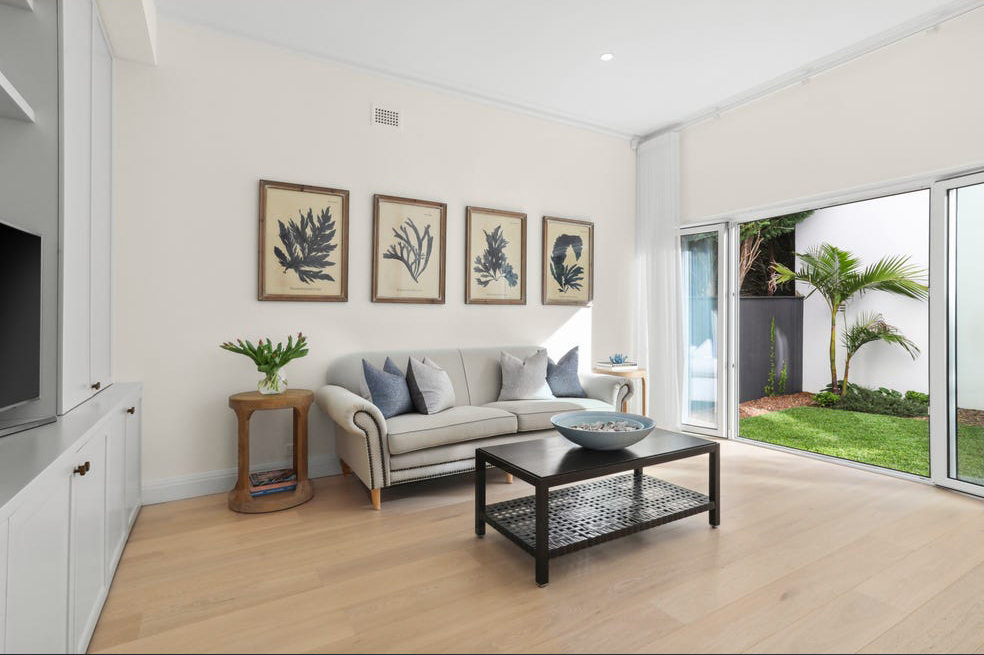
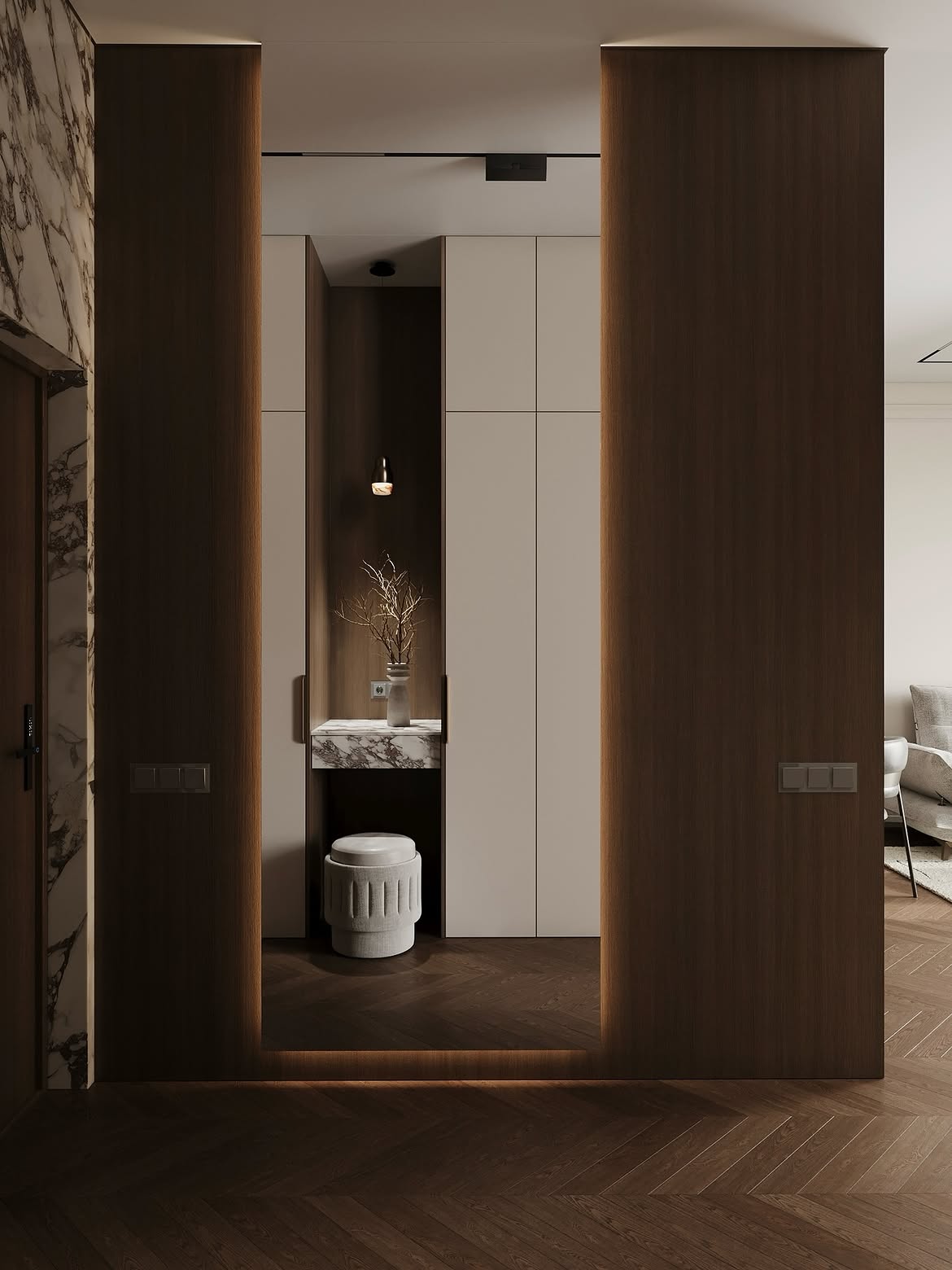
Villa entrance hall with natural wood flooring

Which Wood Species Works Best in a Villa?

There is no single wood species that suits every villa. Each natural wood has its own colour, grain structure and tone, creating a different relationship with light and the material palette of the architecture.

Oak, with its defined grain and relatively versatile colour range, can adapt to many interior languages. Walnut brings deeper brown tones and stronger contrast, making it suitable when a space needs a material foundation with greater visual weight. Meanwhile, Teak is distinguished by its warm golden-brown tone and natural grain, while Ash often feels lighter because of its pale colour and characteristic grain.

Rather than asking which wood is more "premium", it is more useful to consider which species best suits the architecture, light and material palette being developed. You can explore natural wood species to better understand the characteristics of each material before making a selection.

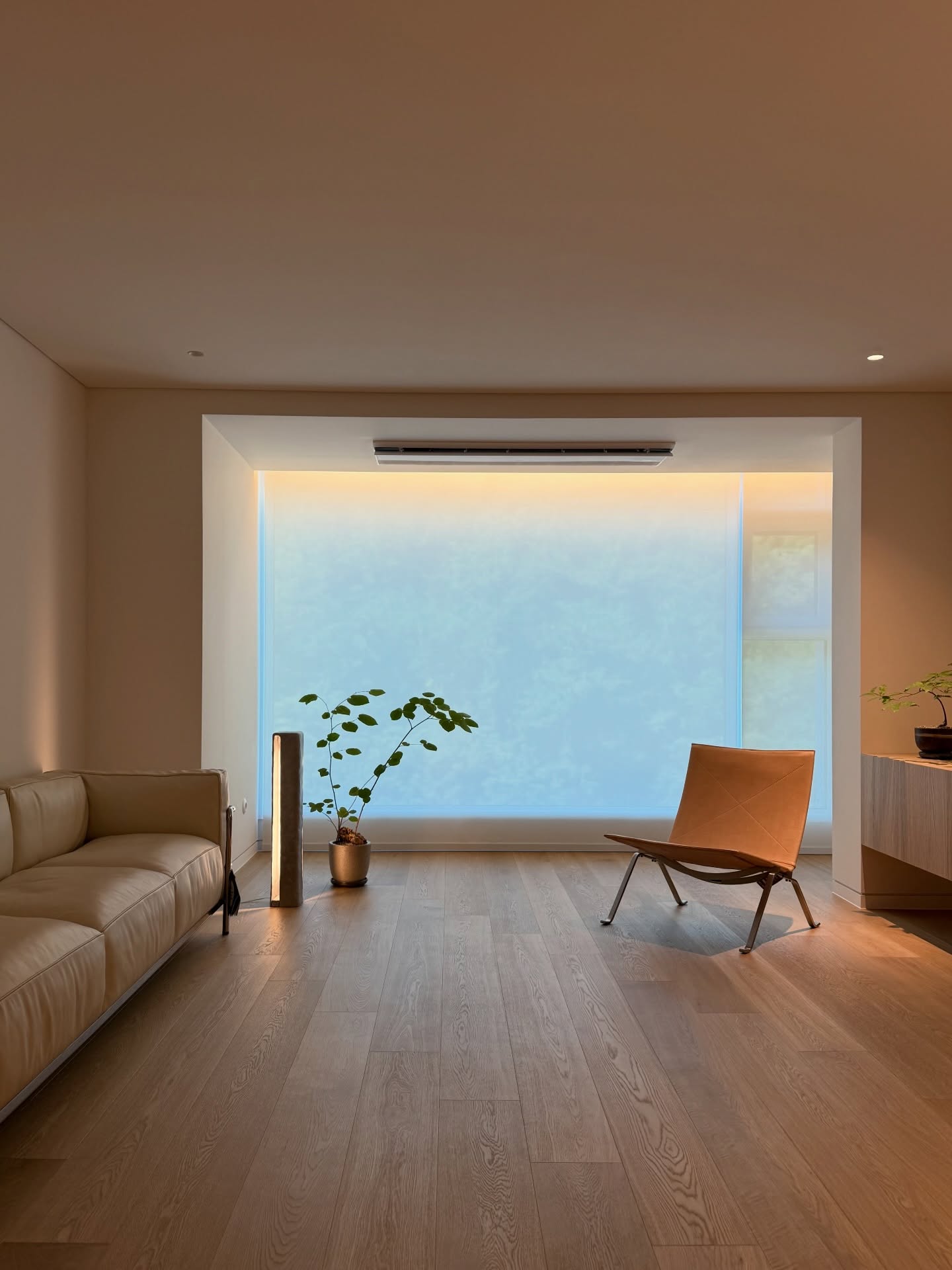
Oak herringbone flooring in warm natural light
Oak herringbone flooring connecting the living space

How Do Plank Dimensions Affect Spatial Perception?

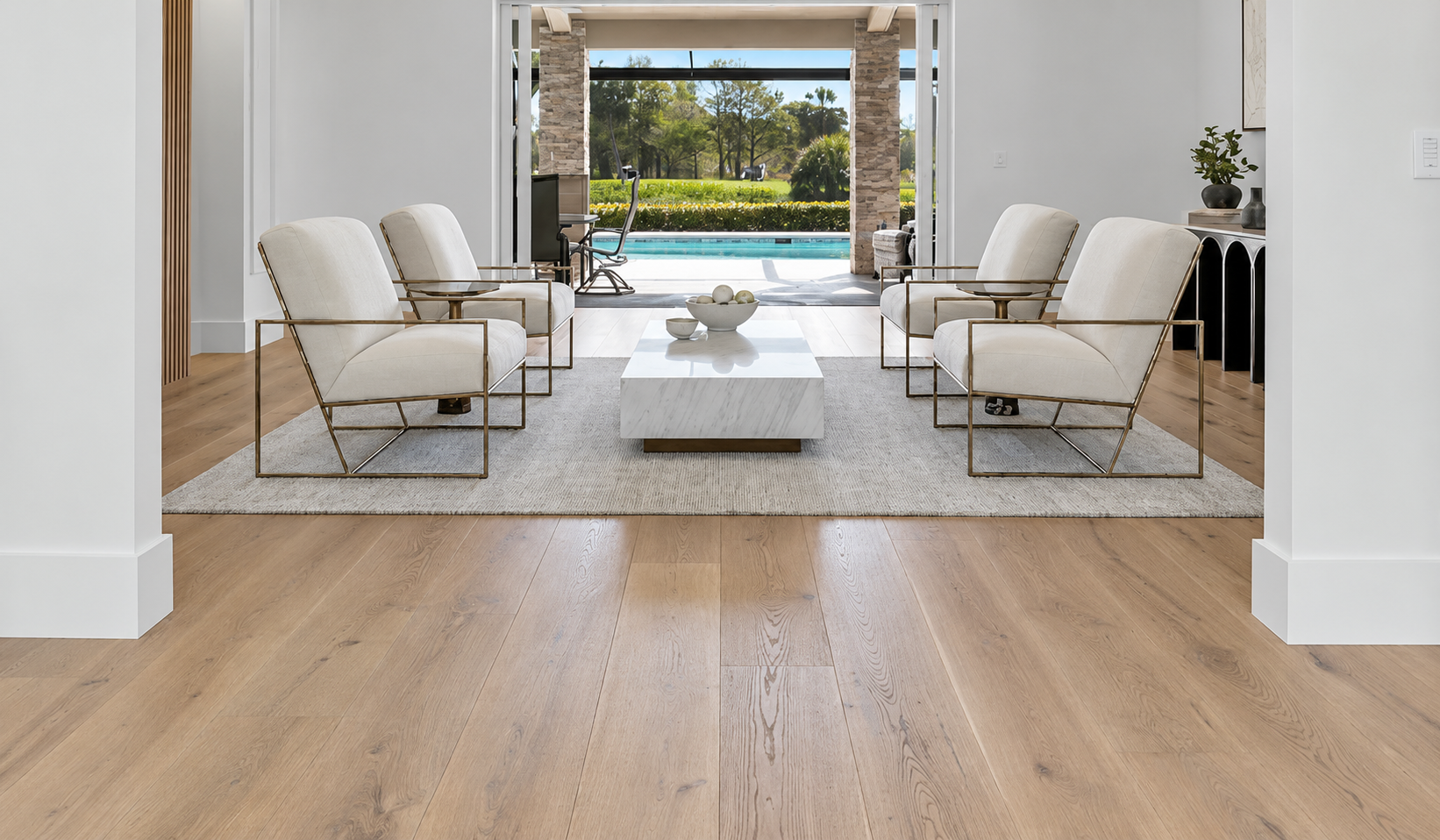
In large spaces, plank dimensions are among the factors that most clearly affect the visual scale of the floor. Wider and longer boards reduce the number of visible joints, allowing the wood grain to read across larger surfaces and creating a greater sense of continuity.

A large villa, however, does not automatically require the largest available plank size. Board width should be considered in relation to room dimensions, ceiling height, furniture scale and, especially, the main sightlines through the space. The right proportion allows the floor to support the architecture rather than dominate it.

In smaller areas such as bedrooms, studies or corridors, plank dimensions can also be adjusted to create a more appropriate rhythm. The key is to maintain a consistent material language even when scale or floor organisation changes from one area to another.

Straight Lay, Herringbone or Chevron?

The laying pattern determines the rhythm the floor creates within a space. Straight lay generally produces a continuous effect and can emphasise the length of an architectural axis. When boards follow the direction of natural light or primary circulation, their joints can reinforce the perceived depth of the room.

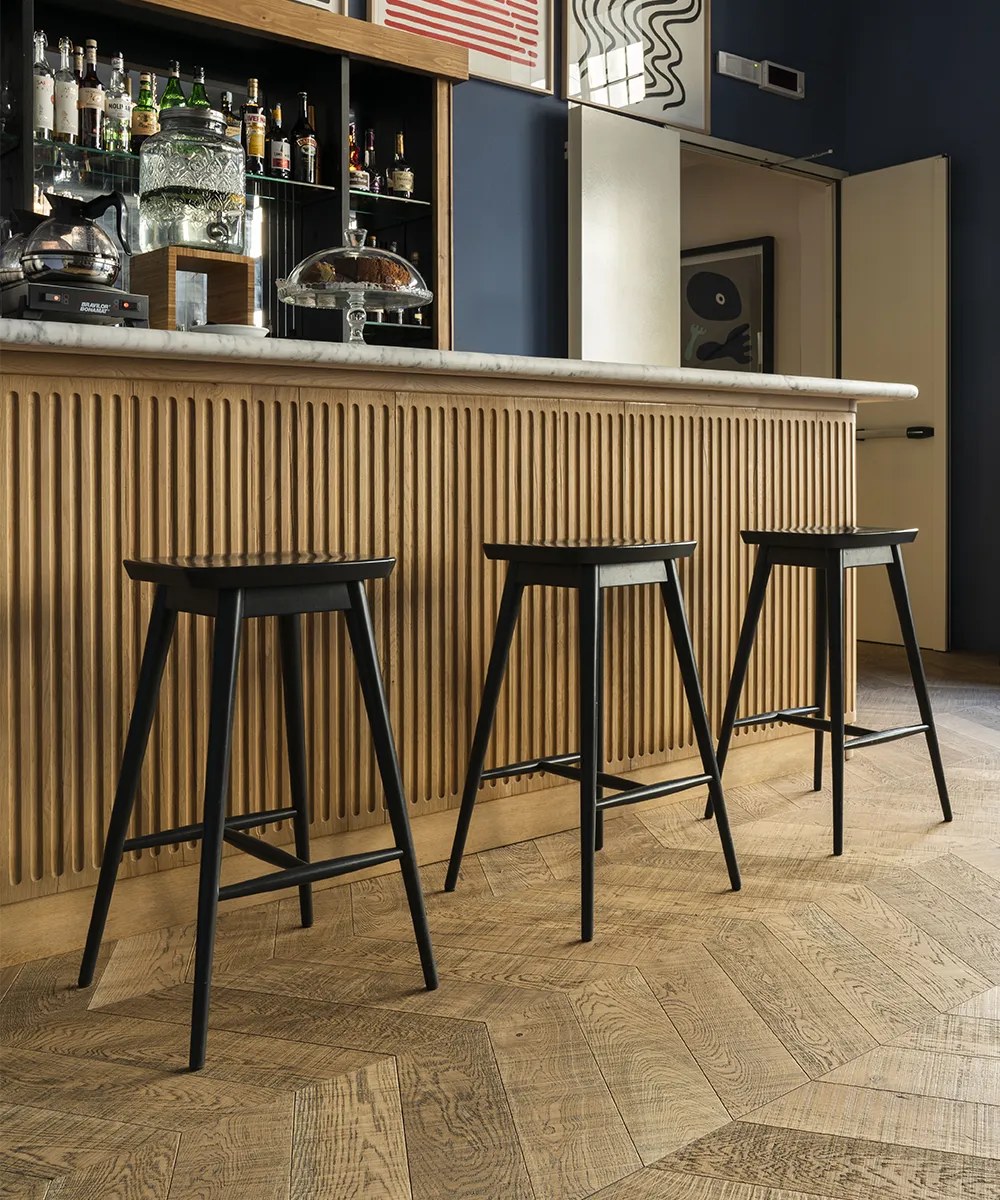
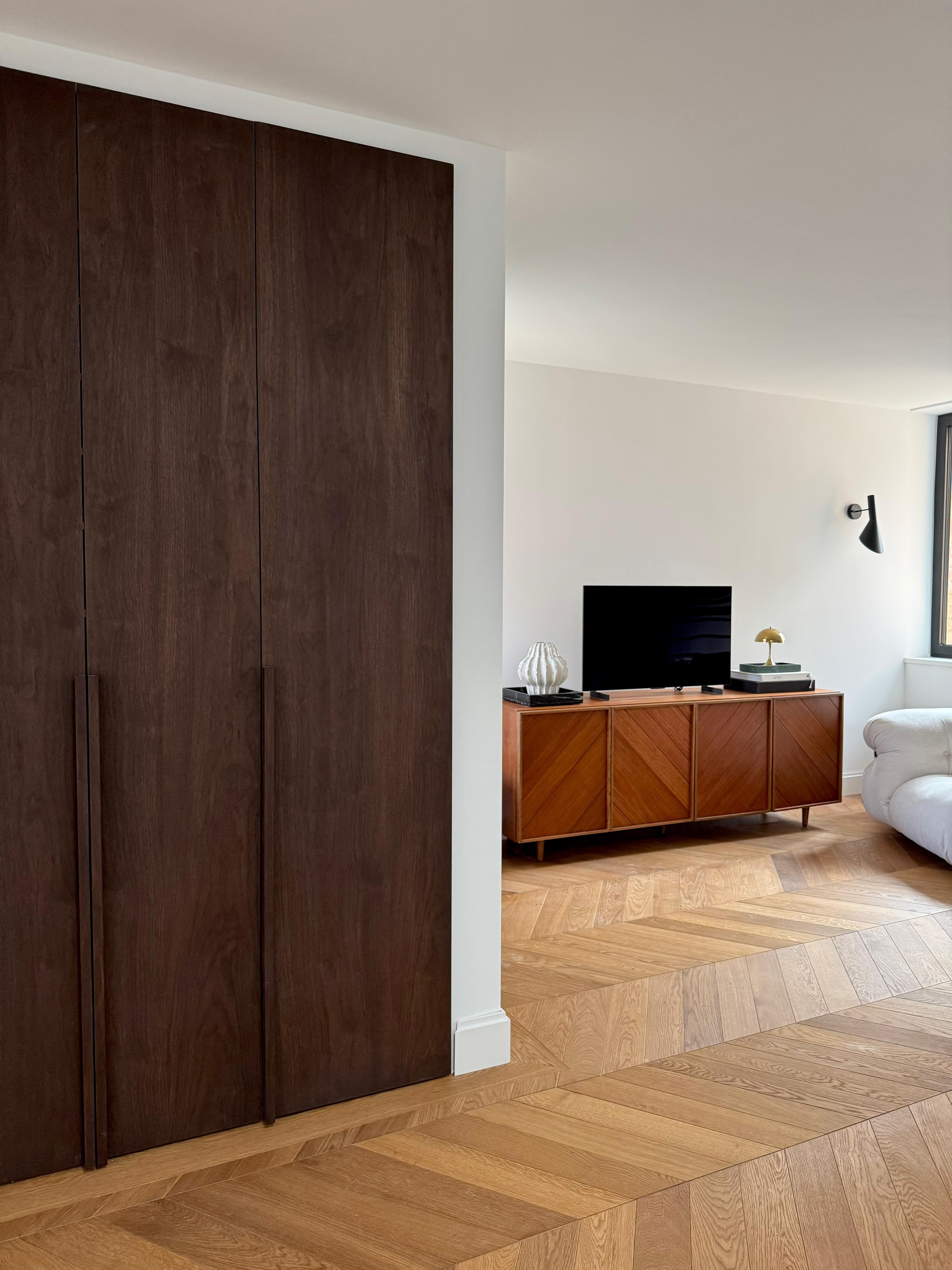
Herringbone creates a more pronounced rhythm through its interlocking V-shaped arrangement. In living rooms, entrance halls or other central areas of a villa, it can give the floor a stronger architectural presence while preserving the natural character of the wood.

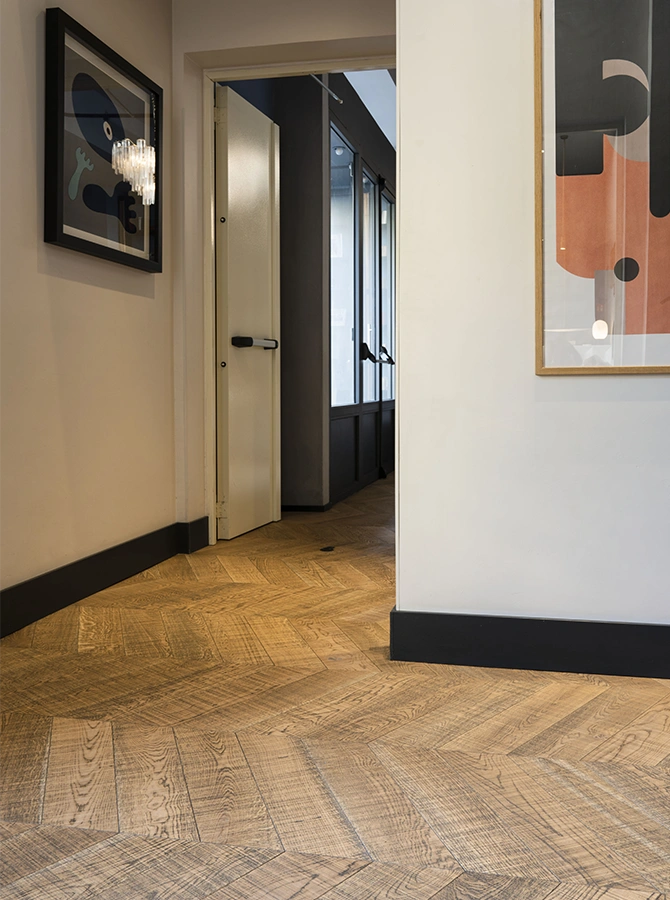
Chevron creates a strong directional effect because the angled board ends meet along a continuous axis. Compared with Herringbone, the visual result is often cleaner and more strongly directional. Choosing between straight lay, Herringbone and Chevron should therefore depend on proportion, sightlines and the desired rhythm of each space. You can explore the differences between wood flooring patterns before making a selection.

One Flooring System Throughout the Villa, or Different Treatments by Space?

Using the same wood species across multiple areas can create material continuity, particularly in villas where the living room, dining area and corridors connect directly. As boundaries between spaces are reduced, the floor can become the element that binds them into a coherent whole.

Continuity does not necessarily mean that every room must use exactly the same format. In some cases, the same wood can be laid straight across larger areas and expressed as Herringbone or Chevron where a stronger focal point is needed. Controlled variation can define different zones without breaking the overall material language.

Colour and surface finish should also be considered within this overall composition. Natural light can make the same wood tone appear different from one orientation to another, while sheen, texture and finishing method further affect how the surface reflects light. Understanding the role of wood flooring colour in a spaceandthe differences between finishing methods helps place the selection process within a more complete context.

Technical Factors to Consider Before Selection

Beyond aesthetics, the actual conditions of the project directly affect how a flooring system performs over time. Subfloor moisture, indoor environmental conditions, temperature changes and the characteristics of each use area should all be considered before determining the appropriate flooring construction.

In projects with large floor areas, material stability becomes even more important. Engineered wood flooring uses a multi-layer construction to limit dimensional movement as environmental conditions change, while the natural wood top layer retains the material's characteristic colour, grain and tactile quality.

Technical considerations should therefore not be separated from aesthetic decisions. A beautiful wood species, well-proportioned plank or carefully chosen laying pattern can only perform as intended when supported by a construction suited to the actual conditions of the project.

Explore NOËL Natural Wood Collections

Warranty Policy

View warranty terms

Engineered Structure

Explore the engineered wood layers

Laying Systems

Explore flooring patterns
Zalo Call
SAMPLE BOX

Exclusive Sample Collection

Request our wood flooring sample set.

Select wood type / tone
Oak - Light / Natural Tone
Walnut - Deep Tone
Ash - Natural
Teak - Natural
Herringbone / Chevron
Straight Lay